Source: Wikimedia Commons
Blue-throated Macaw
AdvancedAra glaucogularis
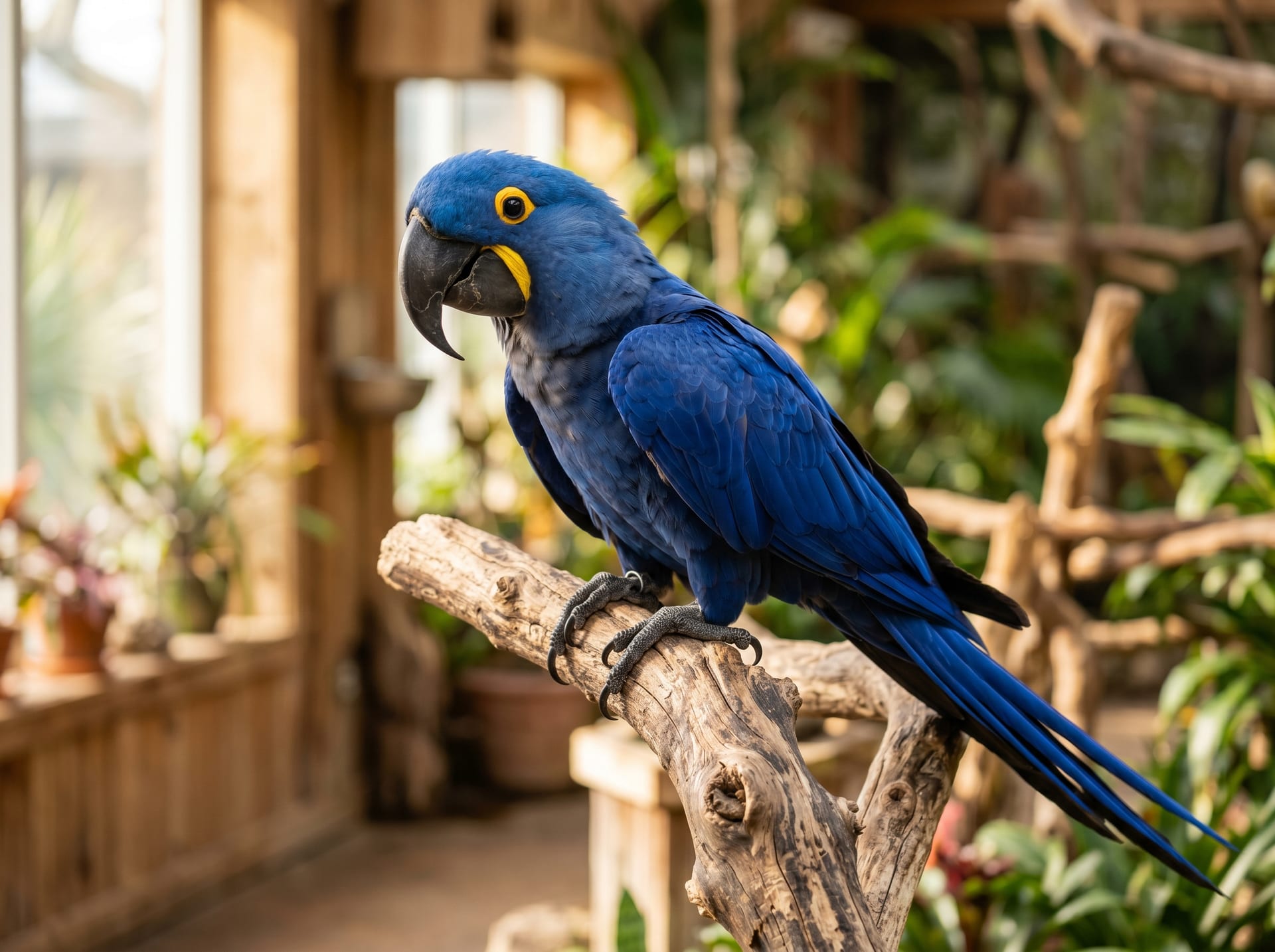
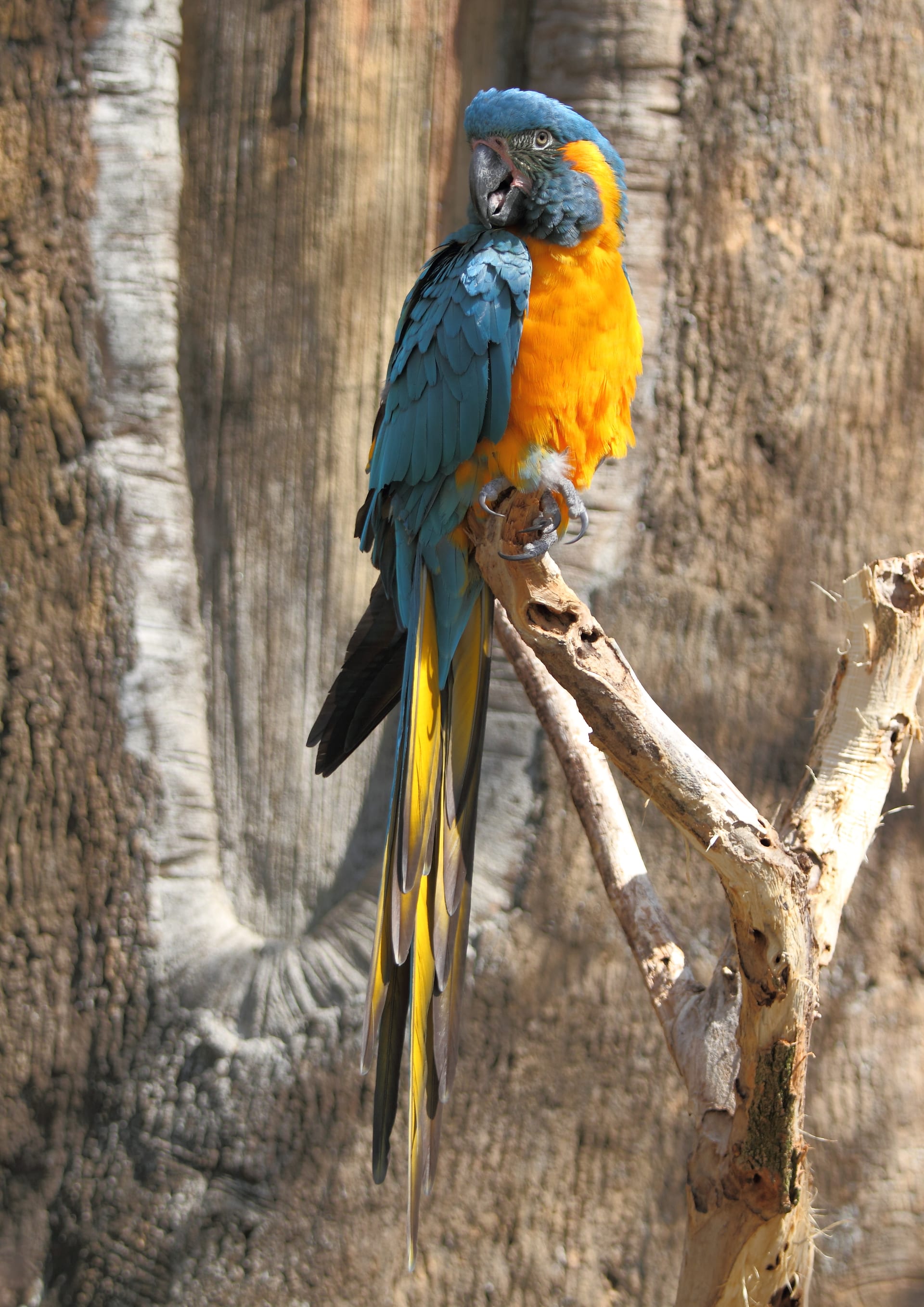
A large macaw 85 cm long, turquoise-blue above and orange-yellow below with a blue-green throat. Confined to the Llanos de Moxos of northern Bolivia, its wild adult population is estimated at only a few hundred birds.
Difficulty
Advanced
Temperature
15〜30℃
Lifespan
About 50 years
Size
About 85cm
Humidity
40〜60%
Diet
Large parrot pellets, palm nuts, other nuts, fruit and vegetables
About
The blue-throated macaw (Ara glaucogularis) is a large macaw endemic to the Llanos de Moxos of northern Bolivia. The upperparts, thighs and undertail coverts are turquoise-blue, the underparts orange-yellow and the throat blue-green. The face is bare white skin crossed by lines of short dark blue feathers; the iris is yellowish-white and the black-grey bill is pink at the base. It lives at 200 to 300 m in moist forest and in palm-dominated groves along rivers, moving in pairs or small groups of up to five, and roosting at night alongside other Ara macaws. Breeding runs from August to November in palm and tree cavities or old woodpecker holes; incubation takes 26 to 28 days and the young fledge 90 to 94 days after hatching. Numbers collapsed through the 1970s and 1980s, and about 208 to 303 adults are thought to remain in the wild. In 2014 Bolivia designated the species a natural patrimony by law.
Source: Wikipedia (CC BY-SA 4.0)
Lifespan of the Blue-throated Macaw
The Blue-throated Macaw lives About 50 years.
Size of the Blue-throated Macaw
The Blue-throated Macaw grows to About 85cm.
It is about 85 cm long including the tail, with a wingspan of roughly 90 cm and a weight of 900 to 1,100 g.
Basic Info
Origin
Endemic to the Llanos de Moxos of northern Bolivia
Lifespan
About 50 years
Size
About 85cm
Care Specifications
Semi-aggressivePairBreeding: Hard
Sources: Wikipedia - Blue-throated macaw (length, wingspan, weight, population, range, legal status) / Japanese Wikipedia - Aoki-kongo-inko (morphology, altitude, behaviour, breeding season, incubation, fledging, population trend) / IOC World Bird List v15.2 (scientific name, authority, English name, range)
References & Sources
Edited & verified by: BreederDirect editorial team
The taxonomic, regulatory, and husbandry data on this page are compiled and verified against the authoritative primary sources below.
Primary sources
- Wikipedia
- CITES Appendices (Ara glaucogularis listed in Appendix I)
- Annex to Council Regulation (EC) No 338/97 as amended by Commission Regulation (EU) 2026/1383 (post-CoP20)
- IUCN Red List
- Japanese Wikipedia - Aoki-kongo-inko (morphology, altitude, behaviour, breeding season, incubation, fledging, population trend)
- IOC World Bird List v15.2 (scientific name, authority, English name, range)
- GBIF
Taxonomy & Authority
Accepted name: Ara glaucogularis Dabbene, 1921
Synonyms: Ara caninde, Ara ararauna caninde
Authority databases: GBIF
Nomenclature follows global taxonomic authority databases.
Regulations & Conservation Status
CITES Appendix IIUCN CR · Critically Endangered
Ara glaucogularis was listed in CITES Appendix II in 1981 as part of the order-wide listing of Psittaciformes and was transferred to Appendix I in 1983. In Japan it is an internationally endangered species under the Act on Conservation of Endangered Species: commercial international trade is in principle prohibited, and transferring a bird or advertising one for sale within Japan requires an individual registration and the certificate issued with it. Transferring a bird without that certificate is unlawful. The IUCN assesses it as Critically Endangered. It is legally protected in Bolivia and was designated a natural patrimony of the country by law in 2014.
Sources: CITES Appendices (Ara glaucogularis listed in Appendix I) / Annex to Council Regulation (EC) No 338/97 as amended by Commission Regulation (EU) 2026/1383 (post-CoP20) / IUCN Red List
Regulations may change. Always verify the latest information with the relevant authorities.
Blue-throated Macaw Listings
Loading latest listingsFind listings for this species