Hyacinth Macaw Care Guide | Long-term Care, Diet, and Environmental Management of the World's Largest Blue Parrot
Detailed guide to caring for Hyacinth Macaws (Anodorhynchus hyacinthinus). Comprehensive overview of everything needed for long-term care of these beautiful cobalt-blue parrots, from cage requirements and diet to mental health care and legal regulations.
Key Takeaways
Detailed guide to caring for Hyacinth Macaws (Anodorhynchus hyacinthinus). Comprehensive overview of everything needed for long-term care of these beautiful cobalt-blue parrots, from cage requirements and diet to mental health care and legal regulations.
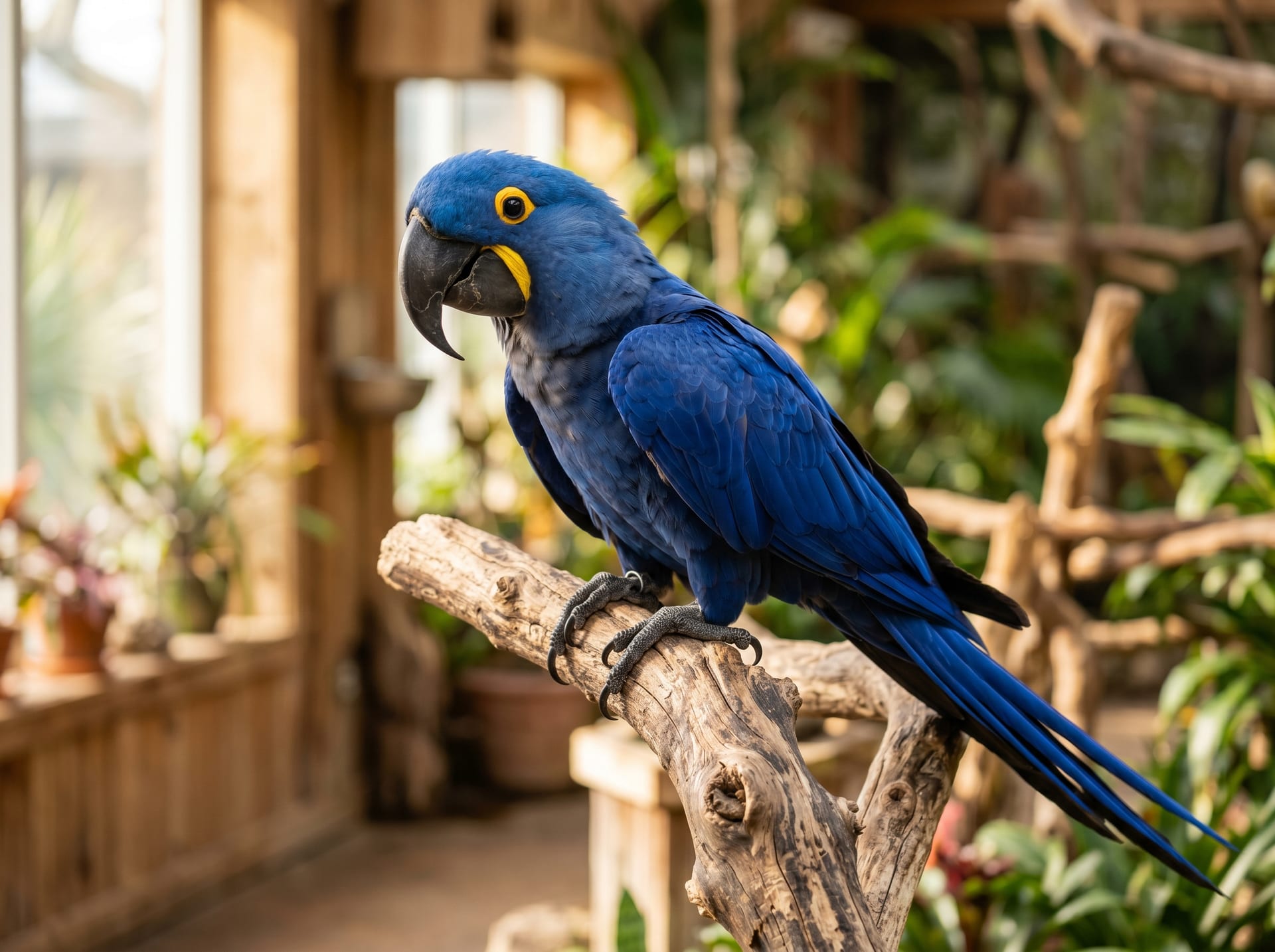
The Hyacinth Macaw (Anodorhynchus hyacinthinus) belongs to the order Psittaciformes, family Cacatuidae, and is recognized as one of the world's largest parrot species. Its cobalt-blue plumage covering the entire body, combined with distinctive yellow eye-rings and brilliant bare facial patches, commands an overwhelming presence. With a maximum wingspan reaching 130 cm and a lifespan exceeding 30–50 years, keeping one requires a lifetime commitment.
✍️
BreederDirect Editorial
The BreederDirect editorial team specializes in care information for animals, covering veterinary care and breeding to deliver beginner-friendly guides.
Find Birds on BreederDirect
Buy directly from verified breeders
Browse Related Listings
Find Birds listings related to this article on BreederDirect. Buy directly from verified breeders.
The Hyacinth Macaw is listed on CITES Appendix I, meaning international trade for commercial purposes is essentially prohibited.
Only captive-bred individuals (CB) bred domestically can be legally obtained
Always verify CITES certificates and transfer documents at purchase
Trading individuals without certificates is illegal
Captive-bred individuals from domestic breeders do circulate in some markets, but are extremely expensive (millions of yen)
Housing and Environment
Cage Size
Hyacinth Macaws require massive enclosures.
Minimum Recommended Size
Guidelines
Width × Depth × Height
200 cm × 150 cm × 200 cm
Ideal
As large as possible (dedicated flight room is optimal)
Standard commercial bird cages are unsuitable. Custom welded steel cages or a dedicated indoor aviary (bird room) are recommended.
Cage Materials
Stainless steel or welded steel bars (they can chew through with powerful beaks)
Painted or galvanized finishes are prohibited due to risk of lead and zinc toxicity
Bar thickness must be minimum 5 mm or more (they can bite through thinner bars)
Perches
Natural wood (eucalyptus, banana, or almond wood): 5–8 cm diameter
Replace regularly (natural outlet for chewing behavior)
Natural toys such as palm nuts and pine cones should be provided
Diet Management
The primary diet of Hyacinth Macaws consists of palm nuts (palm seeds). In the wild, they feed mainly on Acuri and Bocaiuva palm seeds.
Primary Foods
Food
Details
Macadamia Nuts
Optimal alternative nut food. High fat and calorie content
Brazil Nuts
Provide regularly. Avoid excess
Walnuts (raw)
Appropriate amounts daily
Palm Nuts
Best primary food if available
Unlike other macaw species, Hyacinth Macaws are adapted to high-fat diets. Standard parrot pellets alone will result in nutritional deficiency.
Supplementary Foods
Fresh fruits: mango, papaya, banana, pomegranate
Vegetables: corn, carrots, broccoli
Grains and legumes: sprouted beans, mixed grains
Animal protein: boiled eggs (in small amounts)
Foods to Avoid
Chocolate, avocado, onion, garlic, alcohol, caffeine, and high-sodium foods are toxic and can be fatal.
Mental Health Care and Socialization
Hyacinth Macaws possess exceptionally high intelligence and emotional sensitivity. Boredom and isolation are the greatest risk factors, leading to stress-induced self-injury (feather plucking).
Required Interaction
Minimum 3–4 hours daily of out-of-cage time and interaction
Rotate puzzle feeders and enrichment toys daily
Playing music and television provides stimulation (reduces isolation)
Make talking and physical interaction a daily habit
Signs of Behavioral Issues
Sign
Meaning
Feather plucking (feather destruction)
Severe stress or disease. Seek veterinary care immediately
Loud screaming
Boredom or attention-seeking
Increased biting
Fear, hormonal activity, or reinforced behavior
Loss of appetite
Sign of disease or stress
Health Management
Regular Veterinary Checkups
Annual or bi-annual checkups with an avian veterinarian
Blood work, X-rays, and fecal testing are recommended
Regular screening for psittacosis (chlamydiosis)
Vaccinations and Vitamins
Avian vaccines are not widely available in Japan
Vitamin A deficiency (affects eyes, respiratory system, and immunity) is common—supplement with pumpkin and carrots
Calcium: Provide cuttlebones and mineral blocks to prevent fractures and egg-binding
Registration as an animal business operator (sales, exhibition, breeding)
Management of CITES certificates and proper documentation for transfers
Maintain continuous breeding records
Nest Box and Breeding Conditions
Nest box size: 60 cm × 60 cm × 100 cm or larger (vertical orientation)
Nesting material: wood chips and peat
Pairs may take 1–3 years to become comfortable with the nest box
Clutch size: 1–3 white eggs. Incubation period is 26–30 days
Conclusion
Called the "jewel of parrots" for their beauty and intelligence, Hyacinth Macaws require serious commitment to care. Proper housing with ample flight space, a high-fat diet centered on palm nuts, daily enrichment and interaction, and adherence to CITES regulations are essential. As a partner for 30+ years, family consensus and long-term planning are prerequisites. We occasionally list captive-bred individuals with proper documentation, so those considering ownership should review our available birds.