Hawk-headed Parrot (Deroptyus) Care Guide | How to Care for a Rare Parrot That Displays Its Neck Feathers
The Hawk-headed Parrot (Deroptyus accipitrinus) is a medium-sized parrot native to the Amazon basin, known for its unique behavior of spreading its red neck feathers in a fan shape when surprised or excited. This guide covers import regulations for rare species, CITES registration, difficulty level, diet, and cage setup.
Key Takeaways
The Hawk-headed Parrot (Deroptyus accipitrinus) is a medium-sized parrot native to the Amazon basin, known for its unique behavior of spreading its red neck feathers in a fan shape when surprised or excited. This guide covers import regulations for rare species, CITES registration, difficulty level, diet, and cage setup.
Related Species
What Is the Hawk-headed Parrot?
The Hawk-headed Parrot (Deroptyus accipitrinus) is a medium-sized parrot found in the Amazon River basin of South America (Brazil, Peru, Colombia, Venezuela, etc.) and is called the Hawk-headed Parrot or Red-fan Parrot in English.
Its most distinctive feature is a unique defensive and display behavior in which the red and blue feathers on the back of the head and neck spread out in a fan shape when the bird is startled or excited, resembling the crest of a hawk. The name "Hawk-headed" comes from this behavior.
Basic Information
| Item | Details |
|---|---|
| Scientific Name | Deroptyus accipitrinus |
| Common Names | Hawk-headed Parrot / Red-fan Parrot |
| Native Range | Amazon basin, South America |
| Body Length | 35–36 cm |
| Weight | 200–250 g |
| Lifespan | 35–40 years (with proper care) |
| CITES | Appendix II (regulated, legal import possible) |
| Availability | High difficulty (few domestically available) |
| Care Difficulty | Intermediate to advanced |
Legal Regulations and Procurement
The Hawk-headed Parrot is listed on CITES (Convention on International Trade in Endangered Species) Appendix II, and permits are required to import wild individuals. In Japan, legal acquisition is only possible through registered Class I animal dealers.
Important Considerations When Acquiring
- Request presentation of CITES permits and certificates of origin
- Choose CB (captive-bred) individuals from breeders
- Verify the individual's ring or identification information
Illegal trade in wild individuals carries severe penalties. Obtaining birds through legitimate channels also contributes to species conservation.
Appearance and Characteristics
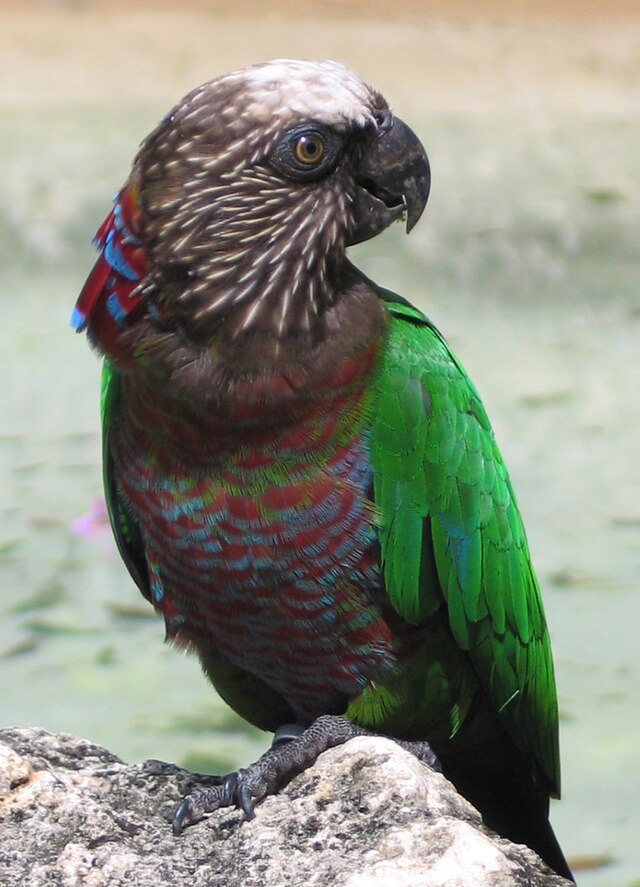
Coloring: Head is brown with white horizontal striping (scale-like pattern); throat and breast display vivid red and blue horizontal stripes; back, wings, and tail are deep green.
Crown Feathers (Fan): Red and blue feathers are densely distributed on the back and sides of the neck and spread in a fan shape when excited, startled, or during courtship displays. This behavior is unique to this species and highly rewarding to observe.
Subspecies Differences
| Subspecies | Characteristics |
|---|---|
| D. a. accipitrinus | Standard form, northern Amazon |
| D. a. fuscifrons | Darker brown head, southern Amazon |
Personality and Behavioral Traits
The Hawk-headed Parrot is a medium-sized parrot with expressive emotions, social tendencies, and strong independence.
Typical Personality Traits
- Forms deep bonds with their owner (pair bonding is strong)
- Cautious and wary of strangers and new environments
- Well-socialized individuals adapt to hand and shoulder perching
- Vocalization is not as loud as macaws, but the bird makes loud sounds when expressing emotions
- Possesses a strong bite force (appropriate training is necessary)
"Moody" Aspects: Many individuals have days when they want contact and days when they don't; learning to read these signals is important.
Understanding the Fan Display Behavior
When the Hawk-headed Parrot spreads its crown feathers, the following situations may apply:
- Defense/Threat: The bird feels fear or anxiety → maintain distance and avoid stimulation
- Excitement/Exploration: Interest in a new environment or toy → interact gently
- Courtship/Display: Commonly shown by males during breeding season
When the fan is extended, the risk of biting increases. Avoid forcibly handling the bird and wait for it to calm down.
Cage and Environment Setup
Appropriate space must be provided for a medium-sized parrot measuring 35 cm in body length.
Recommended Cage Dimensions
| Item | Minimum | Recommended |
|---|---|---|
| Width | 80 cm | 100 cm or larger |
| Depth | 60 cm | 80 cm or larger |
| Height | 100 cm | 120 cm or larger |
| Bar Strength | Stainless steel (due to strong bite force) |
Cage Layout
- Multiple perches of varying diameters (3–5 cm) at different levels
- Durable wooden toys (eucalyptus, cork, etc.)
- Foraging toys (hide food for the bird to search for)
- Swings and hanging-type toys
Placement
- A room corner (with a wall behind) provides a sense of security
- Avoid direct sunlight and direct air conditioning drafts
- A location where family activities are visible (prevents isolation)
Diet Management
The Hawk-headed Parrot is omnivorous, feeding primarily on fruits, seeds, and insects from the Amazon basin. The following diet composition is recommended in captivity.
Basic Diet Composition
| Food Type | Percentage | Details |
|---|---|---|
| High-quality pellets | 50–60% | Nutritionally balanced |
| Fresh fruits and vegetables | 30–40% | Mango, papaya, grapes, kale, etc. |
| Nuts and seeds (treats) | 5–10% | Almonds, walnuts, pine nuts (small amounts) |
Preferred Foods: Mango, papaya, grapes (the bird favors Amazon-basin fruits).
Foods to Avoid
- Avocado: All parts are toxic (lethal risk)
- Chocolate and caffeine
- Onions and garlic (may cause hemolytic anemia)
- High-sodium foods
Hydration: Provide fresh water daily. Offer water baths 2–3 times per week (using a spray bottle or shallow dish).
Socialization and Training
Due to their wariness, building a relationship of trust takes time. The following approach is effective.
Gradual Trust Building
- First 2 weeks: Talk to the bird through the cage and hand-feed favorite foods
- Attempt contact only when the crown feathers are not spread (during relaxed moments)
- Do not force step-up (perching on hand); praise the bird when it voluntarily steps up
- Use only positive reinforcement (praise and food rewards); never use punishment
Important: Do not touch the bird when the fan is displayed. Attempting to handle the bird while it is in a threatening posture will damage trust.
Health Management
Regular Checkups: Twice-yearly health examinations by an avian veterinarian (blood work, crop examination, weight confirmation).
Weight Management: Ideal weight is 200–250 g. Daily weight monitoring is fundamental to health management (sudden changes of 5% or more indicate a problem).
Common Health Issues
- Aspergillosis (fungal infection): Develops easily in poorly ventilated or stressful environments
- Chlamydiosis (psittacosis): Implement strict quarantine protocols for new birds
- Proventricular Dilatation Disease (PDD): Neurological condition caused by avian bornaviruses
If acquiring an imported bird, a minimum quarantine period of 4–6 weeks is essential.
Summary: A Long Journey with a Rare Species
The Hawk-headed Parrot has a high care difficulty and is not easy to acquire—it is a rare parrot. However, its unique fan display behavior, deep emotional expression, and long lifespan of 35–40 years offer an incomparable experience to dedicated caregivers with sufficient knowledge.
When considering ownership, always confirm the following prerequisites: acquisition through legitimate channels, cooperation with an avian veterinarian, and provision of adequate space. By understanding this remarkable Amazon parrot correctly and welcoming it responsibly, you contribute to species conservation.