Military Macaw Care Guide | Equipment, Diet, Legal Regulations, and Long-term Husbandry Tips
A comprehensive guide to caring for the Military Macaw (Ara militaris), a large macaw exceeding 70cm in length and listed in CITES Appendix I. Covers acquisition of CB (captive-bred) individuals and legal compliance, requirements for cages exceeding 120×90×150cm plus daily out-of-cage time of 2–4 hours, nutritional management centered on pellets, behavioral management of biting and vocalizations, disease prevention including PBFD and aspergillosis, and long-term husbandry planning for a lifespan of 40–60 years.
Key Takeaways
A comprehensive guide to caring for the Military Macaw (Ara militaris), a large macaw exceeding 70cm in length and listed in CITES Appendix I. Covers acquisition of CB (captive-bred) individuals and legal compliance, requirements for cages exceeding 120×90×150cm plus daily out-of-cage time of 2–4 hours, nutritional management centered on pellets, behavioral management of biting and vocalizations, disease prevention including PBFD and aspergillosis, and long-term husbandry planning for a lifespan of 40–60 years.
Related Species
About the Military Macaw
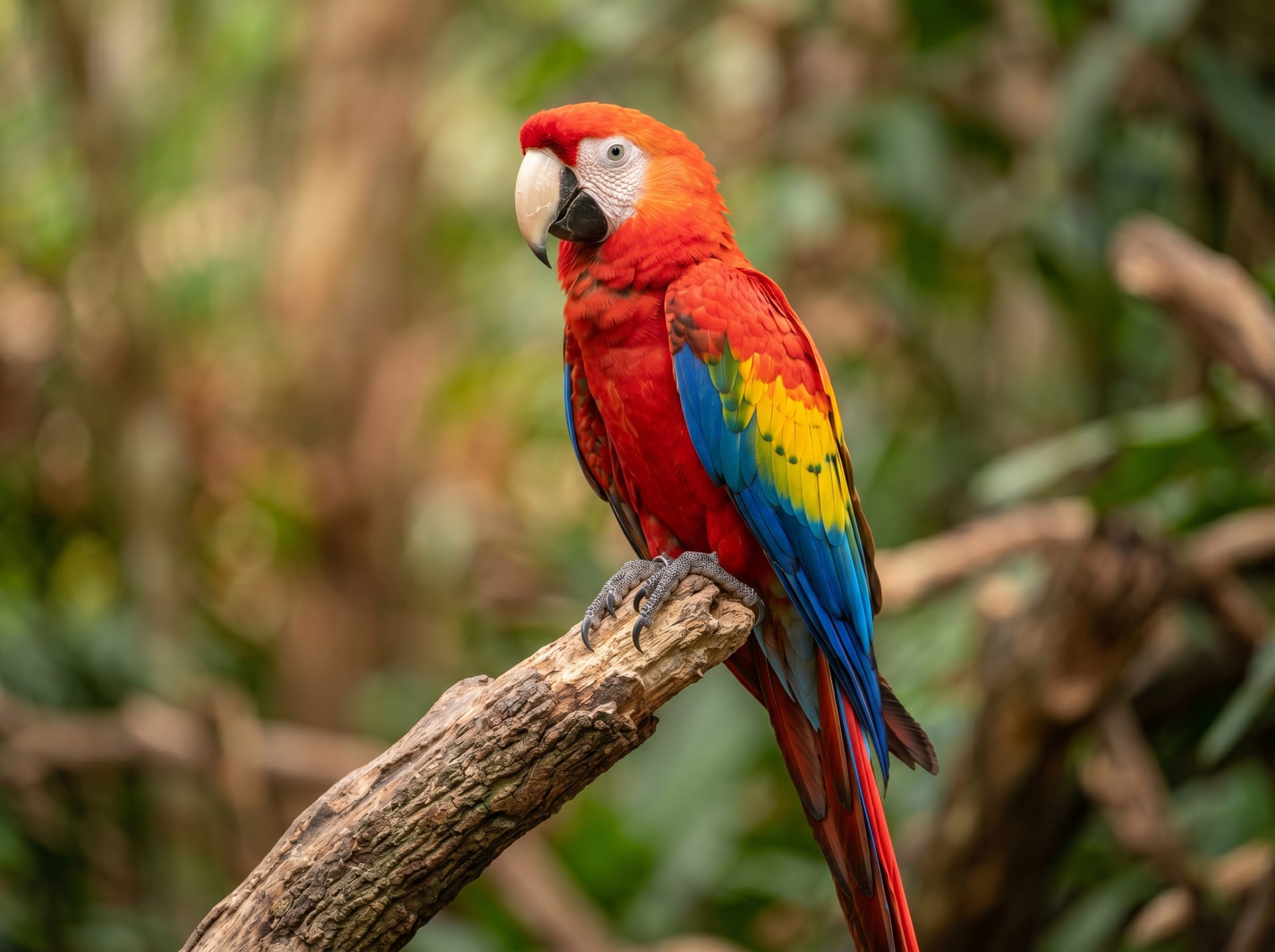
The Military Macaw (Ara militaris) is a large parrot of the order Psittaciformes, family Psittacidae, native to Central America through northwestern South America (Mexico, Colombia, Venezuela, Peru, and others). It reaches 70–75cm in length and 100–110cm wingspan, making it a large species characterized by predominantly green plumage with a distinctive red band on the head and blue flight feathers.
The name "Military" derives from the green feathering resembling military uniforms. Among macaws, it is known for a relatively calm temperament and is valued by breeders as an "manageable large macaw."
Basic Specifications
| Item | Details |
|---|---|
| Length | 70–75cm |
| Weight | 900–1,000g |
| Lifespan | 40–60 years (in captivity) |
| Native Range | Mexico through northwestern South America |
| CITES | Appendix I (permit required) |
| Temperament | Calm, curious, affectionate |
| Vocalization | Extremely loud (soundproofing essential) |
| Difficulty Level | Advanced |
Legal Regulations (Verify Before Purchase)
The Military Macaw is listed in CITES (Convention on International Trade in Endangered Species) Appendix I, and international trade is generally prohibited.
- Only CB (captive-bred) individuals may be purchased
- Legally bred and traded individuals include CITES artificial propagation certificates
- Verification of registration numbers is recommended
- Domestically bred CB individuals may be sold/purchased without certificates, but source verification is mandatory
Before purchasing, always confirm that the individual is "CB from a breeding facility."
Required Husbandry Equipment
Cage Size
Military Macaws are large birds with wingspans exceeding 1 meter when fully extended, requiring enormous cages.
| Purpose | Minimum Size | Recommended Size |
|---|---|---|
| Daytime activity cage | W90×D90×H120cm | W120×D90×H150cm or larger |
| Night cage (sleeping cage) | W60×D60×H90cm | W90×D60×H120cm |
Commercial parrot cages are often insufficient; custom-made or specialized large cages are necessary. Materials should be stainless steel or welded iron, with wire thickness of 3–5mm or greater (aluminum and thin wire can be bent and broken).
Out-of-Cage Space
A minimum of 2–4 hours of out-of-cage time daily is required. The free-flight area should include:
- Removal of hazards (electrical cords, toxic plants, metal fragments, etc.)
- Escape prevention measures (double-locked windows and doors)
- Safe ceiling height (minimum 2m or higher)
- Perches (branches): Natural wood 3–5cm in diameter (cherry, birch, peach, etc.)
Temperature and Humidity Management
| Parameter | Ideal Range |
|---|---|
| Room Temperature | 18–28°C |
| Humidity | 40–60% |
While relatively cold-tolerant, temperatures below 10°C should be avoided. Heating is especially important for chicks and elderly birds.
Feeding and Nutrition
Proper nutrition for large macaws is key to health and longevity.
Primary Diet
| Food | Daily Amount | Notes |
|---|---|---|
| Large parrot pellets | 10–15% of body weight | Should comprise 50–60% of total diet |
| Vegetables (bok choy, carrots, broccoli, etc.) | Daily | Diverse vegetables in small quantities |
| Fruits (apples, bananas, etc.) | 3–4 times weekly | High sugar content—keep portions small |
| Nuts (walnuts, almonds, macadamia, etc.) | 2–5 pieces per day | High fat content—avoid excess |
Foods to Avoid
- Avocado (toxic—potentially fatal)
- Chocolate and caffeine
- Onions and garlic
- High-sodium foods
- Alcohol
Nutritional Supplements
- Calcium supplementation: Keep cuttlebone or mineral powder available
- Vitamin D3: For indoor birds, UVB lighting or veterinary-recommended supplements
Behavior Management and Socialization
Military Macaws are highly intelligent; without proper socialization, behavioral problems (biting, screaming, self-injury) are common.
Basic Socialization
- Hand-feeding as chicks: Excellent for trust building, but requires specialized knowledge
- Step-up training: Teaching the bird to perch on your hand and respond to recalls during out-of-cage time through patient repetition
- Positive reinforcement: Reward training using favorite nuts or praise is most effective (physical punishment is strictly forbidden)
Managing Biting
A large macaw's bite can break bone. To prevent biting:
- Anticipate biting situations and avoid them
- Do not react if bitten (provide no attention)
- Reinforce through repeated experience that "biting = being ignored"
Vocalization Management
Large macaws can vocalize at over 100dB, making apartment and densely populated housing prone to neighbor disputes.
- Soundproofing timed to peak vocalization hours (morning and evening)
- Double-pane windows and sound-absorbing materials
- Environmental enrichment to reduce vocalization triggers (hunger, boredom)
Health Management and Disease Prevention
Regular Health Checkups
Annual to biannual veterinary exams by avian or exotic animal specialists are recommended. Particular attention to:
- Daily weight monitoring: Early detection of abnormalities
- Fecal observation: Soft stools, green droppings, or bloody stools warrant concern
- Feather condition: Feather loss or damage indicates malnutrition or stress
Common Diseases
| Disease | Cause | Symptoms |
|---|---|---|
| PBFD (Beak and Feather Disease) | Circovirus | Feather abnormalities, beak deformities |
| Aspergillosis | Fungal infection | Respiratory distress, loss of appetite |
| Chlamydiosis (Psittacosis) | Bacterial (zoonotic) | Nasal discharge, diarrhea, lethargy |
| Zinc toxicity | Zinc cage component ingestion | Vomiting, neurological symptoms |
| Egg binding (female) | Calcium deficiency, lack of exercise | Abdominal swelling, straining |
Tips for Long-term Husbandry
Military Macaws can live 40–60 years. Successful long-term care requires:
- Comprehensive life planning: Consider your own aging and life changes
- Contingency planning: Prepare wills and alternative care arrangements, as the bird may outlive you
- Relationship with a trusted avian veterinarian
- Community involvement: Participate in species and general parrot communities for information sharing and breeder networks
Summary
A Military Macaw is a "family member" for 40+ years. The size of the bird demands significant responsibility and preparation, but its intelligence and emotional richness offer unparalleled companionship.
- CITES Appendix I—Source verification of CB individuals is mandatory
- Enormous cage + minimum 2–4 hours daily out-of-cage time are baseline requirements
- Pellet-based diet with diverse foods and rich environmental enrichment
- Long-term planning for 40–60 year lifespan
With proper preparation and commitment, life with a Military Macaw will nurture a bond like no other.