Source: Wikimedia Commons
Chestnut-fronted Macaw (Severe Macaw)
AdvancedAra severus
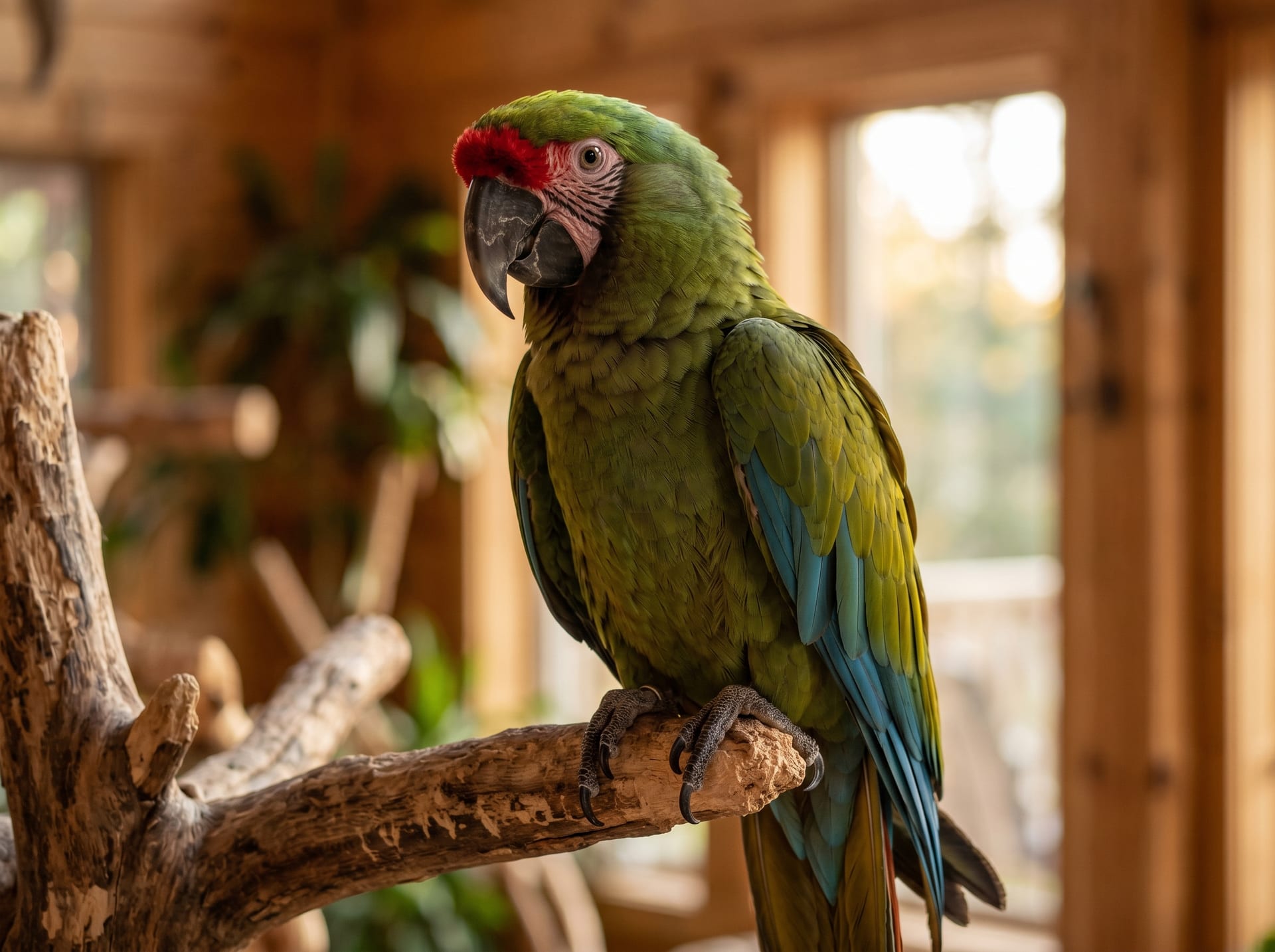
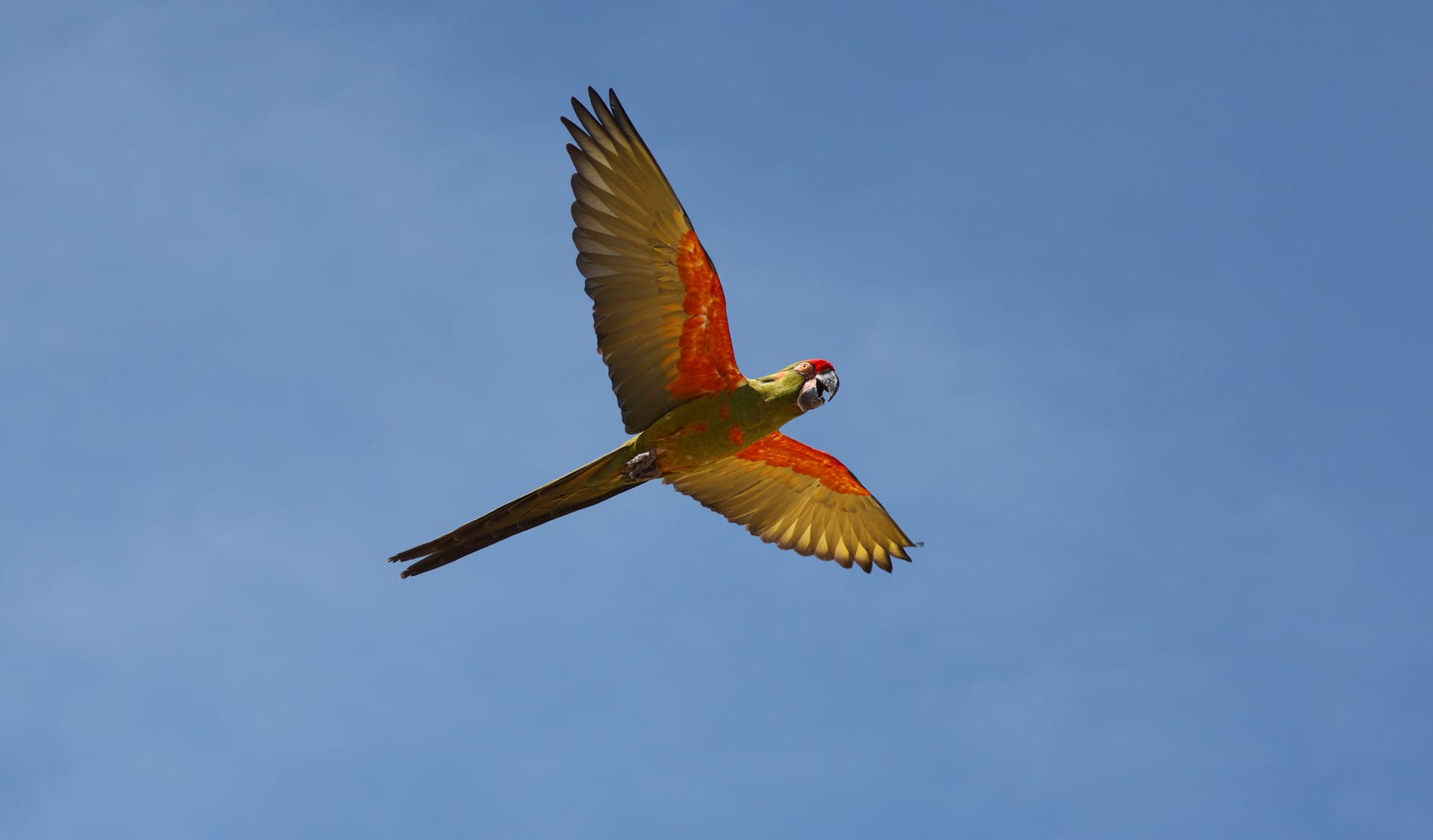
At 45 to 50 cm and 300 to 410 g this is one of the largest mini-macaws. It is mainly green with red and blue on the wings and a chestnut patch above the bill, and it is the only mini-macaw with lines of small black feathers across the bare skin around the eye.
Difficulty
Advanced
Temperature
15〜30℃
Lifespan
30-80 years
Size
45-50cm
Humidity
40〜60%
Diet
Large parrot pellets, nuts, fruit and vegetables
About
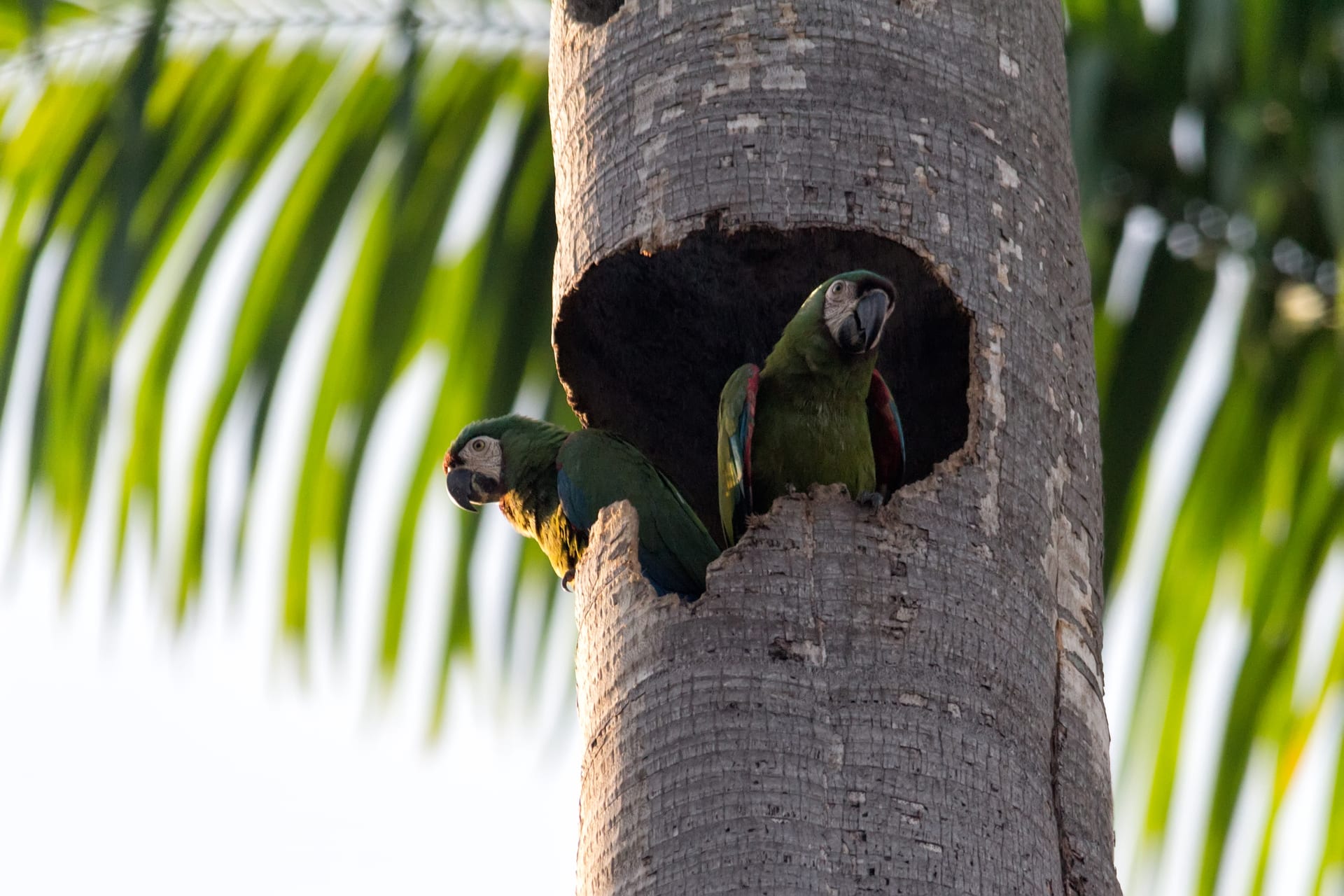
The chestnut-fronted or severe macaw (Ara severus) ranges widely from eastern Panama across northern South America to Amazonian Brazil and central Bolivia. At 45 to 50 cm and 300 to 410 g it is one of the larger of the small macaws known as mini-macaws, with the tail making up roughly half its total length. The plumage is mainly green with patches of red and blue on the wings and a chestnut patch just above the bill. The bill is black and the bare skin around the eye is white, crossed by lines of small black feathers, a feature no other mini-macaw shows. It nests in a hole in a tree, usually laying two or three white eggs; the female incubates for about 28 days and the chicks fledge about 70 days after hatching. The species is gregarious, but birds tend to become more aggressive at sexual maturity, which is how the name severe macaw arose.
Source: Wikipedia (CC BY-SA 4.0)
Lifespan of the Chestnut-fronted Macaw (Severe Macaw)
The Chestnut-fronted Macaw (Severe Macaw) lives 30-80 years.
Reported lifespans range from 30 to 80 years.
Size of the Chestnut-fronted Macaw (Severe Macaw)
The Chestnut-fronted Macaw (Severe Macaw) grows to 45-50cm.
Basic Info
Origin
Eastern Panama to the Guianas, south-western Ecuador, northern Bolivia and Amazonian Brazil
Lifespan
30-80 years
Size
45-50cm
Care Specifications
Semi-aggressivePairBreeding: Moderate
Sources: Wikipedia - Chestnut-fronted macaw (size, weight, morphology, range, lifespan, breeding, temperament) / IOC World Bird List v15.2 (scientific name, authority, English name, range)
References & Sources
Edited & verified by: BreederDirect editorial team
The taxonomic, regulatory, and husbandry data on this page are compiled and verified against the authoritative primary sources below.
Taxonomy & Authority
Accepted name: Ara severus (Linnaeus, 1758)
Synonyms: Psittacus severus, Ara severa, Ara severus castaneifrons
Authority databases: GBIF
Nomenclature follows global taxonomic authority databases.
Regulations & Conservation Status
CITES Appendix IIIUCN LC · Least Concern
Ara severus. CITES lists Psittaciformes spp. as a whole in Appendix II, excluding only Agapornis roseicollis, Melopsittacus undulatus, Nymphicus hollandicus and Psittacula krameri, so this species is covered. International trade in an Appendix II species requires an export permit from the exporting state; it is not among the Appendix I derived species that require registration under Japanese law. The IUCN assesses it as Least Concern. A feral population is established in Florida.
Sources: CITES Appendices (Psittaciformes spp. listed in Appendix II) / Annex to Council Regulation (EC) No 338/97 as amended by Commission Regulation (EU) 2026/1383 (post-CoP20) / IUCN Red List
Regulations may change. Always verify the latest information with the relevant authorities.
Chestnut-fronted Macaw (Severe Macaw) Listings
Loading latest listingsFind listings for this species