Macaw Care Guide | Mental Health Care and Space Requirements for Large Parrots
A comprehensive guide to everything you need to know about keeping macaws. From spacious habitat requirements and mental enrichment unique to large parrots, to nutrition, health management, and legal considerations—a complete guide for first-time macaw owners.
Key Takeaways
A comprehensive guide to everything you need to know about keeping macaws. From spacious habitat requirements and mental enrichment unique to large parrots, to nutrition, health management, and legal considerations—a complete guide for first-time macaw owners.
What You Should Know Before Getting a Macaw
✍️
BreederDirect Editorial
The BreederDirect editorial team specializes in care information for animals, covering veterinary care and breeding to deliver beginner-friendly guides.
Find Birds on BreederDirect
Buy directly from verified breeders
Browse Related Listings
Find Birds listings related to this article on BreederDirect. Buy directly from verified breeders.
Related Tools
Related Articles
Browse by Category
🪸Coral
🐠Marine Fish
🐟Tropical Fish
🐡Goldfish
🐟Medaka
🦎Reptiles
Share
Macaws are large parrots that captivate bird keepers worldwide with their vibrant plumage and high intelligence. While their appeal as pets is undeniable, successful ownership requires ample space, abundant mental stimulation, and a long-term commitment spanning 30 to 50+ years. Impulsive purchases can lead to unfortunate outcomes for both owner and bird. First, understand macaw characteristics thoroughly before deciding to bring one home.
Types and Basic Information About Macaws
Macaws belong to the parrot family and are native to the tropical rainforests of Central and South America. Below are some representative species.
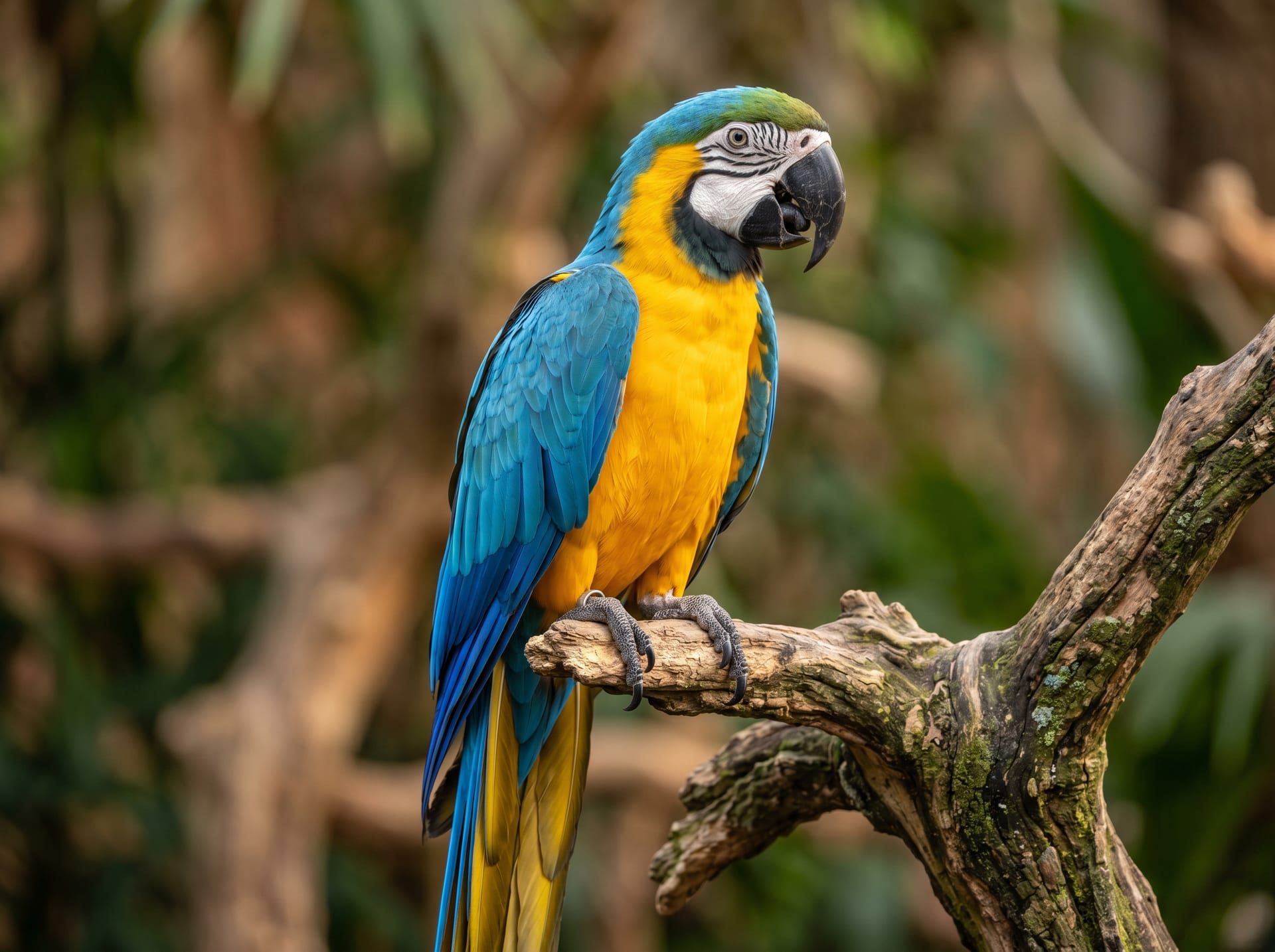
Blue-and-Gold Macaw: Striking blue and yellow plumage. Relatively easy to bond with, making it the No.1 most popular species. Body length approximately 85 cm, lifespan 30-50 years.
Hyacinth Macaw: The largest species with cobalt blue plumage throughout. Body length approximately 100 cm. Extremely expensive and rare.
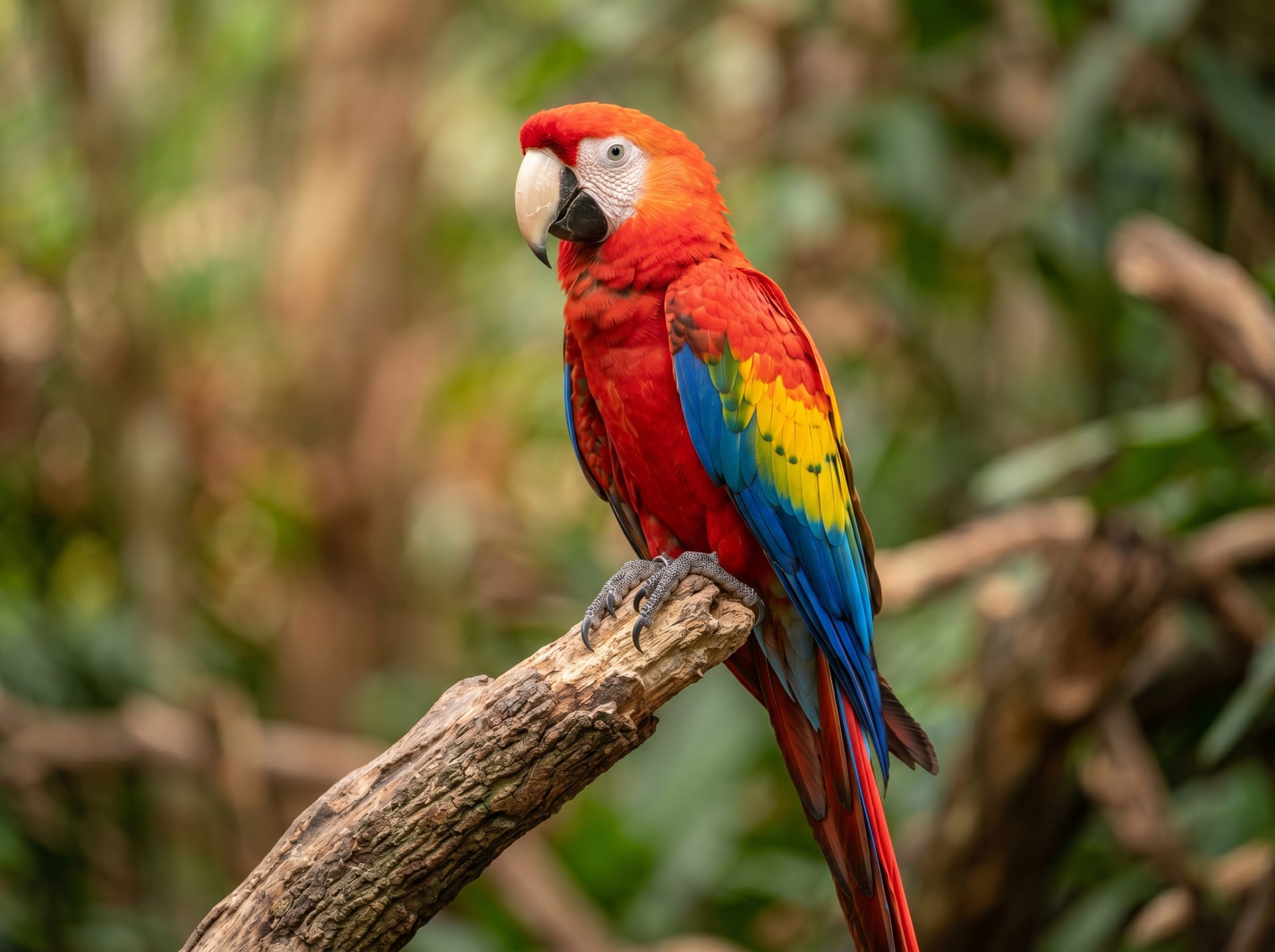
Scarlet Macaw: A classic species with beautiful red, blue, and yellow coloring. Strong-willed and better suited for experienced keepers.
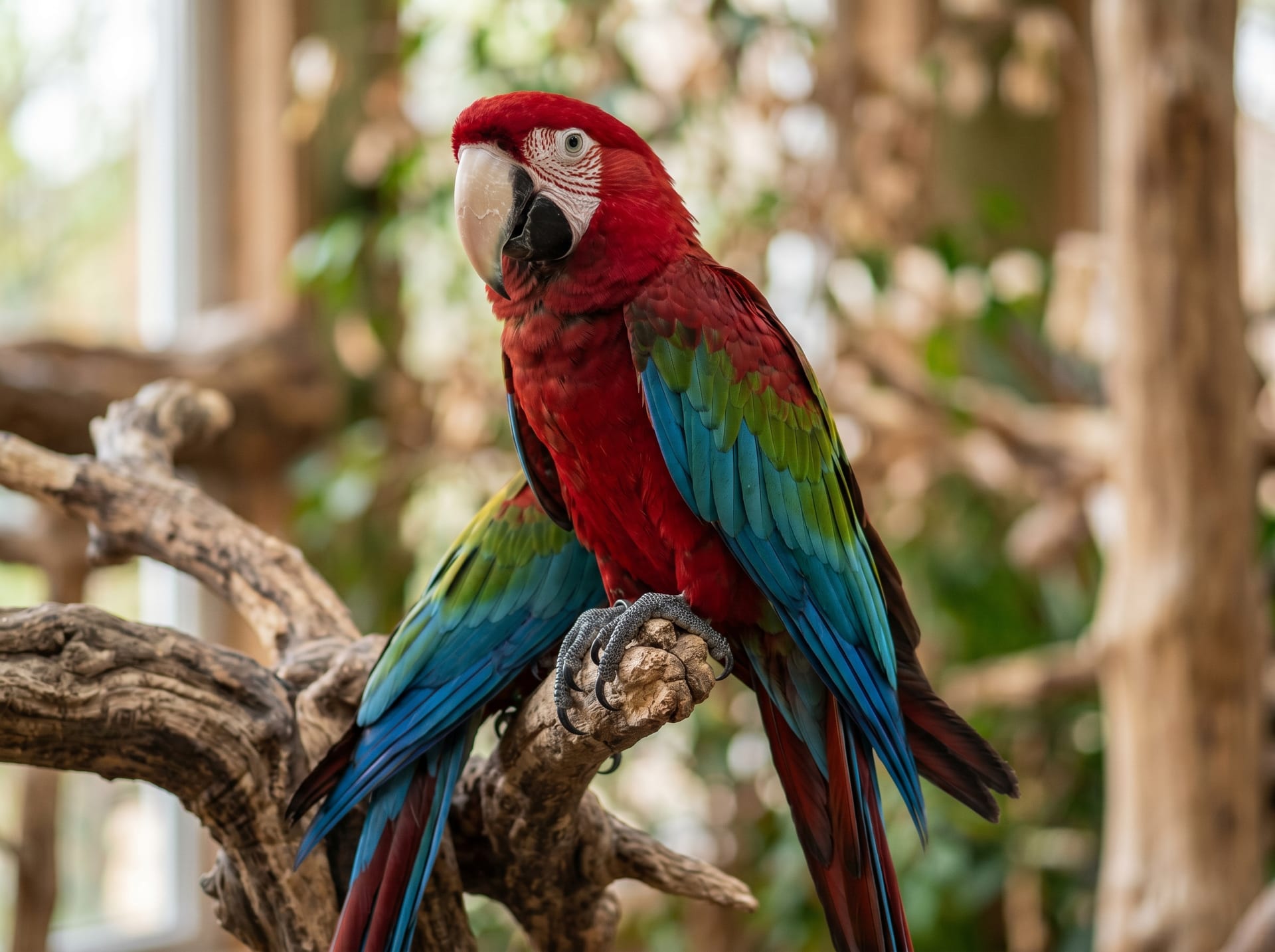
Green-Winged Macaw: A large species with red and green coloring. Known for its gentle temperament and called the "Gentle Giant."
In Japan, many species are regulated by CITES (Convention on International Trade in Endangered Species), and obtaining captive-bred individuals (CB individuals) from domestic breeders is recommended.
Necessary Cage and Space Requirements
Since macaws are large parrots, securing adequate living space is the top priority.
Recommended Cage Size
Minimum: 100 cm wide × 80 cm deep × 150 cm tall or more (for Blue-and-Gold Macaws)
Ideal: 120 cm wide × 100 cm deep × 180 cm tall or more
Large metal cage is essential (stainless steel or zinc-free coated steel)
It is ideal to set up a "bird gym" or "play stand" outside the cage and ensure at least 3-4 hours daily out-of-cage time. Macaws have extremely high activity levels, and constant confinement leads to psychological stress that causes feather plucking and self-biting behaviors.
Room Conditions
Temperature: 20-28°C (avoid sudden temperature changes)
Humidity: 40-60%
Position away from direct sunlight
Absolutely avoid fumes from non-stick cookware, air fresheners, and tobacco—these are fatal
Diet and Nutrition Management
Diet diversity and nutritional balance are key for macaws.
Pellets (50-60%): Use as a complete nutritional staple. Seed-only diets are inadequate due to excessive fat and vitamin deficiency.
Fresh vegetables and fruits (30-40%): Kale, bok choy, carrots, apples, blueberries, etc. Absolutely avoid avocado, onions, and chocolate.
Seeds and nuts (10% or less): Small amounts as treats or training rewards.
Calcium supplementation: Provide cuttlebones or crushed oyster shells as needed.
Large macaws typically consume 100-150 g of food daily. Shifting to a pellet-based diet is key to preventing obesity and promoting longevity.
Mental Care and Enrichment
Macaws are said to have intelligence comparable to a 5-8-year-old child, and insufficient mental stimulation leads to serious behavioral problems.
Foraging toys: Puzzle feeders that hide food to simulate natural foraging behavior.
Destructible toys: Regularly provide wooden or rattan toys. Chewing provides stress relief.
Social interaction: Ensure at least 30 minutes daily of one-on-one training and playtime with the owner.
Training with positive reinforcement to teach basic commands like "step-up," "step-down," and target training deepens the human-bird bond and reduces stress.
Health Management and Legal Considerations
Common Health Issues
Psittacosis (Chlamydia): A zoonotic disease requiring regular fecal screening.
Aspergillosis: A fungal respiratory disease. Prevent through clean housing and proper ventilation.
PBFD (Psittacine Beak and Feather Disease): A viral disease. Confirm through DNA testing of captive-bred individuals.
Feather Destructive Disorder: Caused by stress or dermatological conditions. Requires environmental improvement and veterinary consultation.
Most macaws are listed in CITES Appendices I or II; obtaining captive-bred individuals with CITES certification from reputable breeders is legally safe. Before purchasing, visit the breeder's facility to verify chick socialization and health status.
Conclusion
With proper care, macaws become wonderful lifelong companions. By following four pillars—ample space, nutritionally balanced diet, abundant mental stimulation, and regular veterinary checkups—macaws can enjoy long and happy lives. The joy that their deep bond and remarkable intelligence bring is truly unmatched by other small animals.