Java Sparrow Complete Care Guide | Environment Setup, Diet, Breeding, and Health Management
A beginner-friendly guide to caring for Java Sparrows (Lonchura striata domestica), small finches beloved in Japan for centuries. Covers color varieties including white, silver, and mocha; proper cage selection emphasizing width; temperature management (20-28°C) during winter months; seed-based diet featuring millet, proso millet, and foxtail millet supplemented with leafy greens and cuttlebone; the complete breeding cycle from pairing and nest box setup through egg-laying, incubation, and chick-rearing; nutrition enhancement during molting season; and early treatment of common health issues such as feather fluffing and regurgitation.

Key Takeaways
A beginner-friendly guide to caring for Java Sparrows (Lonchura striata domestica), small finches beloved in Japan for centuries. Covers color varieties including white, silver, and mocha; proper cage selection emphasizing width; temperature management (20-28°C) during winter months; seed-based diet featuring millet, proso millet, and foxtail millet supplemented with leafy greens and cuttlebone; the complete breeding cycle from pairing and nest box setup through egg-laying, incubation, and chick-rearing; nutrition enhancement during molting season; and early treatment of common health issues such as feather fluffing and regurgitation.
Related Species
About Java Sparrows
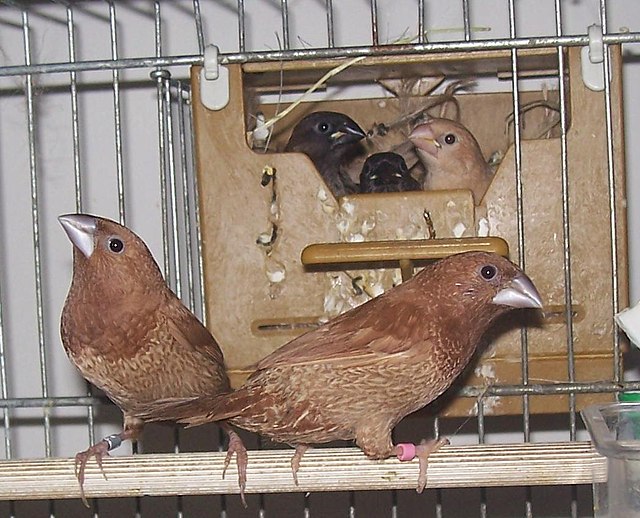
Java Sparrows (Lonchura striata domestica) are finches originally developed from the Bengalese finch (Lonchura striata) through selective breeding in China and Japan. As a selectively bred variety with a history spanning over 300 years, they have long been cherished as pets in Japan due to their gentle temperament, hardiness, and ease of breeding.
Characteristics of Java Sparrows
| Item | Details |
|---|---|
| Body Length | Approximately 12-13 cm |
| Lifespan | Average 5-8 years (some individuals live over 10 years) |
| Temperament | Gentle, social, relatively easy to tame |
| Vocalization | Soft chirps ("chun chun," "chiri chiri"), not loud |
| Difficulty Level | Beginner-friendly (among the easiest finches to care for) |
Main Varieties (Color Variations)
| Variety | Color Characteristics |
|---|---|
| White (including albino) | Entirely white |
| Silver | Gray to light silver |
| Mocha | Brownish beige |
| Pied | White and colored patches |
| Cream | Light cream color |
| Normal (natural color) | Brown to dark brown (similar to Bengalese finch) |
Preparing the Habitat
Choosing a Cage
Although Java Sparrows are small finches, they exercise through flight. A cage with good width is ideal rather than focusing on height.
Recommended Cage Sizes
| Number of Birds | Minimum Cage Size |
|---|---|
| 1-2 birds | W45cm × D30cm × H40cm |
| 3-4 birds (breeding pair) | W60cm × D40cm × H50cm |
| 5 or more birds (colony) | Large cage 90cm+ width |
Materials: Stainless steel cages excel in cleanliness and durability. Wooden cages are prone to harboring mites and bacteria, so caution is needed.
Perches: Install multiple natural wood perches (cherry, cork, etc.) at different heights. Avoid plastic round perches as they hinder foot muscle development.
Temperature Management
Java Sparrows are sensitive to cold, so proper heating is important.
Appropriate Temperature: 20-28°C (ideal: 23-26°C)
Winter Heating: Use a pet heater (60W heating bulb, far-infrared panel heater, etc.). Avoid heating the entire cage; instead, create both a warm area where birds can huddle and a cooler area.
Thermometer: Install a thermometer to monitor cage temperature continuously and prevent sudden fluctuations.
Maintaining Cleanliness
Line the cage bottom with newspaper or paper sheets, changing daily. Wipe perches clean 1-2 times weekly. Wash water and food dishes daily.
Diet and Nutrition
Primary Diet
Seed-based diet (grain-centered) is the foundation.
Recommended Java Sparrow Seed Mix
| Seed Type | Nutritional Role |
|---|---|
| Millet | Carbohydrates and energy source (most preferred) |
| Proso Millet | Easily digestible staple |
| Foxtail Millet | B vitamins |
| Canary Seed | Protein and fat |
Using commercial finch seed mixes (specifically labeled for Java Sparrows or finches) is the most convenient option.
Supplementary Foods
| Food | Role | How to Provide |
|---|---|---|
| Komatsuna and bok choy (leafy greens) | Vitamin and mineral supplement | 2-3 times weekly, finely chopped |
| Boiled egg yolk | Protein supplement (important during molting and laying) | Several times monthly, small amounts |
| Cuttlebone powder (oyster shell powder) | Calcium supplement | Always available |
| Nekton (vitamin supplement) | Complete vitamin | Dissolved in water, once weekly |
| Egg yolk food | Protein and vitamin supplement | 2-3 times weekly |
Foods to Avoid
- Avocado (toxic and potentially fatal)
- Onions and garlic (can cause hemolytic anemia)
- High-salt foods and chocolate
- Strong spices
Breeding
Java Sparrows are relatively easy to breed finches that will naturally lay eggs and raise chicks in an appropriate environment.
Pairing and Sex Determination
Unfortunately, Java Sparrows are visually almost identical between males and females, making visual sex determination extremely difficult.
Sex Determination Tips
- Behavioral clues: Males perform courtship displays in front of females, including rubbing their beaks together (the beak dance)
- DNA sex testing: For definitive sex determination, DNA testing at an avian veterinary clinic is effective
- Confirmation at pet store: If purchasing as a pair, confirm with store staff
Nesting, Egg-laying, and Incubation
Breeding Nest Box: Install a small bird nest box (wooden or straw) in the cage. Place nesting materials (straw, coconut fiber, cotton, etc.) and the birds will build their nest.
Clutch Size: Typically lays 4-8 eggs per clutch
Incubation: Eggs hatch approximately 14-16 days after incubation begins
Chick-rearing (parental feeding): Chicks fledge approximately 3 weeks after hatching. Parent birds regurgitate crop contents to feed the chicks.
Important: Over-breeding exhausts parent birds. It's crucial to practice "clutch limitation" by removing nest boxes to suppress breeding, limiting breeding to 2-3 clutches per year.
Health Management and Disease
Molting: Occurs 1-2 times per year (spring and fall). During molting, proper nutrition (protein and vitamin supplementation) and warmth are crucial.
Common Diseases and Treatment
| Symptom | Suspected Illness | Treatment |
|---|---|---|
| Fluffed feathers (feathers puffed up, bird inactive) | General illness or infection | Provide warmth (30-32°C) and seek veterinary care immediately |
| Vomiting or crop infection | Bacterial or Candida infection | Seek veterinary care immediately |
| Poor circulation in feet | String or hair wrapped around feet | Remove and seek veterinary care |
| Lethargy and loss of appetite | Various causes | Provide warmth immediately and seek veterinary care |
| Nasal discharge or sneezing | Respiratory infection | Provide warmth and seek veterinary care |
Regular Check-ups: Annual visits to an avian veterinary clinic are recommended.
Although Java Sparrows are small finches, they are social and prefer living in groups, allowing you to observe more natural behaviors when keeping multiple birds. With their quiet vocalizations and ease of breeding, they are one of the most recommended species for those beginning to keep finches. With proper heating and nutrition management, you can enjoy their company for many years to come.