Source: Wikimedia Commons
Burrowing Parrot
AdvancedCyanoliseus patagonus
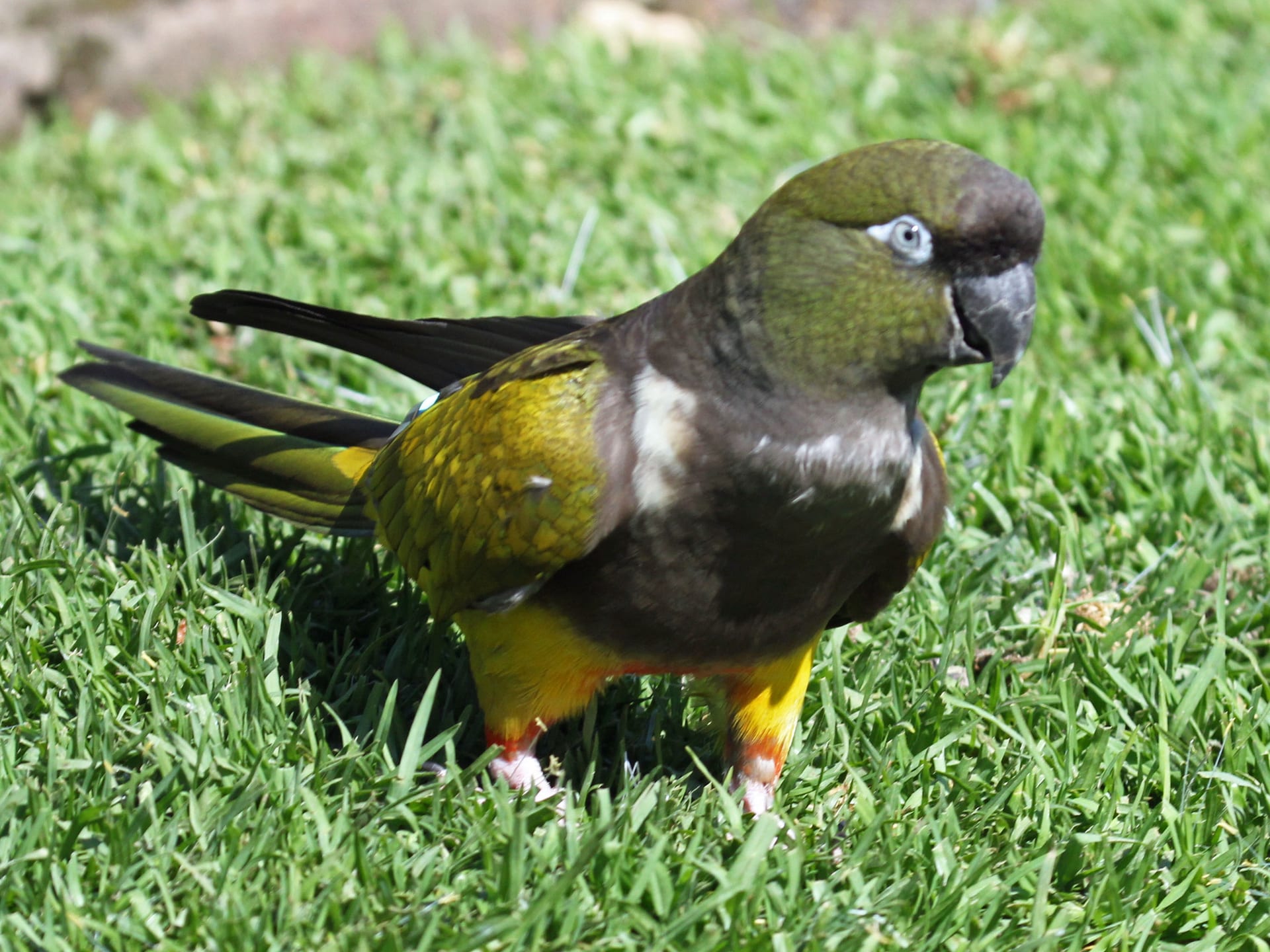
A large South American parrot that excavates nesting burrows in cliffs and breeds colonially. Olive-brown above with contrasting red and yellow underparts, it is the largest of the New World parakeets known as conures.
Difficulty
Advanced
Temperature
15〜30℃
Lifespan
Up to 35 years
Size
39-52cm (including tail)
Humidity
40〜60%
Diet
Soaked or sprouted sunflower seed, maize, beans, whole rice, vegetables, fruit
About
The burrowing parrot (Cyanoliseus patagonus) occurs in Argentina and Chile and is the sole member of the genus Cyanoliseus, with four recognised subspecies. It is 39-52 cm long, the tail alone reaching 21-26 cm, making it the largest of the New World parakeets called conures. It has a white eye-ring and post-ocular patch, an olive-brown head and upper back, a grey-brown breast with a whitish marking, and red on the thighs and central belly. True to its name, it digs long burrows in cliff faces and ravines and breeds in large colonies, inhabiting dry open country up to 2,000 m. In aviculture it is traded as the Patagonian conure and is valued for its playful, gentle nature and mimicry. It needs room to fly.
Source: Wikipedia (CC BY-SA 4.0)
Lifespan of the Burrowing Parrot
The Burrowing Parrot lives Up to 35 years.
Size of the Burrowing Parrot
The Burrowing Parrot grows to 39-52cm (including tail).
Males weigh 253-340 g and females 227-304 g.
Basic Info
Origin
Throughout Argentina and central Chile; some populations move north to southern Uruguay in winter
Lifespan
Up to 35 years
Size
39-52cm (including tail)
Temperature
15〜30℃
Care Specifications
References & Sources
Edited & verified by: BreederDirect editorial team
The taxonomic, regulatory, and husbandry data on this page are compiled and verified against the authoritative primary sources below.
Taxonomy & Authority
Accepted name: Cyanoliseus patagonus (Vieillot, 1818)
Synonyms: Psittacus patagonicus
Authority databases: GBIF
Nomenclature follows global taxonomic authority databases.
Regulations & Conservation Status
CITES Appendix IIIUCN LC · Least Concern
Cyanoliseus patagonus. The order Psittaciformes is listed as a whole in CITES Appendix II.
Sources: CITES Appendices (Psittaciformes spp. listed in Appendix II) / IUCN Red List
Regulations may change. Always verify the latest information with the relevant authorities.
Burrowing Parrot Listings
Loading latest listingsFind listings for this species