Source: Wikimedia Commons
Ruppell's Parrot
IntermediatePoicephalus rueppellii
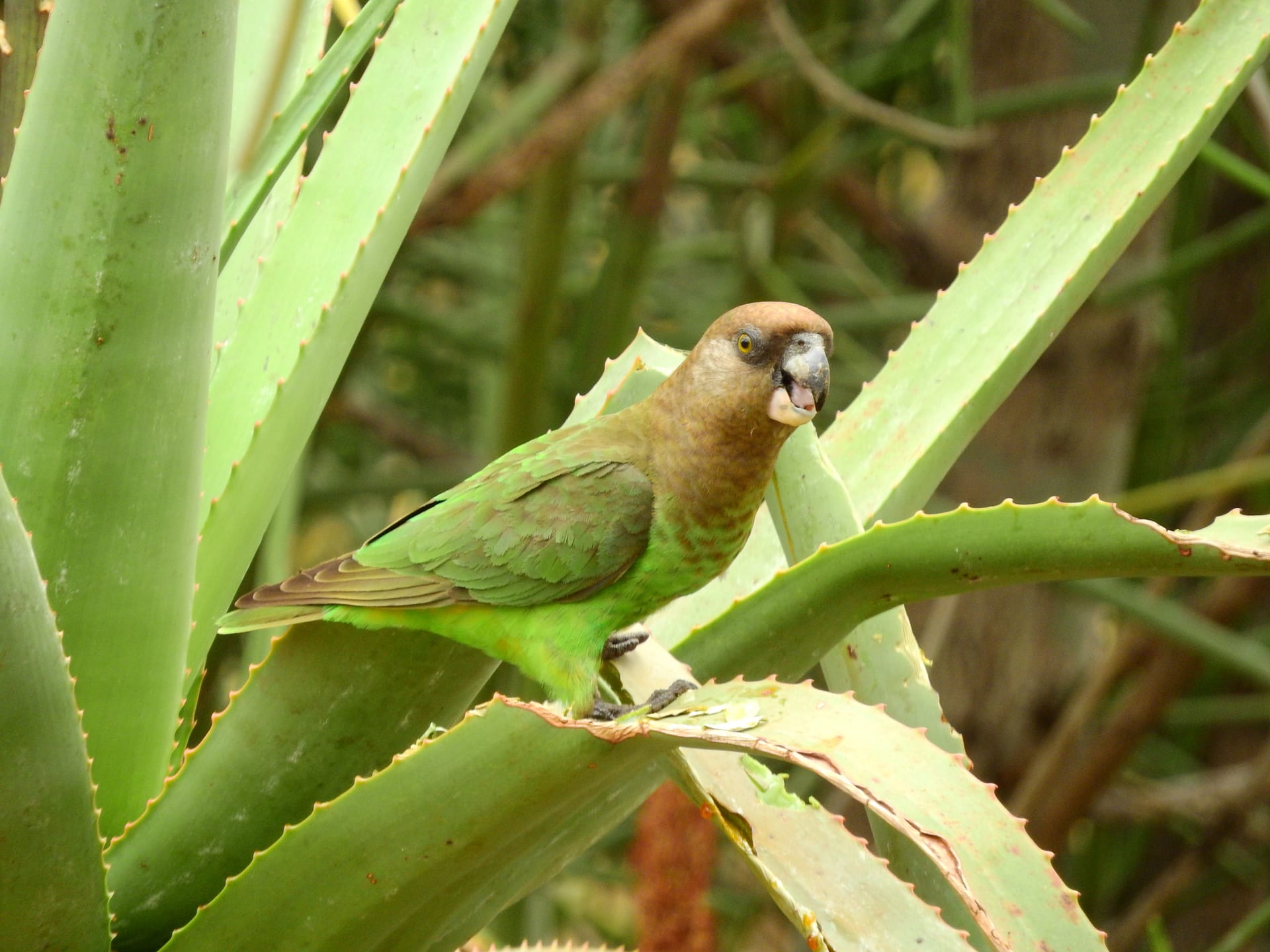
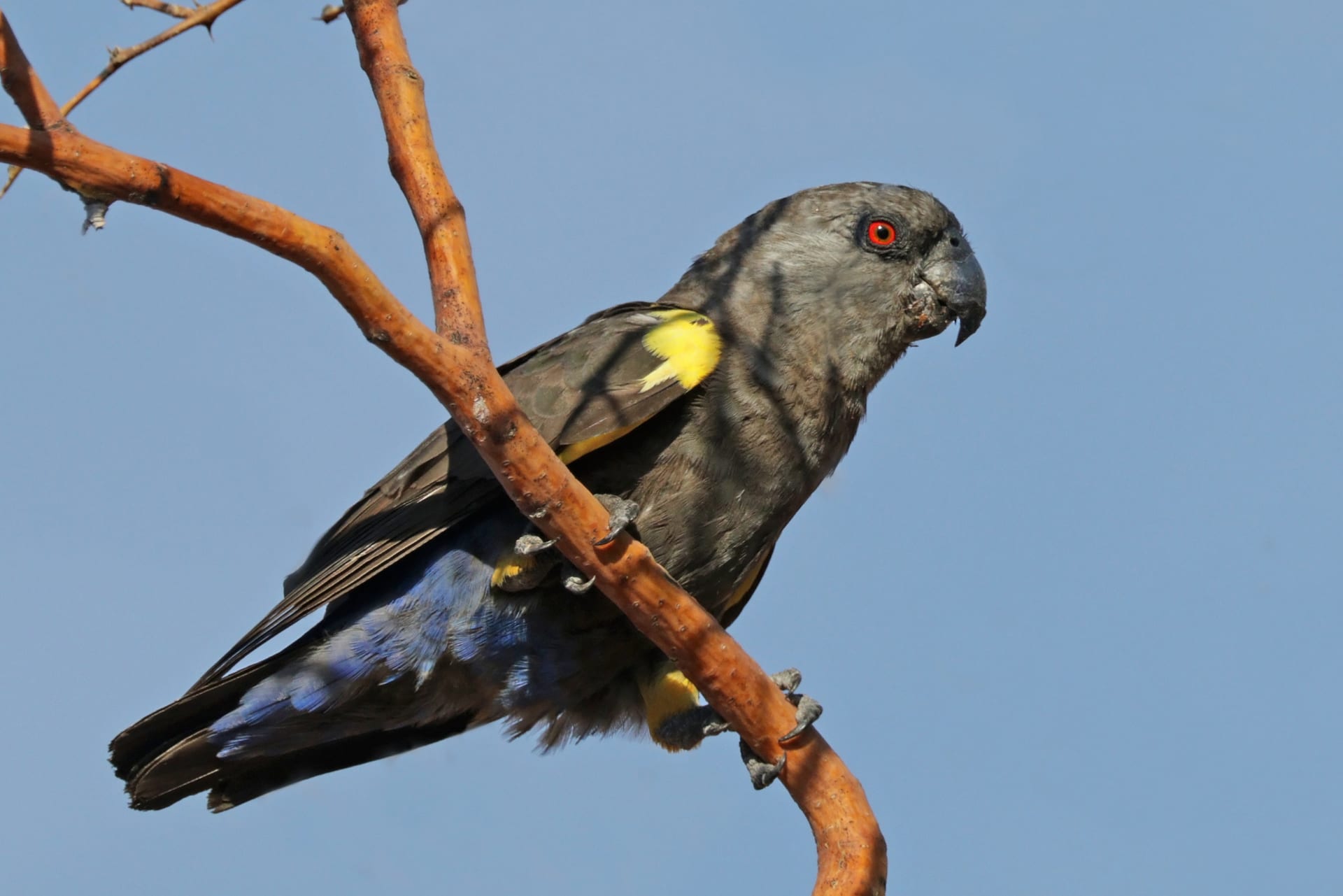
A small parrot 22-25 cm long, greyish-brown with yellow at the bend of the wing and on the thighs. Adult females have a blue lower back and rump that males lose on maturing, so the sexes can be told apart. It is endemic to the Namibia region.
Difficulty
Intermediate
Temperature
15〜30℃
Lifespan
25-35 years
Size
22-25cm (105-156g)
Humidity
40〜60%
Diet
Mixed seed, nuts, fruit, greens, vegetables and pellets
About
Ruppell's parrot (Poicephalus rueppellii) is endemic to southwestern Africa from central Namibia to southwest Angola. Both adult males and females have yellow feathers on the leading edge of the wings and covering the upper legs, though in immature birds the yellow is dull or missing. The species is sexually dimorphic: adult females have blue feathers on the lower back and rump, while males lose that blue colouring as they mature - unusual among Poicephalus parrots, which are generally hard to sex by sight. It lives in well-developed dry acacia woodland along watercourses, and also in dry Euphorbia forest, Brachystegia woodland, Adansonia-dominated thornveld and montane Commiphora and acacia formations where it extends upslope, generally little above 1,500 m. In captivity a walk-in aviary 2.1 m long, or an indoor cage at least 1.8 m long, is recommended. Clutches are of three to five eggs with fledging at about nine weeks, and the species is rare in the trade.
Source: Wikipedia (CC BY-SA 4.0)
Lifespan of the Ruppell's Parrot
The Ruppell's Parrot lives 25-35 years.
Size of the Ruppell's Parrot
The Ruppell's Parrot grows to 22-25cm (105-156g).
It is 22-25 cm long and weighs 105-156 g depending on the source.
Basic Info
Origin
Southwestern Africa, from central Namibia to southwest Angola
Lifespan
25-35 years
Size
22-25cm (105-156g)
Care Specifications
PeacefulPair
Sources: World Parrot Trust Parrot Encyclopedia / Wikipedia - R%C3%BCppell's_parrot
References & Sources
Edited & verified by: BreederDirect editorial team
The taxonomic, regulatory, and husbandry data on this page are compiled and verified against the authoritative primary sources below.
Taxonomy & Authority
Accepted name: Poicephalus rueppellii (G. R. Gray, 1849)
Synonyms: Pionias rueppellii
Authority databases: GBIF
Nomenclature follows global taxonomic authority databases.
Regulations & Conservation Status
CITES Appendix IIIUCN LC · Least Concern
Poicephalus rueppellii. The order Psittaciformes is listed in CITES Appendix II except for species placed in Appendix I, so this species is Appendix II and international trade requires an export permit.
Sources: CITES Appendices (Appendix II) / IUCN Red List
Regulations may change. Always verify the latest information with the relevant authorities.
Ruppell's Parrot Listings
Loading latest listingsFind listings for this species