Source: Wikimedia Commons
Australian King Parrot
AdvancedAlisterus scapularis
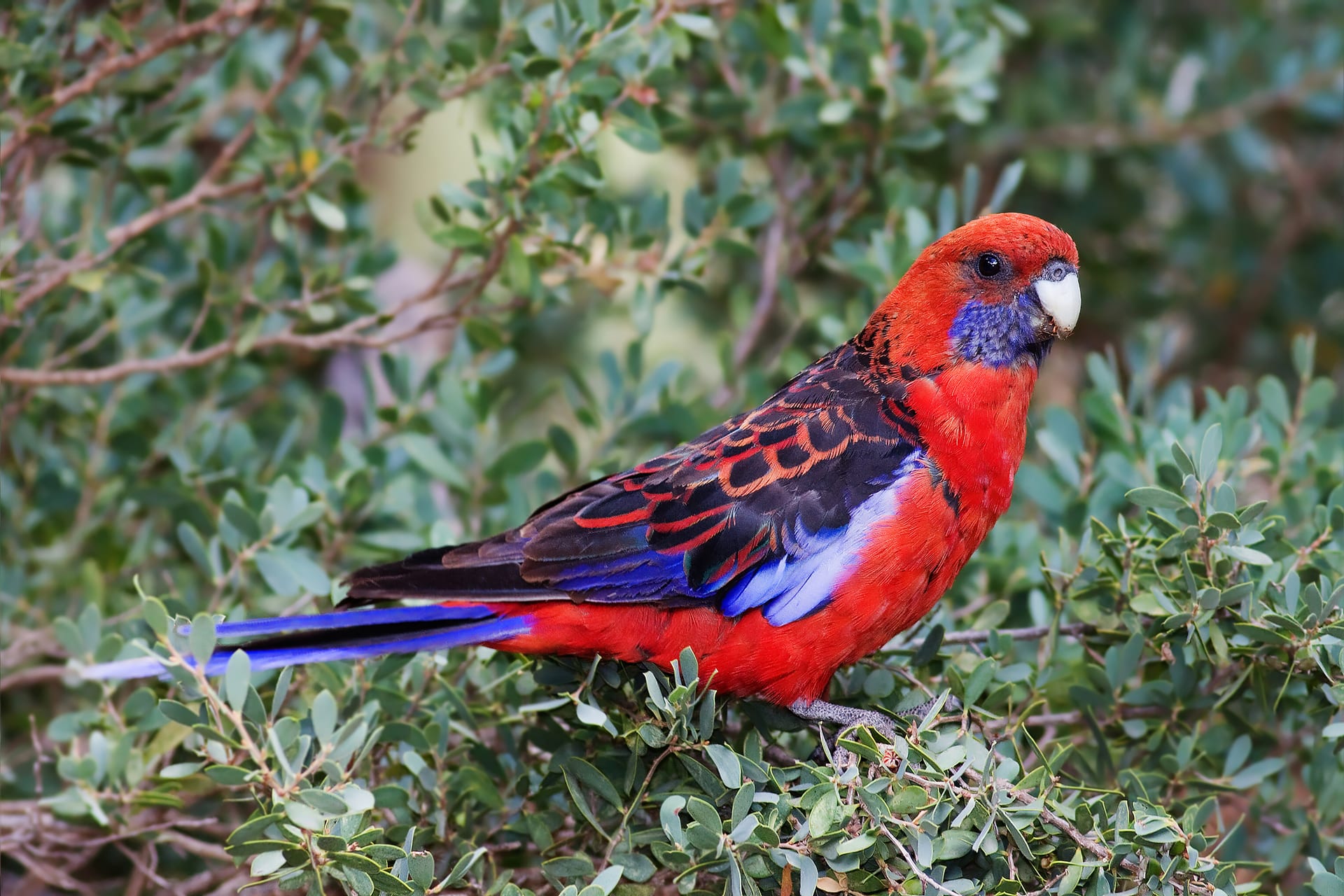
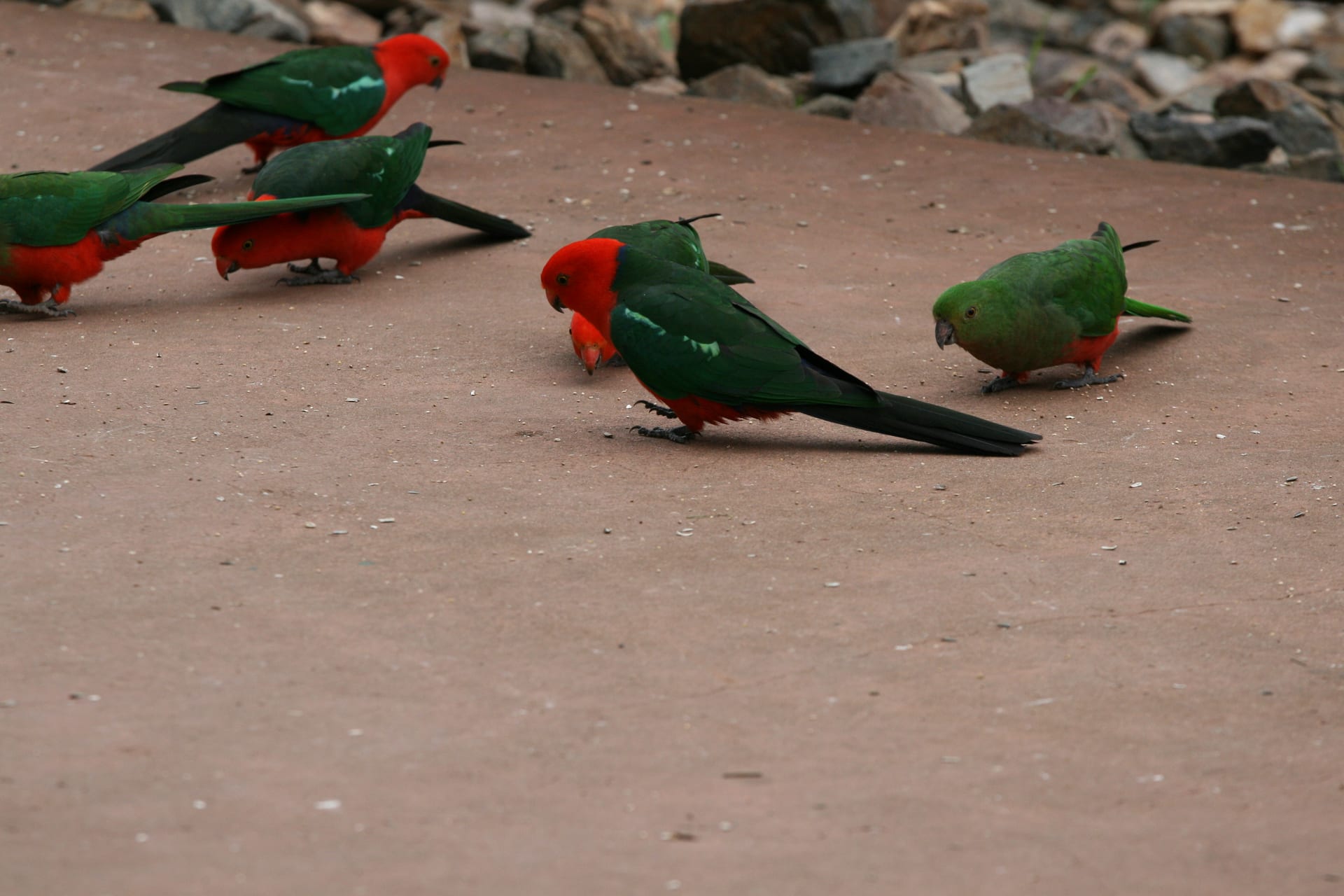
A large parrot 43 cm long; the male has a crimson head and breast with a green back and wings.
Difficulty
Advanced
Temperature
15〜30℃
Lifespan
20-25 years
Size
43cm including the long broad tail (195-275g)
Humidity
40〜60%
Diet
Mixed seed, spray millet, pulses, greens, fruit and vegetables, nuts and pellets
About
The Australian king parrot (Alisterus scapularis) is endemic to eastern Australia from Cooktown in Queensland to Port Campbell in Victoria. The male has a red head, breast and lower underparts, a blue band on the back of the neck between the red above and the green back, green wings each with a pale green shoulder band, a green tail and a blue rump; the upper mandible is reddish-orange with a black tip, the lower black with an orange base, and the irises are yellow. The female has a green head, so the sexes are easily distinguished. It occurs to 1,625 m in humid, heavily forested upland country, using eucalypt woodland in and beside subtropical and temperate rainforest. In the breeding season birds move into denser wet sclerophyll forest, gullies and savanna woodland; outside it they visit cultivated land, parks, orchards and gardens. In captivity a walk-in flight 3 m long is recommended, with clutches of three to six eggs and fledging at five weeks.
Source: Wikipedia (CC BY-SA 4.0)
Lifespan of the Australian King Parrot
The Australian King Parrot lives 20-25 years.
Size of the Australian King Parrot
The Australian King Parrot grows to 43cm including the long broad tail (195-275g).
Adults of both sexes are about 43 cm long including the long, broad tail, and weigh 195-275 g.
Basic Info
Origin
Eastern Australia, from Cooktown in Queensland to Port Campbell in Victoria
Lifespan
20-25 years
Care Specifications
Semi-aggressivePair
Sources: World Parrot Trust Parrot Encyclopedia / Wikipedia - Australian king parrot
References & Sources
Edited & verified by: BreederDirect editorial team
The taxonomic, regulatory, and husbandry data on this page are compiled and verified against the authoritative primary sources below.
Taxonomy & Authority
Accepted name: Alisterus scapularis (Lichtenstein, 1816)
Synonyms: Psittacus scapularis, Aprosmictus scapularis
Authority databases: GBIF
Nomenclature follows global taxonomic authority databases.
Regulations & Conservation Status
CITES Appendix IIIUCN LC · Least Concern
Alisterus scapularis. The order Psittaciformes is listed in CITES Appendix II except for species placed in Appendix I, so this species is Appendix II and international trade requires an export permit.
Sources: CITES Appendices (Appendix II) / IUCN Red List
Regulations may change. Always verify the latest information with the relevant authorities.
Australian King Parrot Listings
Loading latest listingsFind listings for this species