Source: Wikimedia Commons
Eastern Bluebonnet
IntermediateNorthiella haematogaster
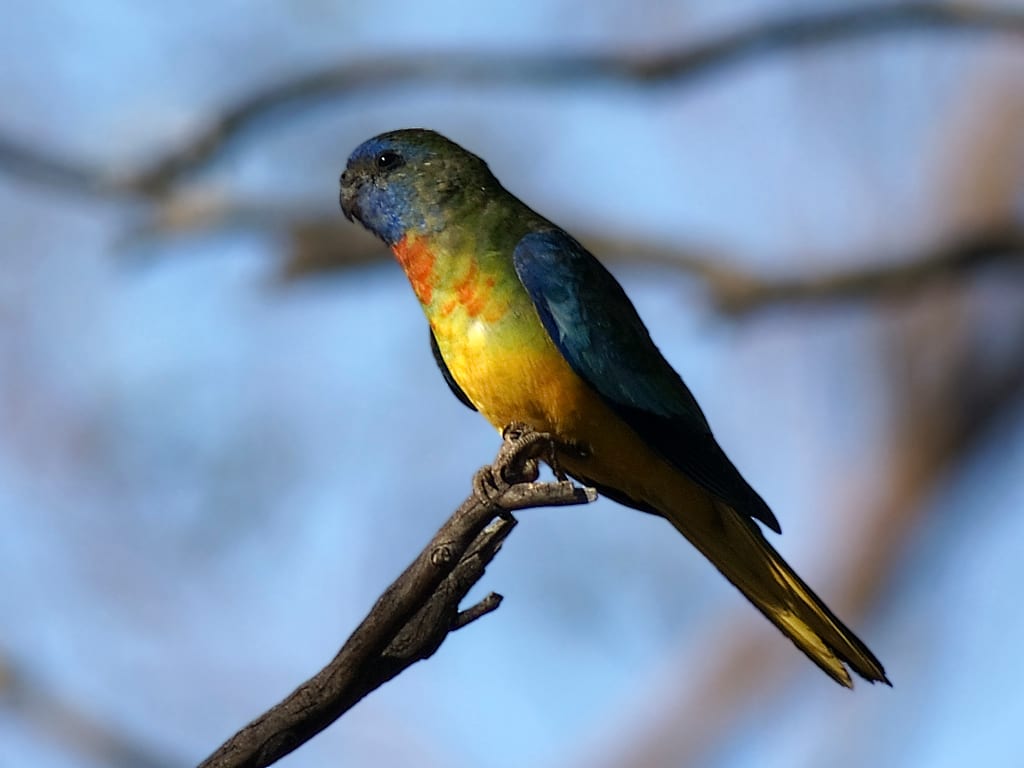
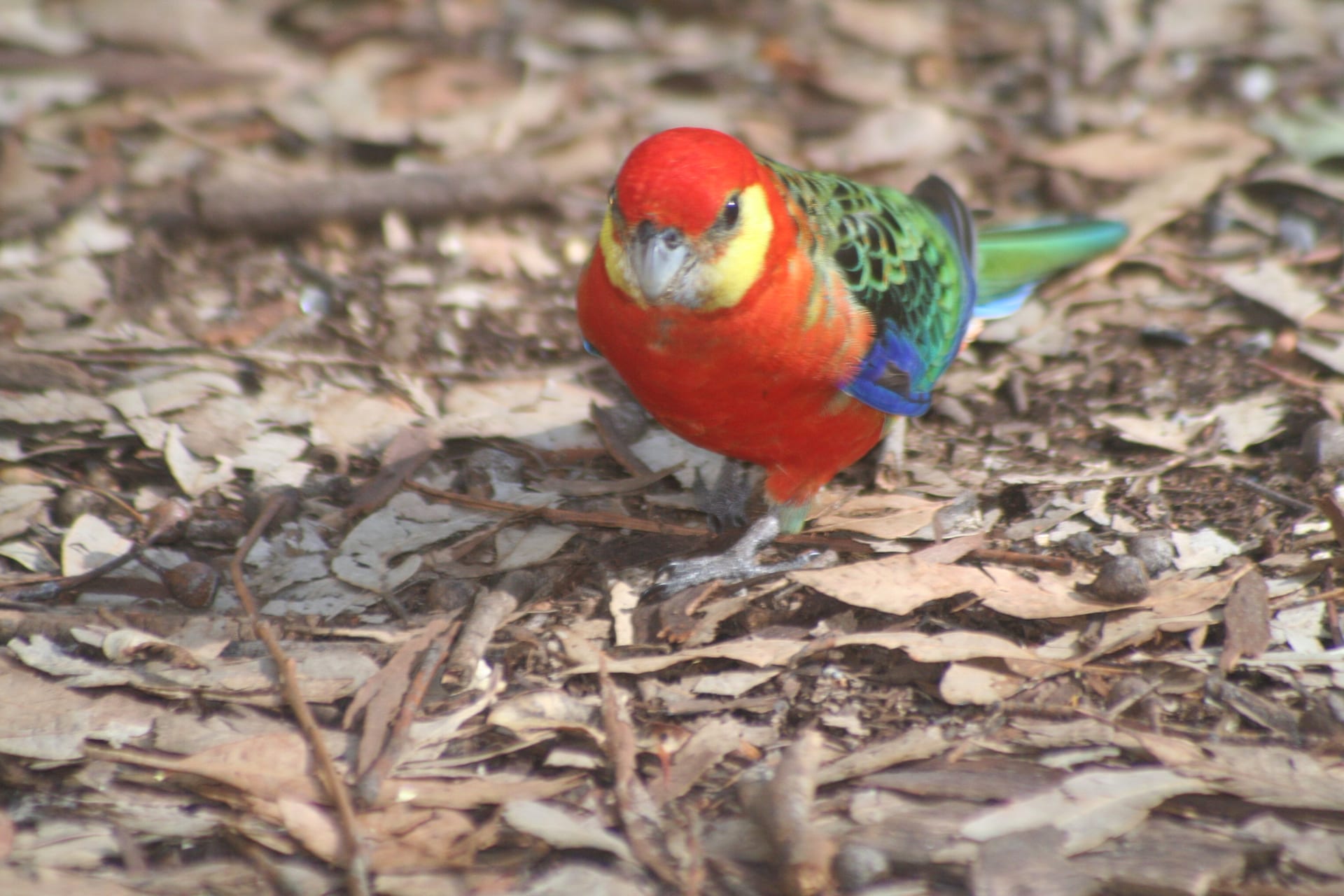
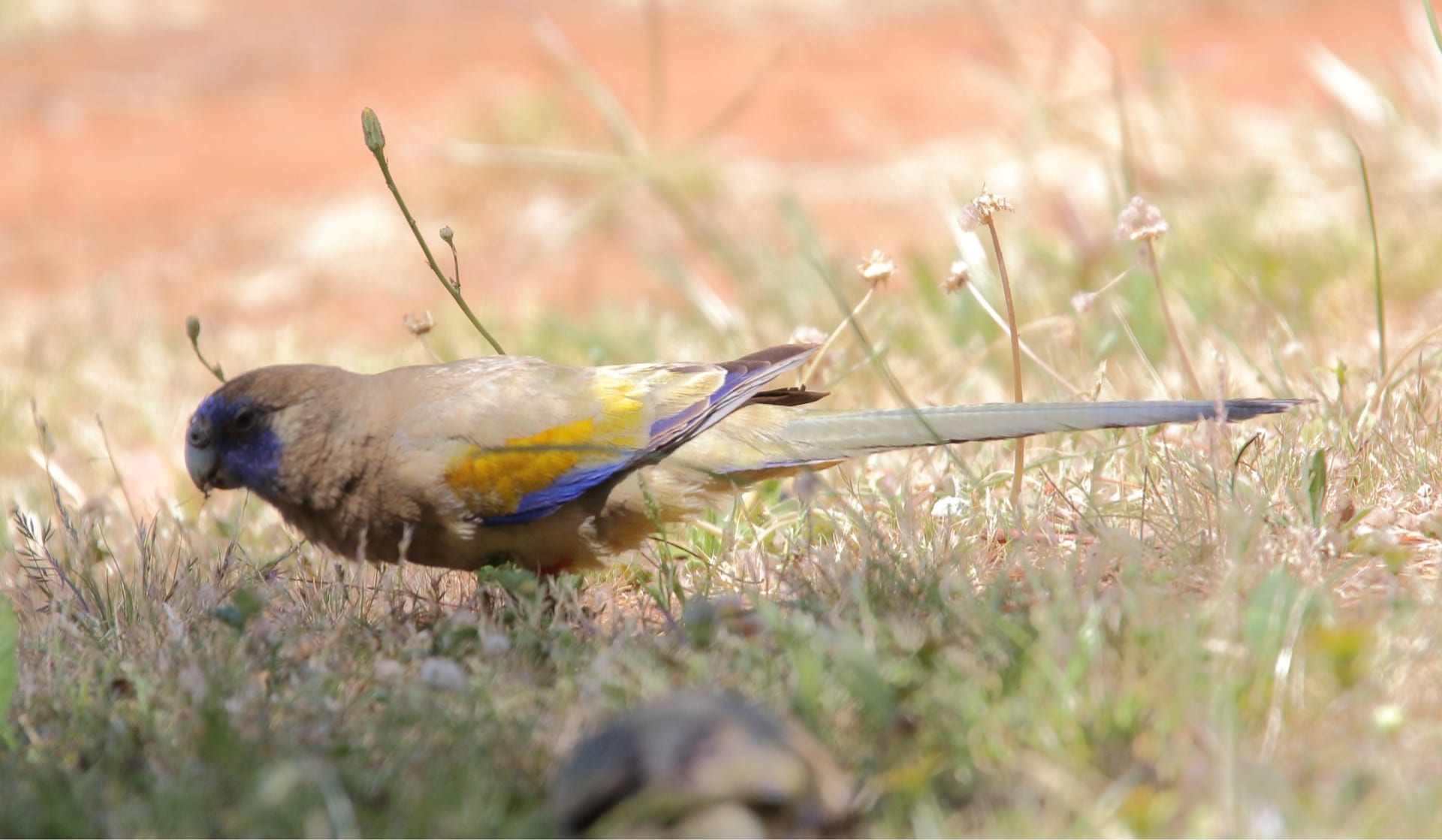
A medium parrot 26-35 cm long, marked by a blue face, blue wings and red or yellow on the belly. Adapted to semi-arid inland Australia, its three subspecies differ sharply in belly colour, and it chews hard.
Difficulty
Intermediate
Temperature
15〜30℃
Lifespan
15 years or more
Size
Males 28-35cm, females 26-32cm (65-105g)
Humidity
40〜60%
Diet
Small seeds, greens, seeding grasses, fruit and vegetables, and pellets
About
The bluebonnet (Northiella haematogaster) is a medium-sized parrot of the interior of southeastern and south-central Australia. A blue face and blue wings stand out, and the belly carries red or yellow patches. It is adapted to semi-arid country but also flourishes in areas of moderate rainfall at the eastern and southern edges of its range. Three distinct subspecies are recognised, and belly colour varies considerably between them. In captivity a walk-in flight 3 m long is recommended, with a vertical nest box about 15 x 15 x 41 cm. The birds enjoy bathing and scratching about in sand or soil, so a sand area is worth providing, and as strong chewers they should have unsprayed flowering, fir, pine or willow branches. Clutches are of five to six eggs and young fledge in five weeks.
Source: Wikipedia (CC BY-SA 4.0)
Lifespan of the Eastern Bluebonnet
The Eastern Bluebonnet lives 15 years or more.
Size of the Eastern Bluebonnet
The Eastern Bluebonnet grows to Males 28-35cm, females 26-32cm (65-105g).
Males are 28-35 cm long and females 26-32 cm, and both weigh 65-105 g.
Basic Info
Origin
Australia (the interior of the southeast and south-centre)
Lifespan
15 years or more
Size
Males 28-35cm, females 26-32cm (65-105g)
Care Specifications
Semi-aggressivePair
Sources: World Parrot Trust Parrot Encyclopedia / Wikipedia - Greater bluebonnet
References & Sources
Edited & verified by: BreederDirect editorial team
The taxonomic, regulatory, and husbandry data on this page are compiled and verified against the authoritative primary sources below.
Taxonomy & Authority
Accepted name: Northiella haematogaster (Gould, 1838)
Synonyms: Psephotus haematogaster, Psephotellus haematogaster
Authority databases: GBIF
Nomenclature follows global taxonomic authority databases.
Regulations & Conservation Status
CITES Appendix IIIUCN LC · Least Concern
Northiella haematogaster. The order Psittaciformes is listed in CITES Appendix II except for species placed in Appendix I, so this species is Appendix II and international trade requires an export permit.
Sources: CITES Appendices (Appendix II) / IUCN Red List
Regulations may change. Always verify the latest information with the relevant authorities.
Eastern Bluebonnet Listings
Loading latest listingsFind listings for this species