Source: Wikimedia Commons
Scarlet-chested Parrot
IntermediateNeophema splendida
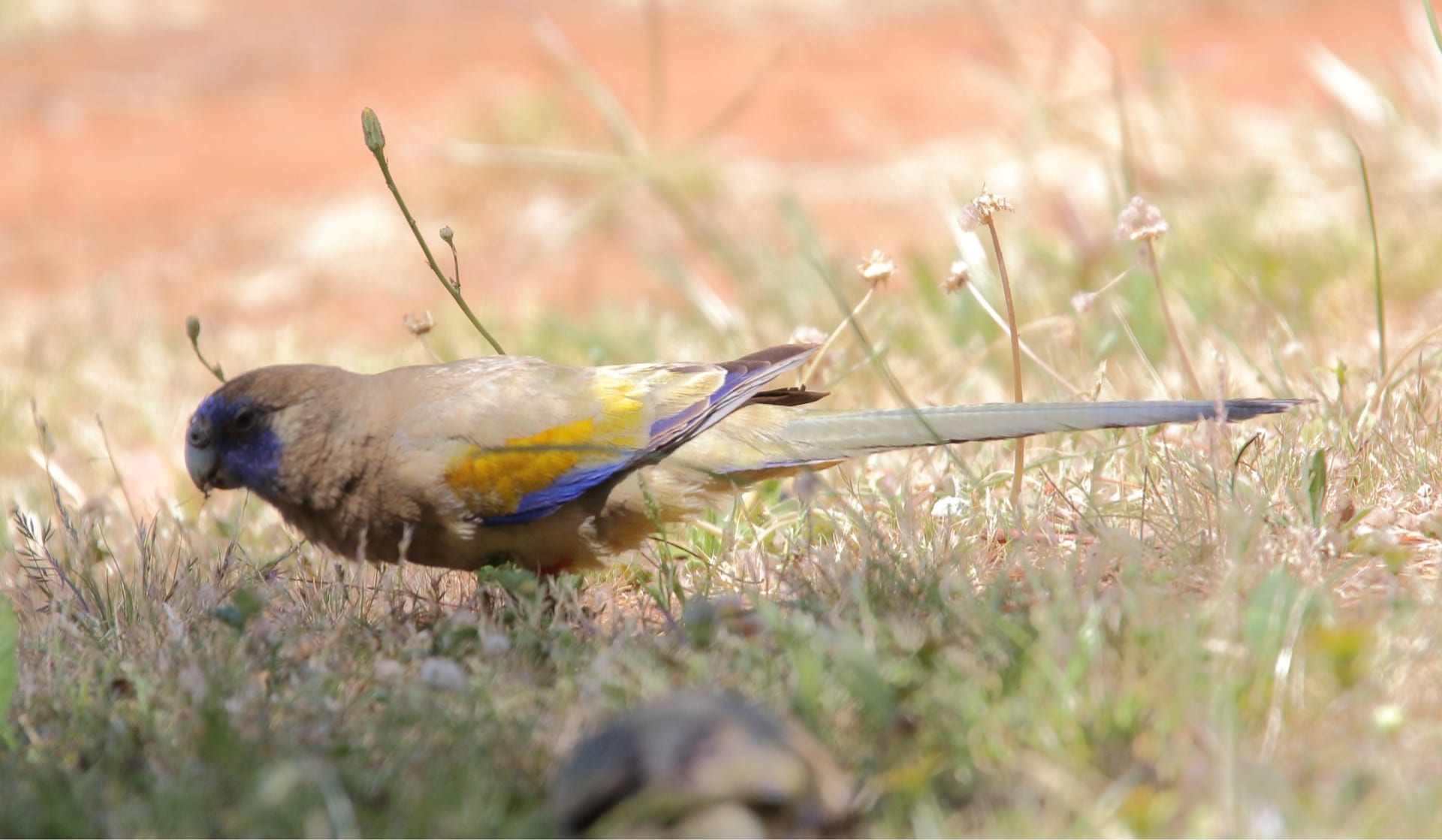
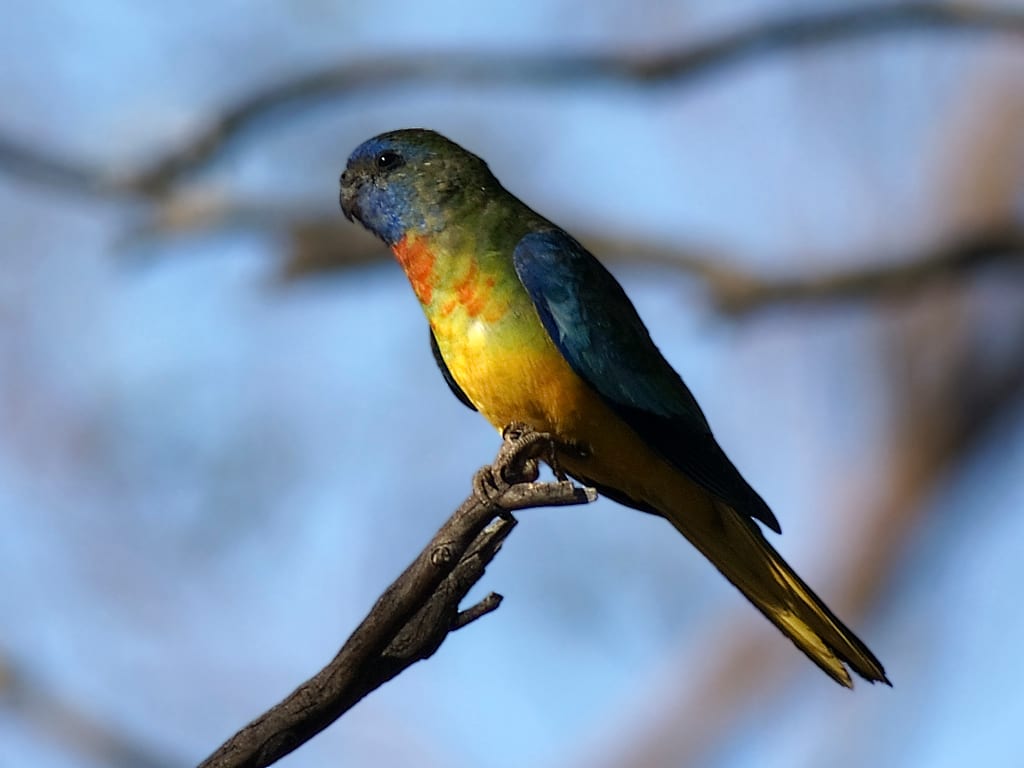
A small parrot 19-21 cm long; the male has a deep blue face and a brilliant scarlet breast. Endemic to arid inland Australia, it feeds on grass seed on the ground, and the sexes differ markedly - the female lacks the scarlet breast.
Difficulty
Intermediate
Temperature
15〜30℃
Lifespan
About 10 years
Size
19-21cm (36-44g)
Humidity
40〜60%
Diet
Small seeds (canary seed, millet, small amounts of oats, buckwheat and safflower), greens, seeding grasses and pellets
About
The scarlet-chested parrot (Neophema splendida) is a small parrot endemic to central South Australia and inland southern Western Australia. It lives in arid mallee and mulga scrub with sparse spinifex cover, favouring recently burnt ground, feeds on grass seed on the ground, and forms large flocks outside the breeding season. In captivity a walk-in flight of at least 2.1 m, or 1.8 m indoors, is recommended, with clean sand or soil to satisfy its habit of scratching about. Clutches are of four to six eggs and young fledge in four to five weeks. In Japan it is also traded under a name that properly belongs to the related Neophema pulchella, so buyers do best to confirm the scientific name.
Source: Wikipedia (CC BY-SA 4.0)
Lifespan of the Scarlet-chested Parrot
The Scarlet-chested Parrot lives About 10 years.
Size of the Scarlet-chested Parrot
The Scarlet-chested Parrot grows to 19-21cm (36-44g).
It is 19-21 cm long and weighs 36-44 g, and the sexes differ: the male has a deep blue head and face, a brilliant scarlet breast and a yellow belly, while the female lacks the scarlet.
Basic Info
Origin
Australia (central South Australia and inland southern Western Australia)
Lifespan
About 10 years
Size
19-21cm (36-44g)
Care Specifications
PeacefulPair
Sources: World Parrot Trust Parrot Encyclopedia / Wikipedia - Scarlet-chested parrot
References & Sources
Edited & verified by: BreederDirect editorial team
The taxonomic, regulatory, and husbandry data on this page are compiled and verified against the authoritative primary sources below.
Taxonomy & Authority
Accepted name: Neophema splendida (Gould, 1841)
Synonyms: Euphema splendida
Authority databases: GBIF
Nomenclature follows global taxonomic authority databases.
Regulations & Conservation Status
CITES Appendix IIIUCN LC · Least Concern
Neophema splendida. The order Psittaciformes is listed in CITES Appendix II except for species placed in Appendix I, so this species is Appendix II and international trade requires an export permit.
Sources: CITES Appendices (Appendix II) / IUCN Red List
Regulations may change. Always verify the latest information with the relevant authorities.
Scarlet-chested Parrot Listings
Loading latest listingsFind listings for this species