Source: Wikimedia Commons
Blue-crowned Hanging Parrot
AdvancedLoriculus galgulus
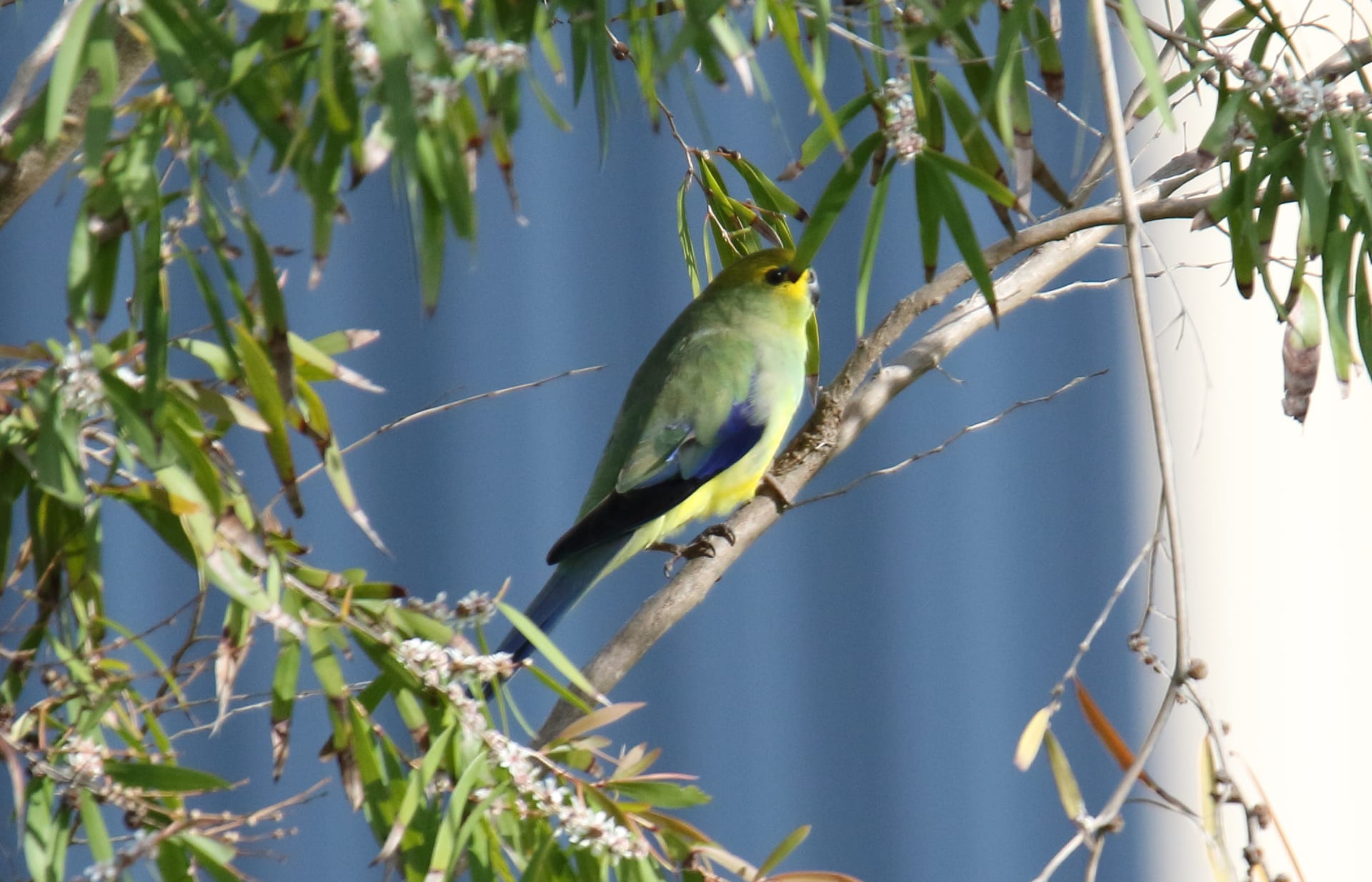
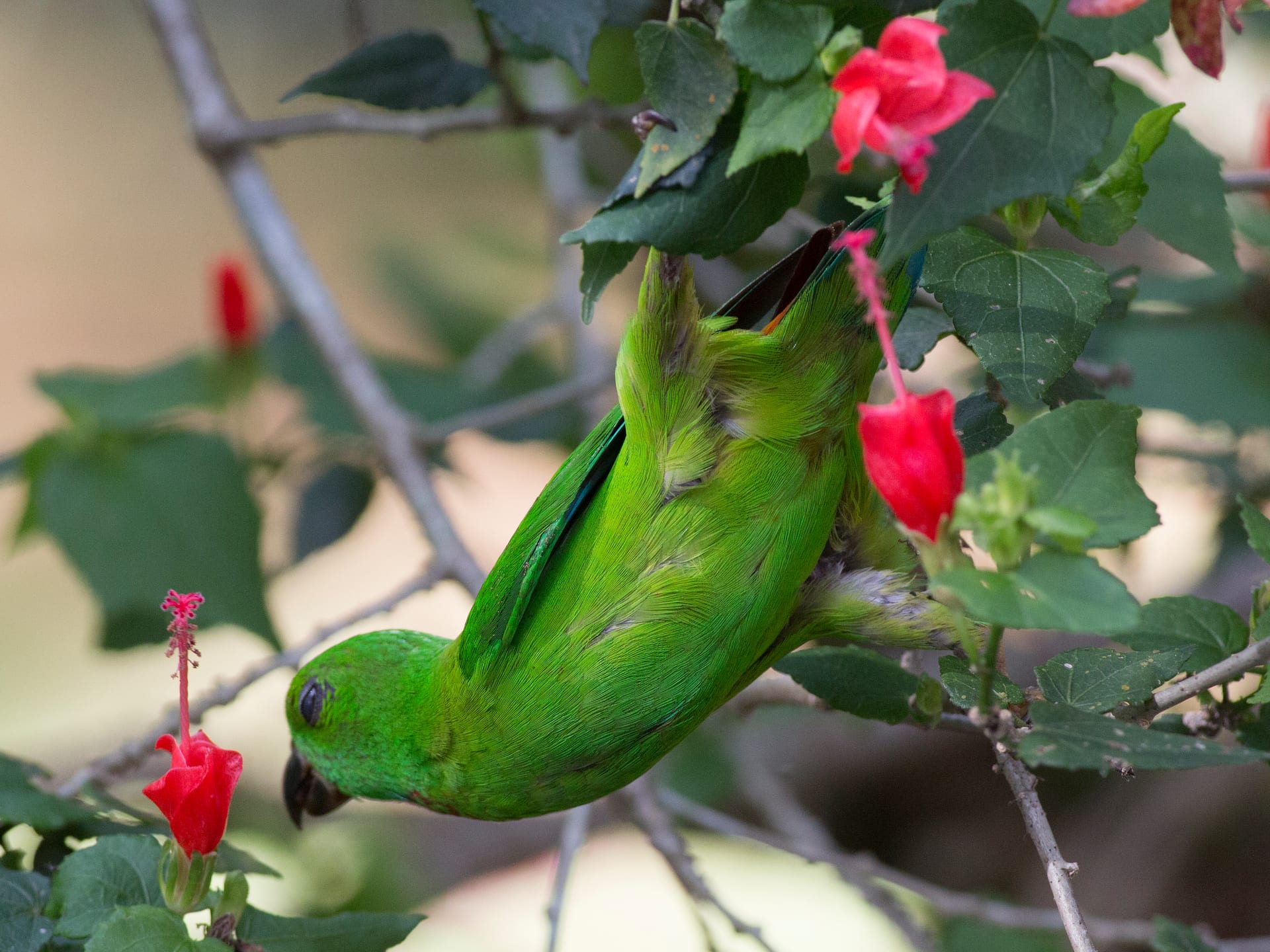
A tiny parrot 12 cm long and 28 g in weight, green with a crown-like patch of blue. It roosts hanging upside down, hence hanging parrot, and lives mainly on fruit and nectar.
Difficulty
Advanced
Temperature
15〜30℃
Lifespan
About 14 years
Size
12cm (28g)
Humidity
40〜60%
Diet
Fruit (apple, pear, pomegranate, guava), berries, nectar, small seeds, insectivorous food and mealworms
About
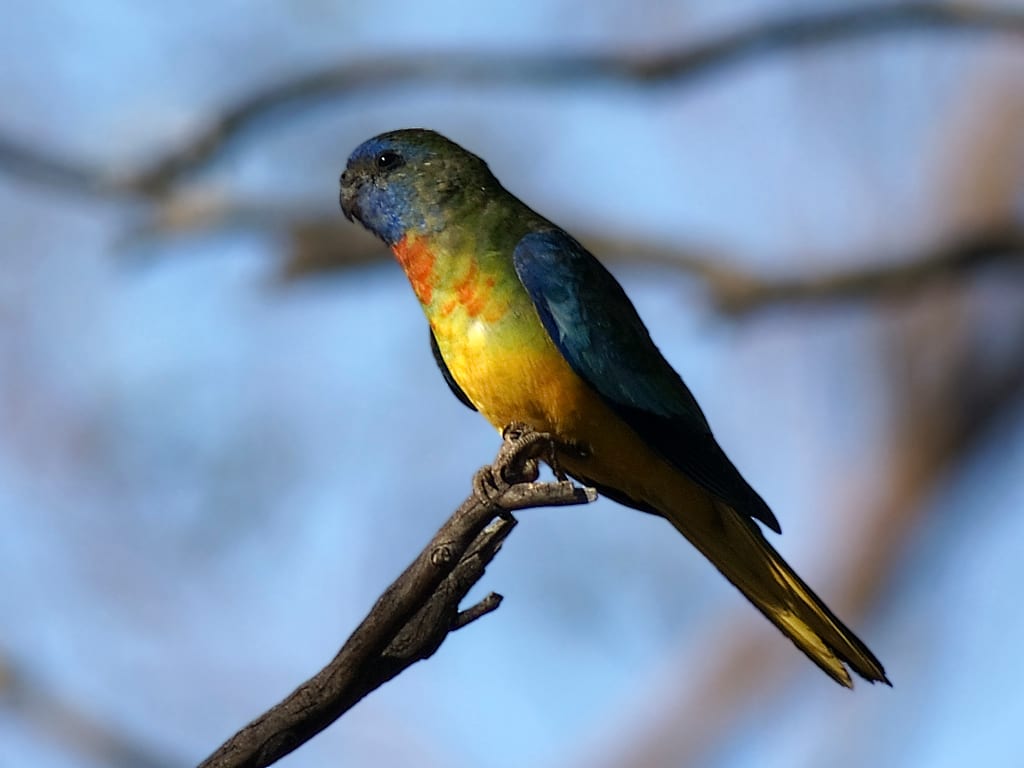
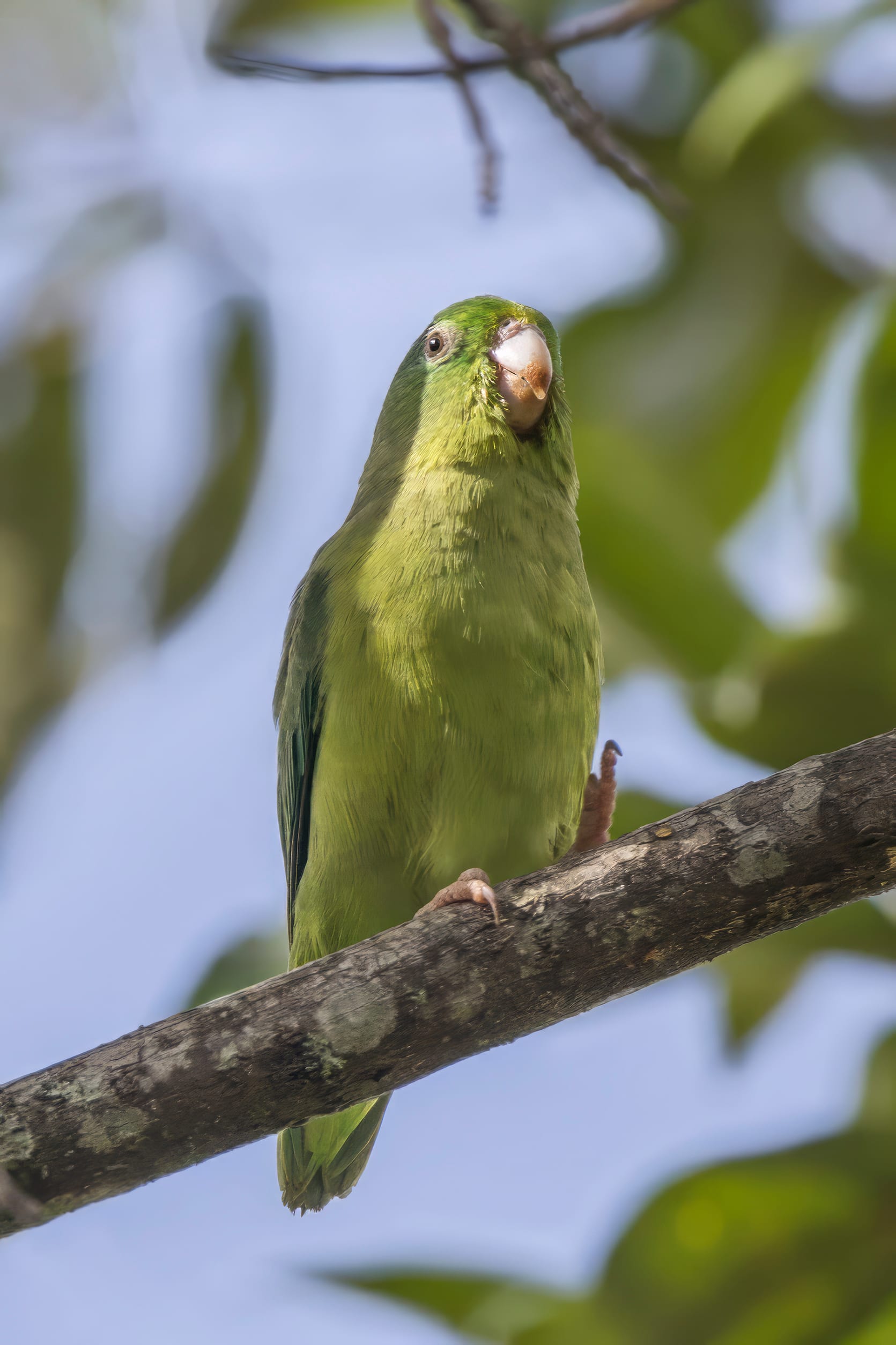
The blue-crowned hanging parrot (Loriculus galgulus) is a tiny parrot of southern Burma and Thailand, Malaya, Singapore and Indonesia (Sumatra, Java and Borneo). Green plumage, a black beak and the blue feathers arranged like a crown on the head identify it. Linnaeus described it in 1758, and it is now one of 14 hanging parrots in the genus Loriculus. In the wild it travels the canopy and middle storey, seen singly, in pairs, or outside the breeding season in parties of 150 or more. It roosts upside down, which is where the name hanging parrot comes from. The diet leans strongly on fruit and nectar: flowers, buds and the fruits of various figs, along with Erythrina and durian blossom and the mesocarp of oil-palm fruit. In captivity a planted walk-in aviary at least 1.5 m long is recommended, and outdoor housing with a small attached shelter works in a warm climate. Clutches are of three to four eggs.
Source: Wikipedia (CC BY-SA 4.0)
Lifespan of the Blue-crowned Hanging Parrot
The Blue-crowned Hanging Parrot lives About 14 years.
It is 12 cm tall, weighs 28 g and has a longevity of 14 years.
Size of the Blue-crowned Hanging Parrot
The Blue-crowned Hanging Parrot grows to 12cm (28g).
Basic Info
Origin
Southern Burma and Thailand, Malaya, Singapore and Indonesia (Sumatra, Java, Borneo)
Lifespan
About 14 years
Size
Care Specifications
PeacefulGroup
Sources: World Parrot Trust Parrot Encyclopedia / Wikipedia - Blue-crowned hanging parrot
References & Sources
Edited & verified by: BreederDirect editorial team
The taxonomic, regulatory, and husbandry data on this page are compiled and verified against the authoritative primary sources below.
Taxonomy & Authority
Accepted name: Loriculus galgulus (Linnaeus, 1758)
Synonyms: Psittacus galgulus
Authority databases: GBIF
Nomenclature follows global taxonomic authority databases.
Regulations & Conservation Status
CITES Appendix IIIUCN LC · Least Concern
Loriculus galgulus. The order Psittaciformes is listed in CITES Appendix II except for species placed in Appendix I, so this species is Appendix II and international trade requires an export permit.
Sources: CITES Appendices (Appendix II) / IUCN Red List
Regulations may change. Always verify the latest information with the relevant authorities.
Blue-crowned Hanging Parrot Listings
Loading latest listingsFind listings for this species