Source: Wikimedia Commons
Spectacled Parrotlet
IntermediateForpus conspicillatus
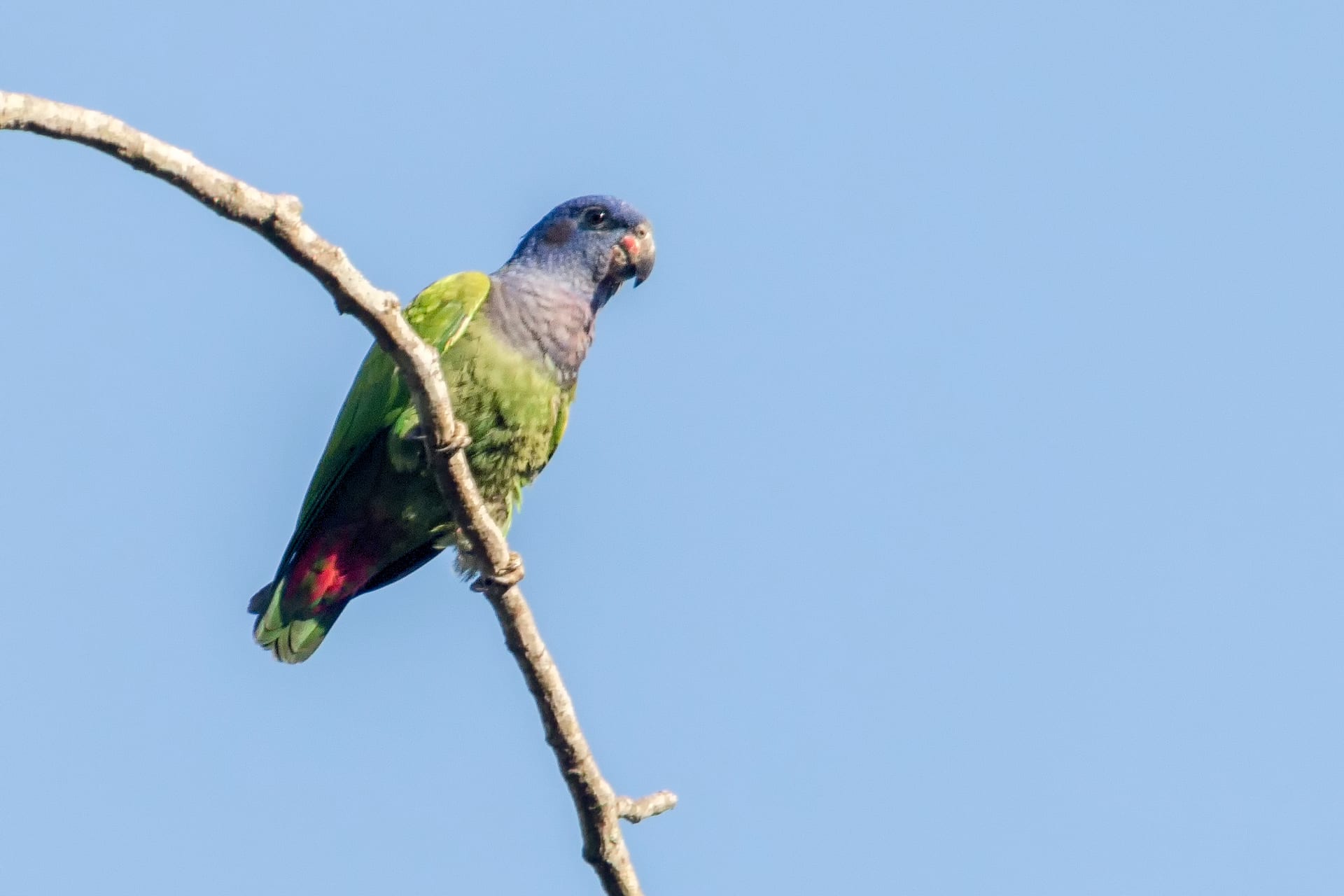
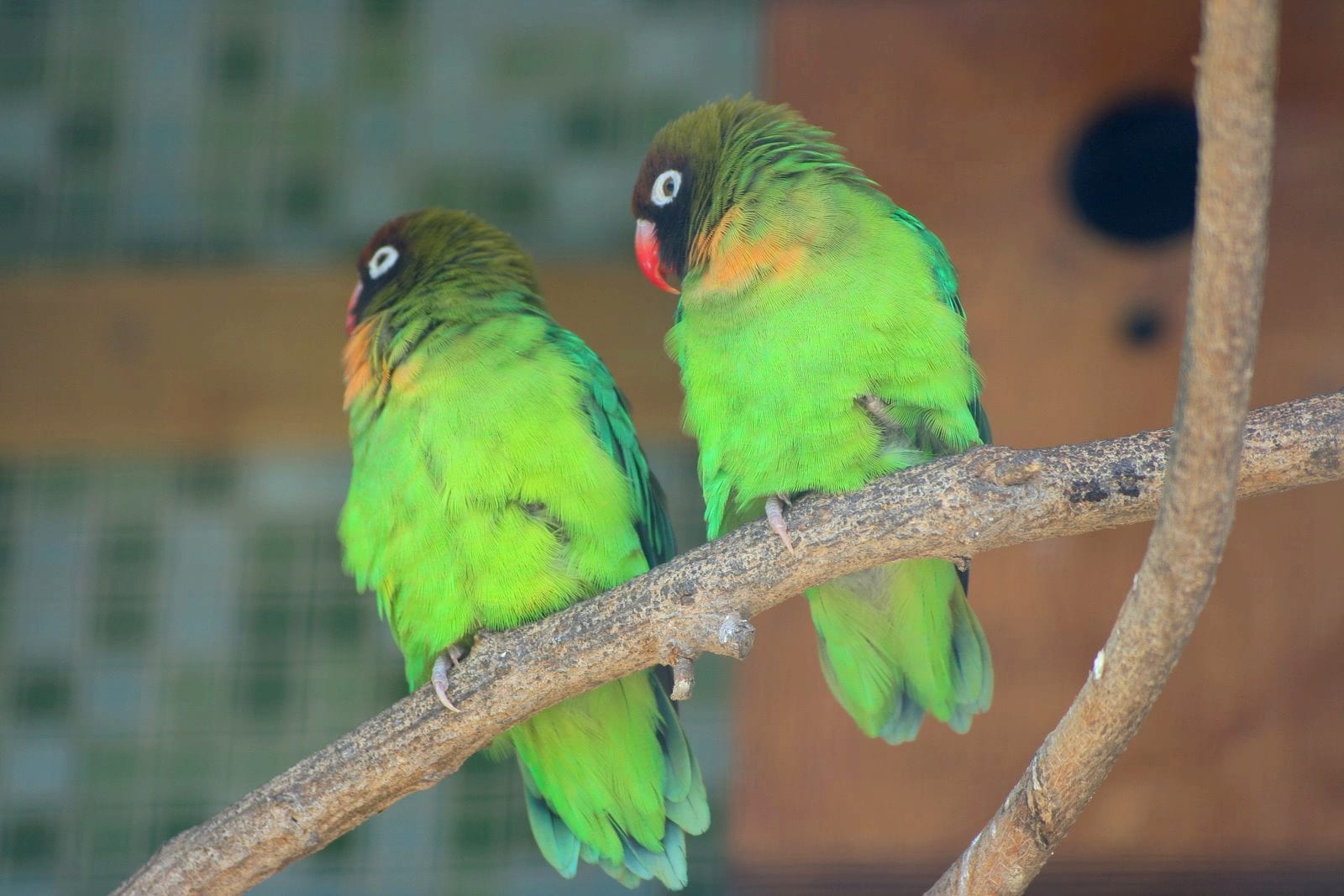
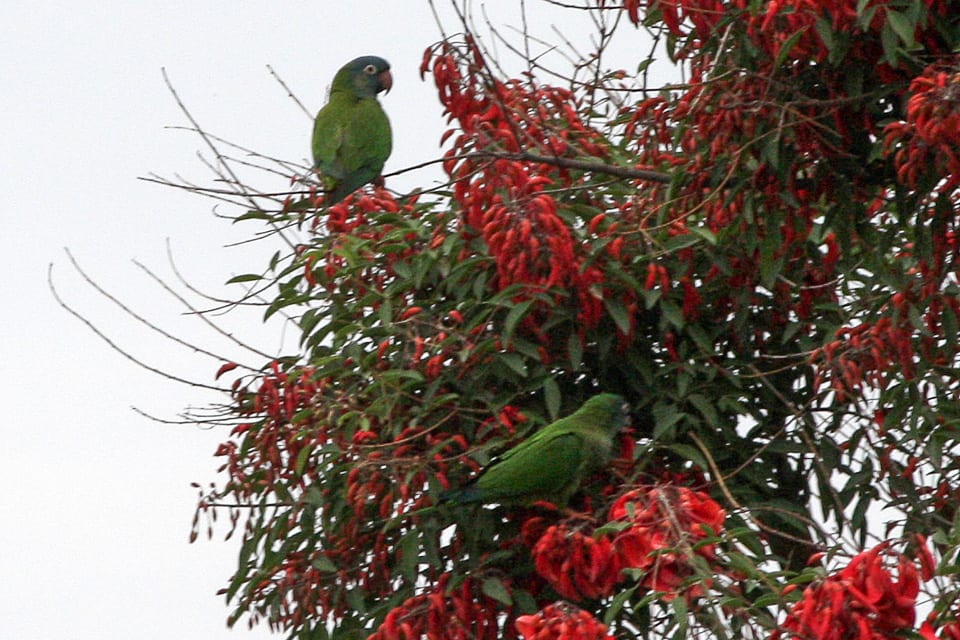
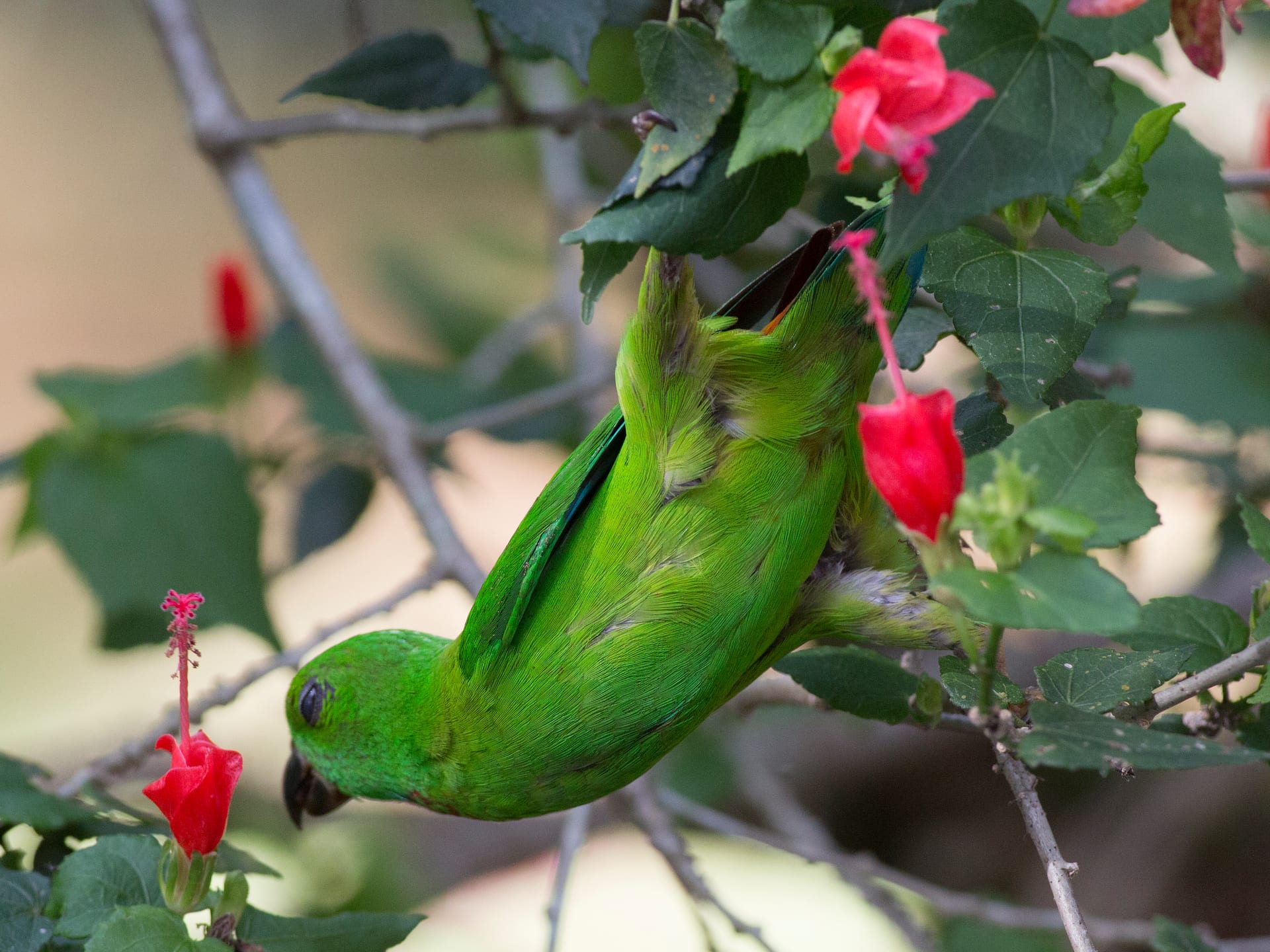
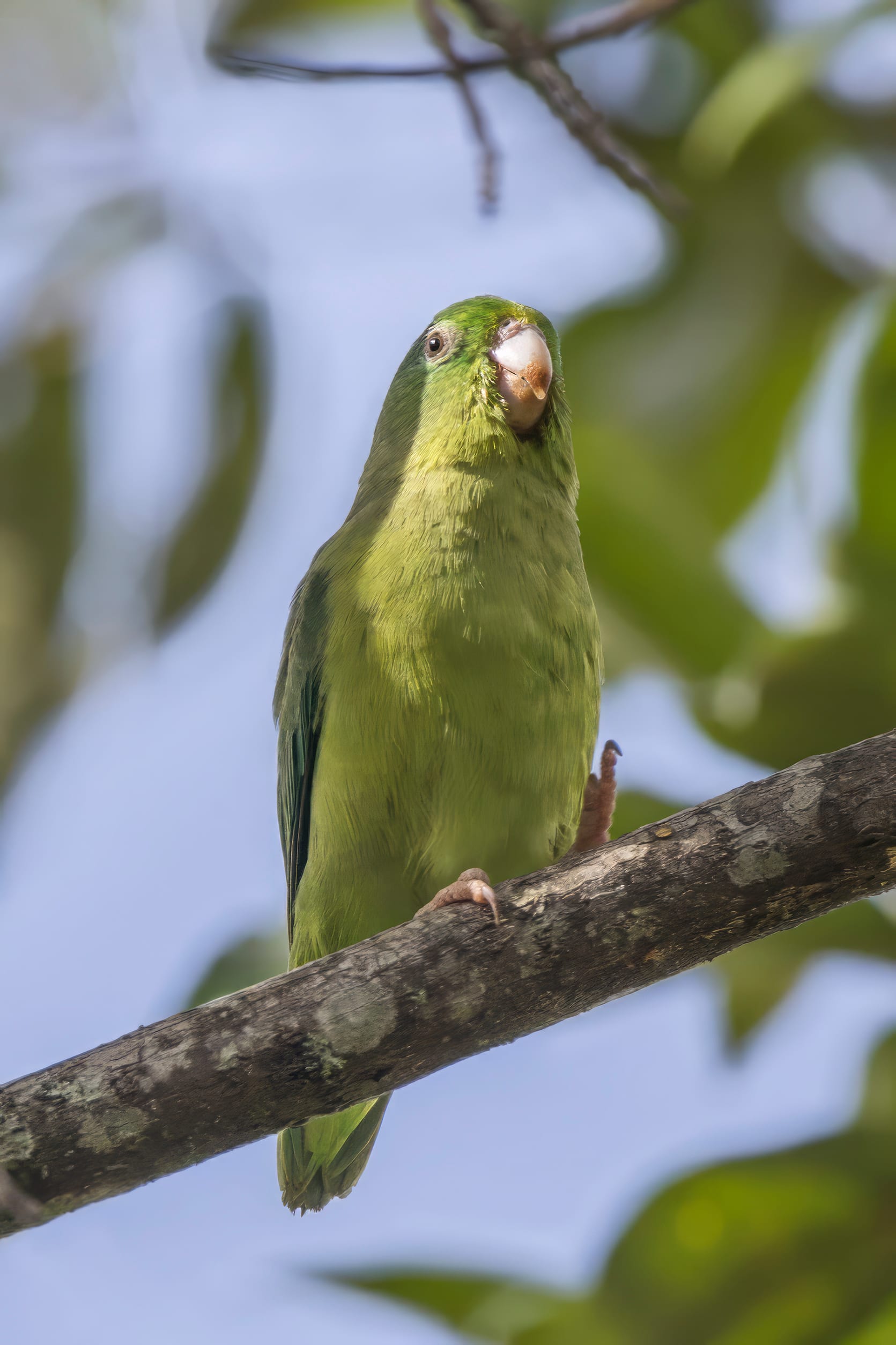
A tiny parrot 12 cm long and 30 g in weight. Males carry bright blue around the eye and on the rump while females are green throughout. It ranges from Colombia to Venezuela and eastern Panama and is long-lived, reaching 25 years.
Difficulty
Intermediate
Temperature
15〜30℃
Lifespan
About 25 years
Size
12cm (30g)
Humidity
40〜60%
Diet
Small seeds (canary seed, millet, small amounts of oats, buckwheat and safflower), greens, seeding grasses and pellets
About
The spectacled parrotlet (Forpus conspicillatus) is a tiny parrot of northern and central Colombia, Venezuela and eastern Panama. The male's bright colour and specific mating calls attract the female; she incubates the eggs while he guards the nest and feeds her and the chicks once they hatch. It lives up to 1,800 m, occasionally to 2,600 m, in lightly wooded habitats - lowland evergreen forest edge, thorn scrub, llanos, gallery woodland and cultivated areas with scattered trees - and ventures into denser forest where there are clearings. It feeds on grass and weed seeds on the ground as well as fruit, berries, blossom and buds, and outside the breeding season it is social, forming communal night roosts. In captivity an indoor or outdoor cage or aviary at least 1.2 m long is recommended, with a vertical nest box about 15 x 15 x 15 cm. Clutches are of four to six eggs with fledging at five weeks.
Source: Wikipedia (CC BY-SA 4.0)
Lifespan of the Spectacled Parrotlet
The Spectacled Parrotlet lives About 25 years.
Size of the Spectacled Parrotlet
The Spectacled Parrotlet grows to 12cm (30g).
It is 12 cm long and weighs 30 g; the male carries bright blue around the eye and on the rump, while the female is green throughout.
Basic Info
Origin
Northern and central Colombia, Venezuela and eastern Panama
Lifespan
About 25 years
Size
Care Specifications
Semi-aggressivePair
Sources: World Parrot Trust Parrot Encyclopedia / Wikipedia - Spectacled parrotlet
References & Sources
Edited & verified by: BreederDirect editorial team
The taxonomic, regulatory, and husbandry data on this page are compiled and verified against the authoritative primary sources below.
Taxonomy & Authority
Accepted name: Forpus conspicillatus (Lafresnaye, 1848)
Synonyms: Psittacula conspicillata
Authority databases: GBIF
Nomenclature follows global taxonomic authority databases.
Regulations & Conservation Status
CITES Appendix IIIUCN LC · Least Concern
Forpus conspicillatus. The order Psittaciformes is listed in CITES Appendix II except for species placed in Appendix I, so this species is Appendix II and international trade requires an export permit.
Sources: CITES Appendices (Appendix II) / IUCN Red List
Regulations may change. Always verify the latest information with the relevant authorities.
Spectacled Parrotlet Listings
Loading latest listingsFind listings for this species