The Complete Guide to Parrotlet Care | Characteristics, Housing, and Taming of One of the World's Smallest Parrots
A comprehensive guide to parrotlet (Pacific Parrotlet / Forpus coelestis) care. Despite their small size, these parrots have bold personalities. This guide covers their characteristics, appropriate cage sizing and environmental setup, feeding seeds, fruits, and pellets, taming methods and hand-training techniques, considerations for multi-bird housing and housing with other species, and prevention of common diseases.
Key Takeaways
A comprehensive guide to parrotlet (Pacific Parrotlet / Forpus coelestis) care. Despite their small size, these parrots have bold personalities. This guide covers their characteristics, appropriate cage sizing and environmental setup, feeding seeds, fruits, and pellets, taming methods and hand-training techniques, considerations for multi-bird housing and housing with other species, and prevention of common diseases.
Related Species
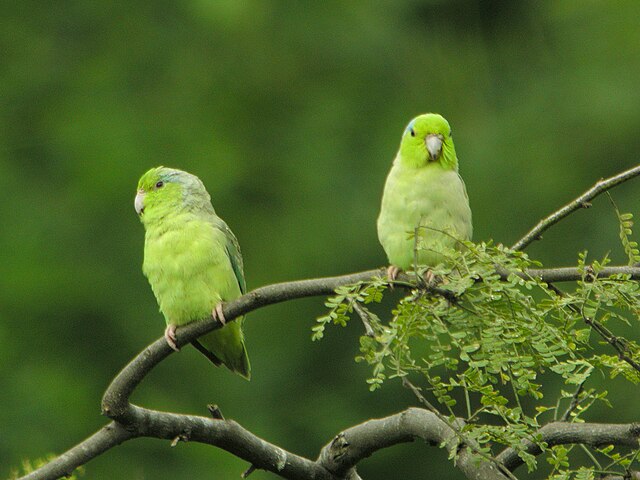
The parrotlet (Pacific Parrotlet / Forpus coelestis) is native to Ecuador and Peru in South America and is one of the world's smallest parrot species at 12–13 cm in body length. The saying "small bird, big personality" is perfectly fitting—despite their adorable size, they possess remarkably bold and courageous temperaments. In recent years, these charming small parrots have become increasingly popular in Japan.
Parrotlet Characteristics and Temperament
Appearance Body length: 12–13 cm; weight: approximately 30 grams. They have a rounded, stocky body shape with a short tail. Wild-type (green) males have bright blue markings on the wings and back, while females have faint or predominantly green coloring. Selective breeding has produced various color mutations including blue, yellow, white, and American white varieties.
Personality Despite their small stature, their boldness is legendary. They are often described as "small tyrants" who are unafraid of birds much larger than themselves. When properly tamed, however, they develop deep affection for their owners and may perch on shoulders, snuggle into sleeves, and show other endearing behaviors. They are highly intelligent and can learn a small number of words.
Vocalizations Less loud than budgies, but they vocalize especially when lonely or excited. The volume is relatively apartment-friendly, though individual variation exists.
Required Cage and Environmental Setup
Parrotlets are active and move around frequently, so do not be fooled by their small size—provide ample space.
Cage Size Guidelines
| Number of Birds | Recommended Cage Size |
|---|---|
| 1 bird | Width 45 cm × Depth 35 cm × Height 60 cm or larger |
| Pair | Width 60 cm × Depth 45 cm × Height 75 cm or larger |
Metal steel cages are recommended for easy sanitation and durability. Bar spacing should be 1 cm or less to prevent their narrow heads from becoming trapped.
Cage Interior Layout
- Perches: Install 2–3 natural wood perches of varying diameters (1–1.5 cm) at different heights. Combining perches of different sizes and materials is effective for foot health
- Perch placement: Position one perch in the middle section near food and water dishes, and arrange others at jumping distance
- Food cups: Stainless steel or ceramic deep cups are easiest to manage and reduce spillage
- Toys: Rotate wooden chewing toys, mirrors, and foraging toys
Temperature and Humidity Management
| Parameter | Target Range |
|---|---|
| Ideal temperature | 20–28°C |
| Danger zone | 15°C or below (heating required during cold seasons) |
| Humidity | 50–60% |
Although wild parrotlets inhabit relatively dry subtropical to temperate environments, heating is necessary during Japan's winter. Utilize pet thermostat-controlled heating panels or small animal heat mats.
Diet and Nutrition Management
Parrotlets are omnivorous and consume seeds, fruits, flowers, pollen, and insects in the wild. In captivity, a nutritionally balanced and diverse diet is ideal.
Base Diet: Pellets + Seeds
Pellets (50–60% of total food intake) Incorporating commercial pellets designed for small parrots such as Zupreem, Harrison's Bird Foods, or Roudybush as the primary food ensures balanced nutrition. A diet of seeds alone increases the risk of obesity and fatty liver disease.
Seeds (30–40% of total food intake) Use small-grain seeds such as millet, sorghum, and canary seed. Sunflower seeds are high in fat and should be given only as a supplemental treat in small amounts.
Supplementary Foods: Fruits and Vegetables (Small amounts daily)
- Safe foods: Apple (seeds removed), pear, blueberries, mango, papaya, carrot, broccoli, mustard greens, bell pepper
- Unsafe foods: Avocado, chocolate, caffeine, alcohol, onions, leeks, salt-rich processed foods
Calcium supplementation: Keep cuttlebone (oyster shell) readily available or attach a cuttlebone to the cage.
Taming and Hand-Training
Parrotlets are naturally wary and may not readily step onto hands initially. Build trust gradually and patiently through structured steps.
Basic Taming Steps
- First week: Talk to your bird quietly from outside the cage to acclimate them to your presence. Avoid sudden movements or loud noises
- Weeks 2–3: Begin offering treats (millet sprays) from your fingertips through the cage door
- One month onward: Use "step-up" training to teach your hand as a perch. Repeat this paired with verbal cues like "step" or "come here"
- Once tamed: Provide 15–30 minutes of daily out-of-cage flight time and interaction
Multi-Bird Housing and Housing with Other Species
Parrotlets have strong territorial instincts and often cannot cohabitate peacefully with other birds, whether the same or different species. If pair-housing is desired, assess compatibility carefully and conduct initial introductions through separate cages. Housing with other small parrots like budgies is generally not recommended, as parrotlets may attack and injure them.
Common Diseases and Prevention
Overgrown beaks and nails Insufficient appropriate perches, such as those made of concrete or stone, increase the likelihood of overgrowth. Install perches with nail-file surfaces to prevent this condition.
Candidiasis (digestive tract fungal infection) Candida fungi proliferate in the digestive tract when immunity is compromised. Symptoms include vomiting and fungal growth on the beak. Prevent through appropriate temperature management and providing clean water and food.
PDD (Beak and Feather Disease) and PBFD These viral diseases cause feather abnormalities and beak deformities. Prevent infection through health screening upon introduction and quarantine periods for new birds.
Obesity and Fatty Liver Disease Seed-focused diets are the leading cause. Prevention is achieved through transitioning to pellet-based feeding and ensuring adequate exercise through daily flight time.
Summary
Parrotlets are fascinating small parrots that combine diminutive size with rich personality and the capacity to form deep bonds with their owners. Their bold temperament requires patience during the initial taming phase, but once they bond with their human, they display strong attachment and affection. By maintaining an appropriate cage environment, providing balanced nutrition, and ensuring daily out-of-cage time, you can enjoy a rich companion bird life with a healthy, long-lived parrotlet (10–15 years or more).