Superb Parrot (Super Bird) Care Guide | Beautiful Parrots with Slim Bodies and Gentle Temperaments
Complete guide to caring for Superb Parrots (Polytelis swainsonii). Detailed explanation of husbandry methods for this Australian medium-sized parrot, covering temperament, flight cage setup, diet management, taming methods, and breeding basics—everything you need to know to welcome a beautiful, long-lived Super Bird.
Key Takeaways
Complete guide to caring for Superb Parrots (Polytelis swainsonii). Detailed explanation of husbandry methods for this Australian medium-sized parrot, covering temperament, flight cage setup, diet management, taming methods, and breeding basics—everything you need to know to welcome a beautiful, long-lived Super Bird.
Related Species
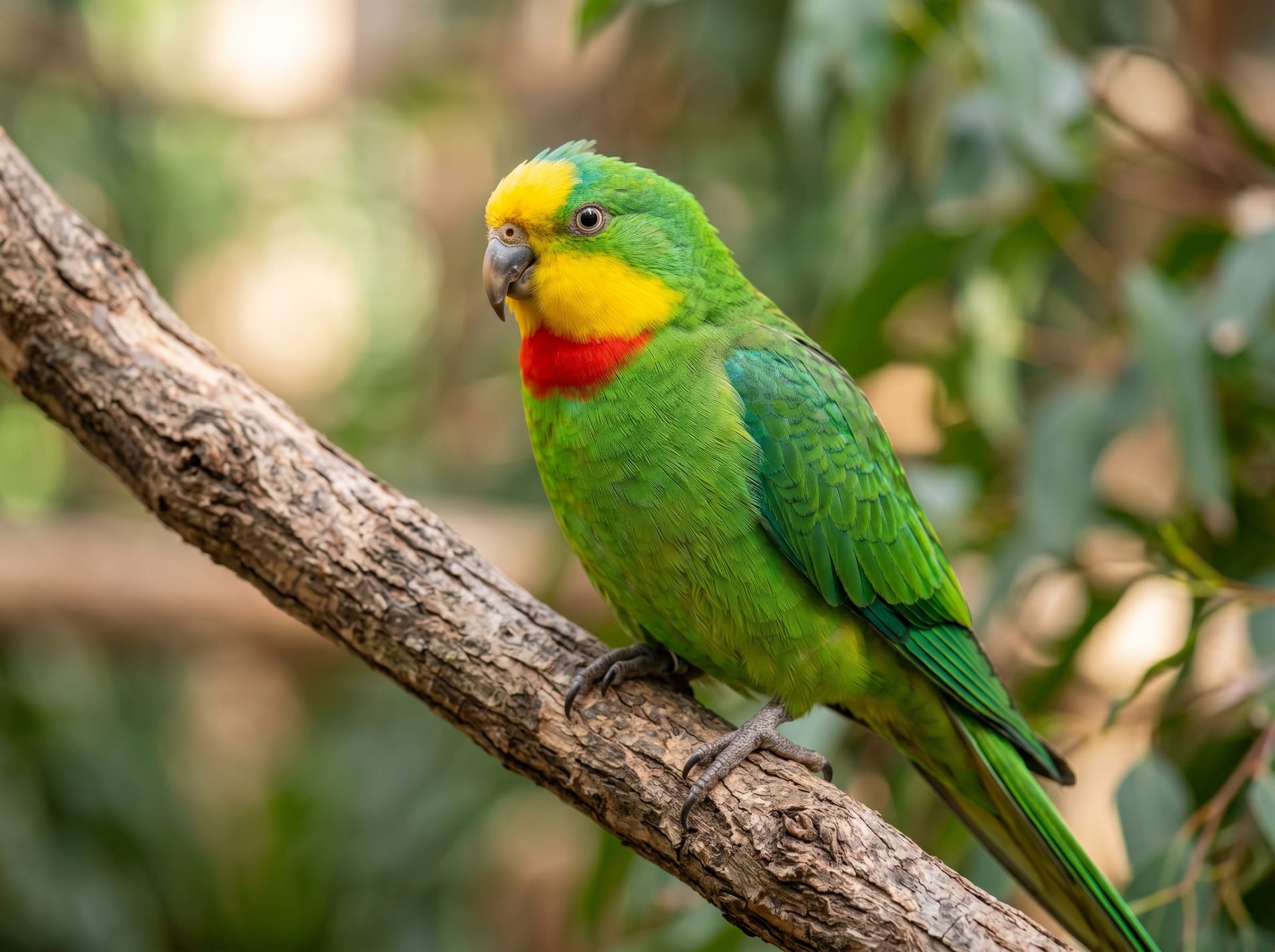
The Superb Parrot (Polytelis swainsonii) is a medium-sized parrot native to Australia, known for its slender body shape and striking coloration of green, red, and yellow. It excels in flight ability, earning the nickname "Super Bird," with its name derived from its notably long wings. With their quiet, gentle temperament and ability to breed when provided proper conditions, these beautiful birds are gaining popularity as an attractive species for intermediate to advanced keepers.
Characteristics of Superb Parrots
Basic Information
| Item | Details |
|---|---|
| Scientific Name | Polytelis swainsonii |
| English Name | Superb Parrot |
| Body Length | Approximately 40 cm (including tail feathers) |
| Weight | 130–160 g |
| Lifespan | 25–30 years |
| Native Range | Southeastern Australia |
Appearance and Sexual Dimorphism
Males have a striking combination of bright green body plumage, yellow face, red throat, and bluish wings. Females are predominantly dull green overall, but characteristically have reddish coloring on the underside of the tail feathers. Sexual differences become apparent within several months of hatching, so you can determine sex either through DNA testing or by observing as the bird matures.
Comparison with other Polytelis species:
| Species | Characteristics |
|---|---|
| Superb Parrot (Super Bird) | Striking yellow, green, and red coloration. The species covered in this guide. |
| Australian King Parrot | Larger, with more vivid red. Closely related species. |
| Regent Parrot (Green Parrot) | Subdued pale blue-green coloration. |
Personality and Behavior
Superb Parrots are relatively quiet birds, notably lacking the sharp, piercing screams typical of larger parrot species.
- Gentle and unlikely to panic: They remain calm inside their cage
- Excellent fliers: They enjoy flying and exercise in flight cages
- Curious and inquisitive: They adapt easily to environmental changes
- Variable tameness: Some individuals are readily tame while others are shy. Habituation to handling may take time.
Setting Up the Enclosure
Cage Size
Since Superb Parrots are strong fliers, a spacious flight cage with ample width is ideal.
- Minimum cage size: 90 cm wide × 60 cm deep × 120 cm tall or larger
- Ideal flight cage: Aviary-style enclosure 150 cm wide or larger
- For breeding pairs: 180 cm width or larger is recommended
Due to their slender body shape, horizontal flight space is more important than vertical height. Large commercial cages from brands like Coriander or Bird Worker, as well as custom-built mesh aviaries, are popular choices.
Perch Installation
Install natural wood perches (eucalyptus, cork, willow, etc.) at various heights. The ideal diameter is 2–3 cm, where the bird's foot can lightly grasp around it. Using only plastic perches negatively impacts foot health.
Temperature and Humidity Management
- Ideal temperature: 18–28°C (around 20°C is optimal)
- Minimum temperature: 10°C (adult birds are relatively cold-hardy)
- Humidity: 40–70%
- Ventilation: A well-ventilated environment with good air circulation
Superb Parrots require careful attention during Japan's hot and humid summers. Prevent water temperature from rising due to direct sunlight, and use fans or cooling mats to regulate temperature.
Diet and Nutrition Management
Basic Diet Composition
Superb Parrots are native to Australian grasslands and have a primarily seed-based diet. However, seeds alone can lead to vitamin and mineral deficiencies, so provide a balanced variety of foods.
Recommended diet proportions:
- Grains and seeds (50%): Small parrot seed mix, millet, canary seed, oats, sorghum
- Pellets (20–30%): Australian bird formulations such as Harrison's or Roudybush
- Fresh vegetables and fruits (20–30%): Bok choy, Chinese cabbage, carrots, apples, berries
Foods to Avoid
- Avocado: Risk of fatal toxicity
- Onions and chives: Cause red blood cell destruction
- Chocolate and caffeine: Risk of poisoning
- High-salt and high-sugar foods: Stress on kidneys and liver
Supplementary Nutrients
- Calcium supplementation: Keep cuttlebone (squid bone) available
- Mineral block: Allows free-choice access to various minerals
- Vitamin supplements: Add small amounts during breeding and molting seasons
Taming and Daily Care
Hand-Taming Training Steps
Hand-feeding chicks builds trust easily, but even adult birds can become tame with patience and time.
- Habituation period (2–4 weeks): Talk to the bird through the cage to familiarize it with your presence
- Use favorite foods: Hand-offer millet sprays to create a "hand = safe" association
- Offering your hand: Slowly place your hand in the cage and teach the bird to perch on it
- Out-of-cage time and interaction: Start with short periods outside the cage and gradually extend duration
Bathing
Superb Parrots enjoy bathing. Offer bathing opportunities 2–3 times per week using shallow trays or misting. Allow the bird to dry naturally in a warm room or sunny area after bathing.
Nail Trimming and Beak Care
Regular nail trimming is necessary (approximately monthly to bi-monthly). The beak wears naturally through contact with natural wood and mineral blocks, but consult an avian veterinarian if you observe abnormal overgrowth or deformation.
Breeding
Basic Breeding Requirements
Breeding instances of Superb Parrots are increasing in Japan. Breeding requirements are as follows:
- Breeding age: 2 years or older (1.5 years for precocious individuals)
- Breeding season: September–January (corresponding to Australian spring–summer)
- Nest box size: Vertical box approximately 30–40 cm tall × 25 cm wide × 25 cm deep
- Pair compatibility: House birds in adjacent separate cages and observe if they show mutual interest
Egg-Laying and Incubation
Females lay 3–6 eggs per clutch, with an incubation period of approximately 21 days. After hatching, chicks develop flight feathers at 4–5 weeks and become fully independent at 8–10 weeks. While hand-rearing is possible, natural parental rearing is recommended for beginners.
Summary
The Superb Parrot is a quiet, beautiful medium-sized parrot that can be raised while enjoying their excellent flight ability. With adequate flight space and quality nutrition, they can live nearly 30 years as a lifelong companion. When acquiring a bird from a breeder, choosing a weaned juvenile bird ensures faster taming and makes breeding more manageable for beginners.