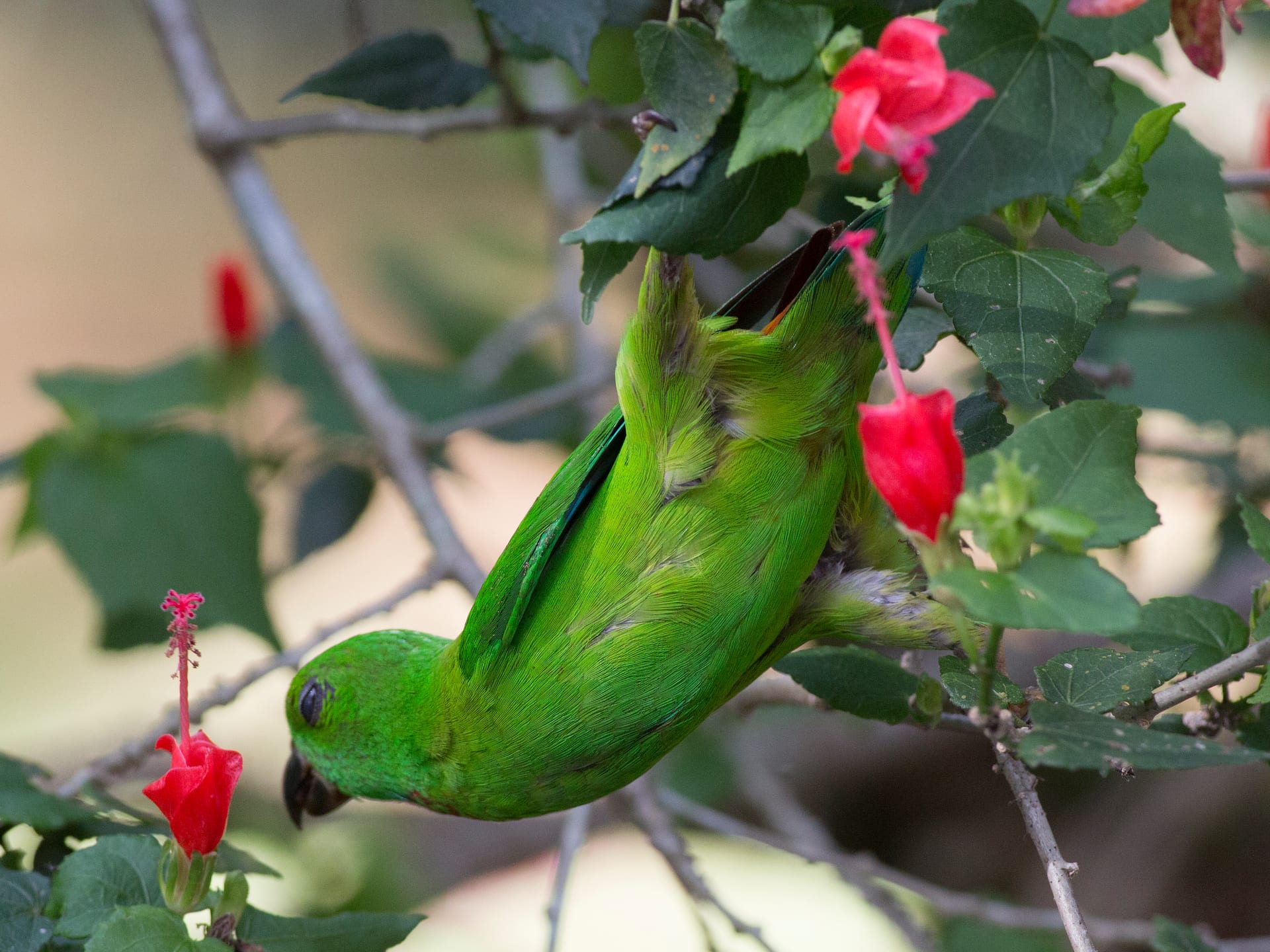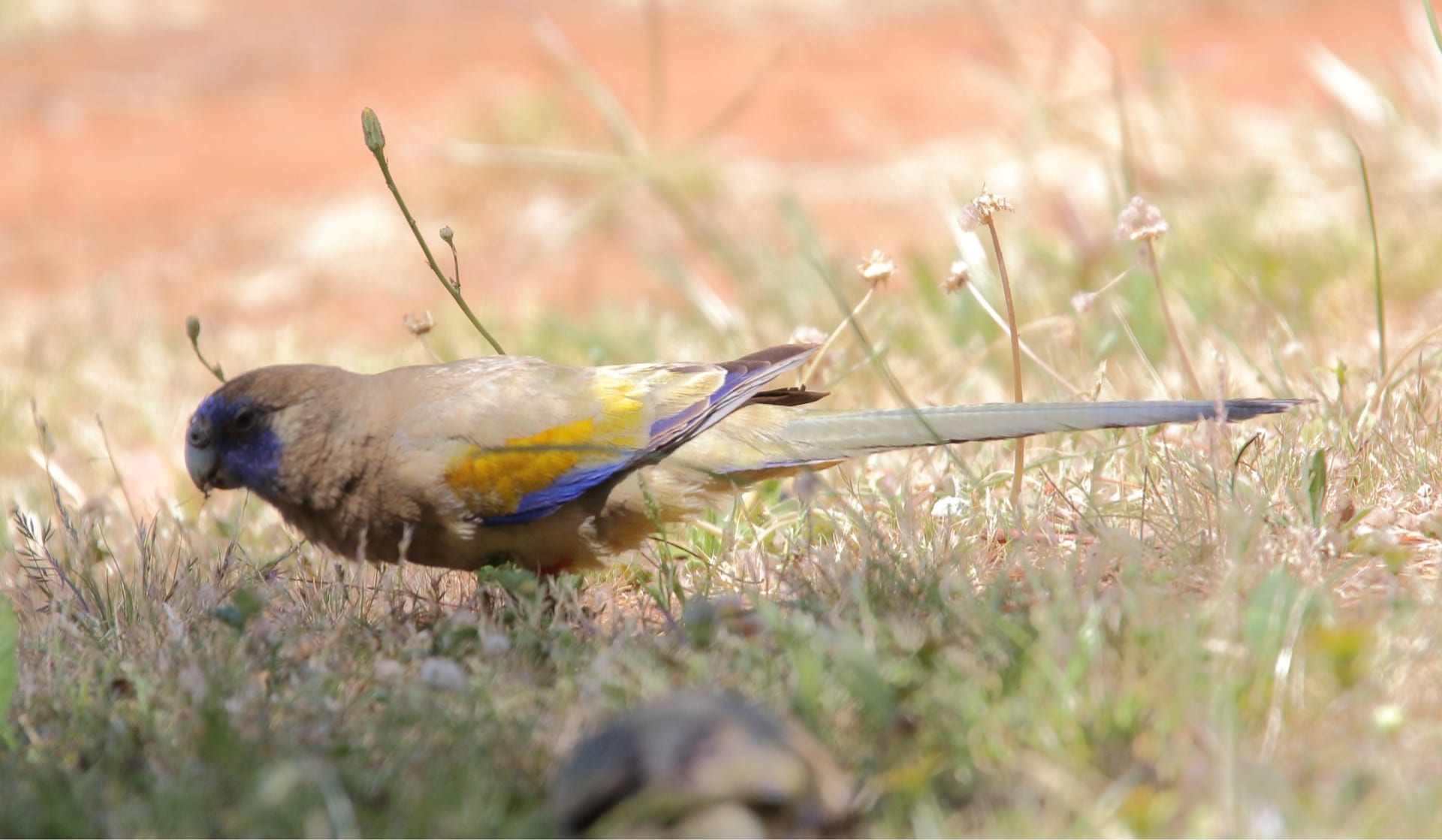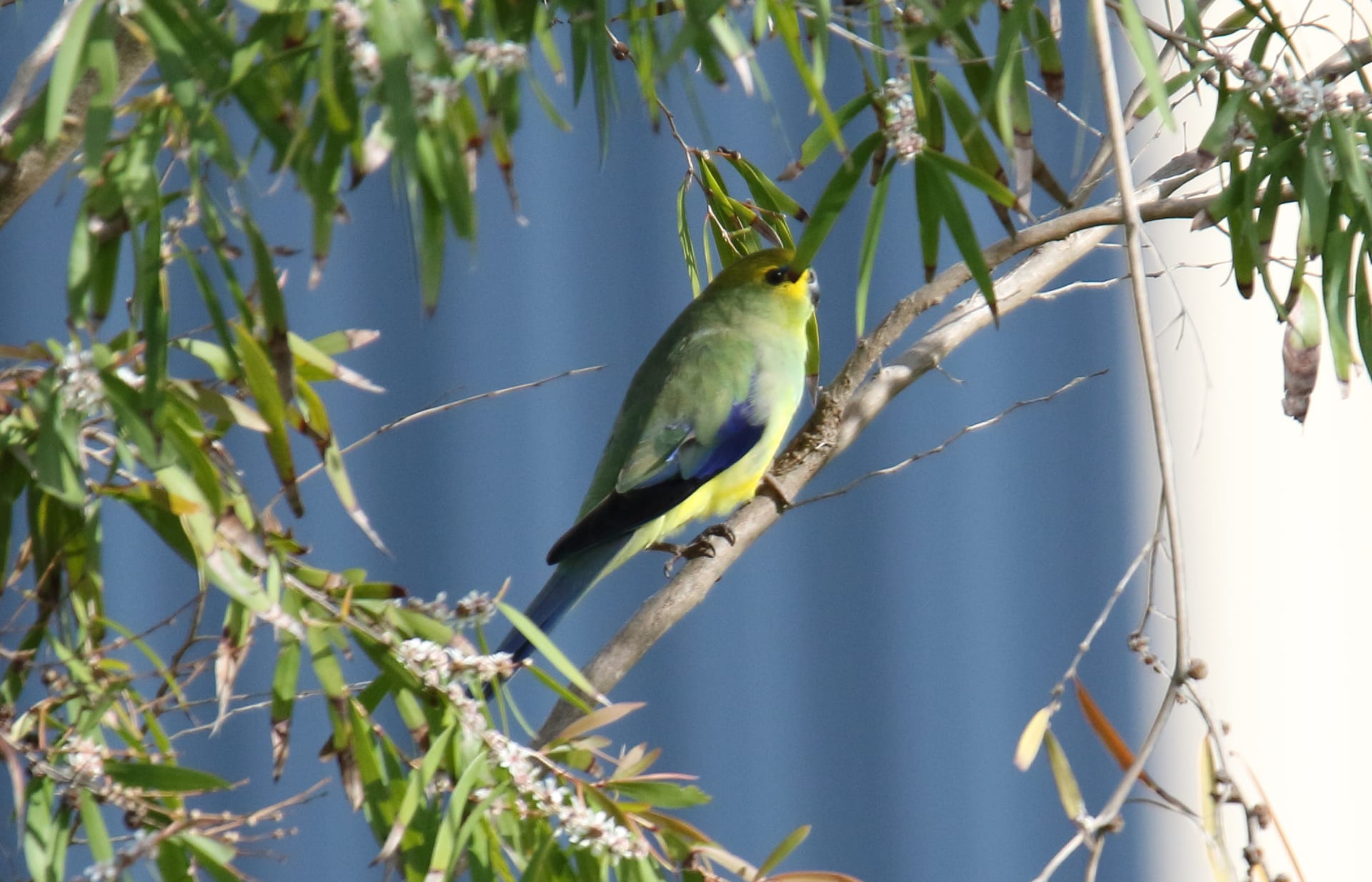
Source: Wikimedia Commons
Blue-winged Parrot
IntermediateNeophema chrysostoma
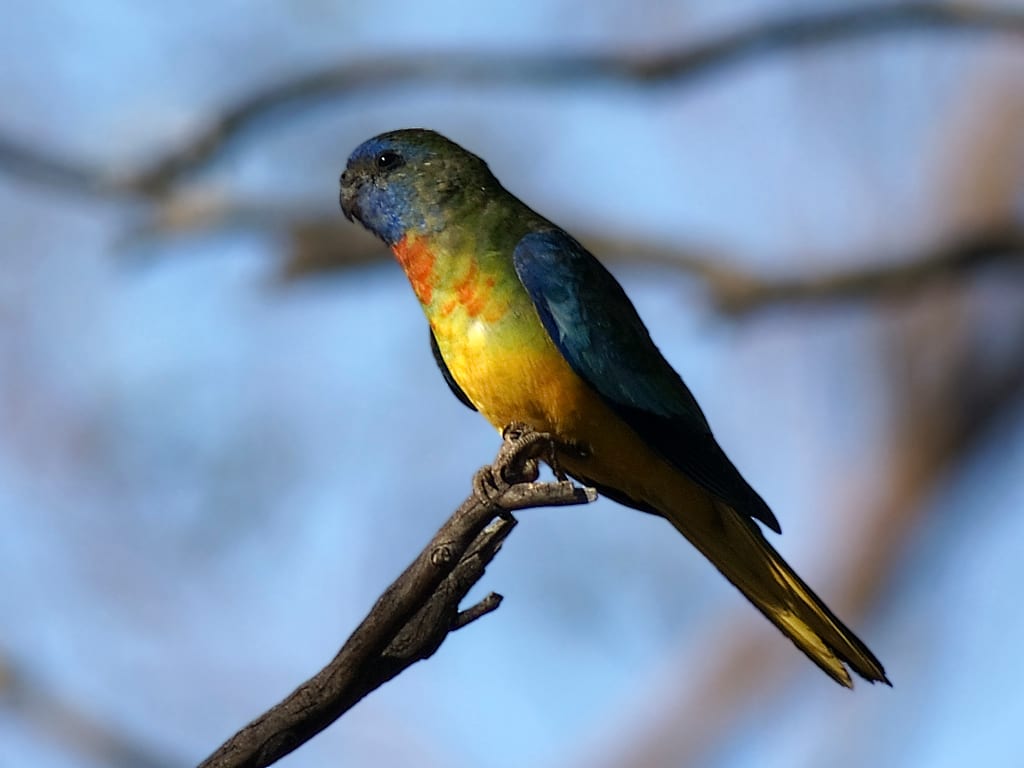
A small parrot 20-24 cm long, olive-green with a broad blue wing band. It occurs in Tasmania and southeastern mainland Australia and is known for being tame, yet the IUCN assesses it as Vulnerable.
Difficulty
Intermediate
Temperature
15〜30℃
Lifespan
Probably 10-15 years
Size
20-24cm (33-60g, around 55g)
Humidity
40〜60%
Diet
Small seeds (canary seed, millet, small amounts of oats, buckwheat and safflower), greens, seeding grasses and pellets
About
The blue-winged parrot (Neophema chrysostoma) occurs in Tasmania and southeastern mainland Australia. Both sexes are predominantly olive-green, and the greater amount of blue on the wing distinguishes it from the elegant parrot and the orange-bellied parrot. It lives up to 1,200 m in a wide range of habitats - savanna woodland, acacia scrub, grassland, orchards, forest clearings, farmland, arid saltbush, mountain heath, lignum swamp, coastal dunes and saltmarsh. It takes the seeds of grasses and herbs both on the ground and in trees and moves in pairs or small groups, and it is tame and approachable. In captivity a walk-in flight 2-2.5 m long is recommended; clutches are of four to six eggs and young fledge at about 30 days. The IUCN estimates 7,500-15,000 mature individuals, rapidly decreasing, and assesses the species as Vulnerable.
Source: Wikipedia (CC BY-SA 4.0)
Lifespan of the Blue-winged Parrot
The Blue-winged Parrot lives Probably 10-15 years.
Size of the Blue-winged Parrot
The Blue-winged Parrot grows to 20-24cm (33-60g, around 55g).
It is 20-24 cm long and weighs 33-60 g, around 55 g typically.
Basic Info
Origin
Australia (Tasmania and the southeast of the mainland)
Lifespan
Probably 10-15 years
Size
20-24cm (33-60g, around 55g)
Care Specifications
PeacefulPair
Sources: World Parrot Trust Parrot Encyclopedia / Wikipedia - Blue-winged parrot
References & Sources
Edited & verified by: BreederDirect editorial team
The taxonomic, regulatory, and husbandry data on this page are compiled and verified against the authoritative primary sources below.
Taxonomy & Authority
Accepted name: Neophema chrysostoma (Kuhl, 1820)
Synonyms: Euphema chrysostoma
Authority databases: GBIF
Nomenclature follows global taxonomic authority databases.
Regulations & Conservation Status
CITES Appendix IIIUCN VU · Vulnerable
Neophema chrysostoma. The order Psittaciformes is listed in CITES Appendix II except for species placed in Appendix I, so this species is Appendix II and international trade requires an export permit.
Sources: CITES Appendices (Appendix II) / IUCN Red List
Regulations may change. Always verify the latest information with the relevant authorities.
Blue-winged Parrot Listings
Loading latest listingsFind listings for this species