Source: Wikimedia Commons
Crimson Rosella
IntermediatePlatycercus elegans
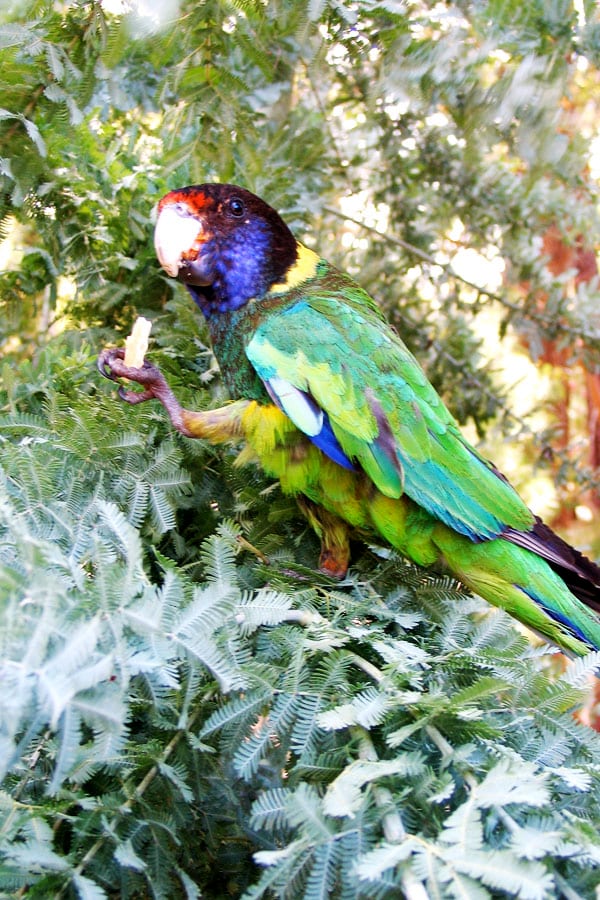
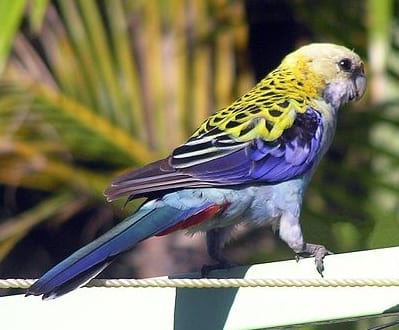
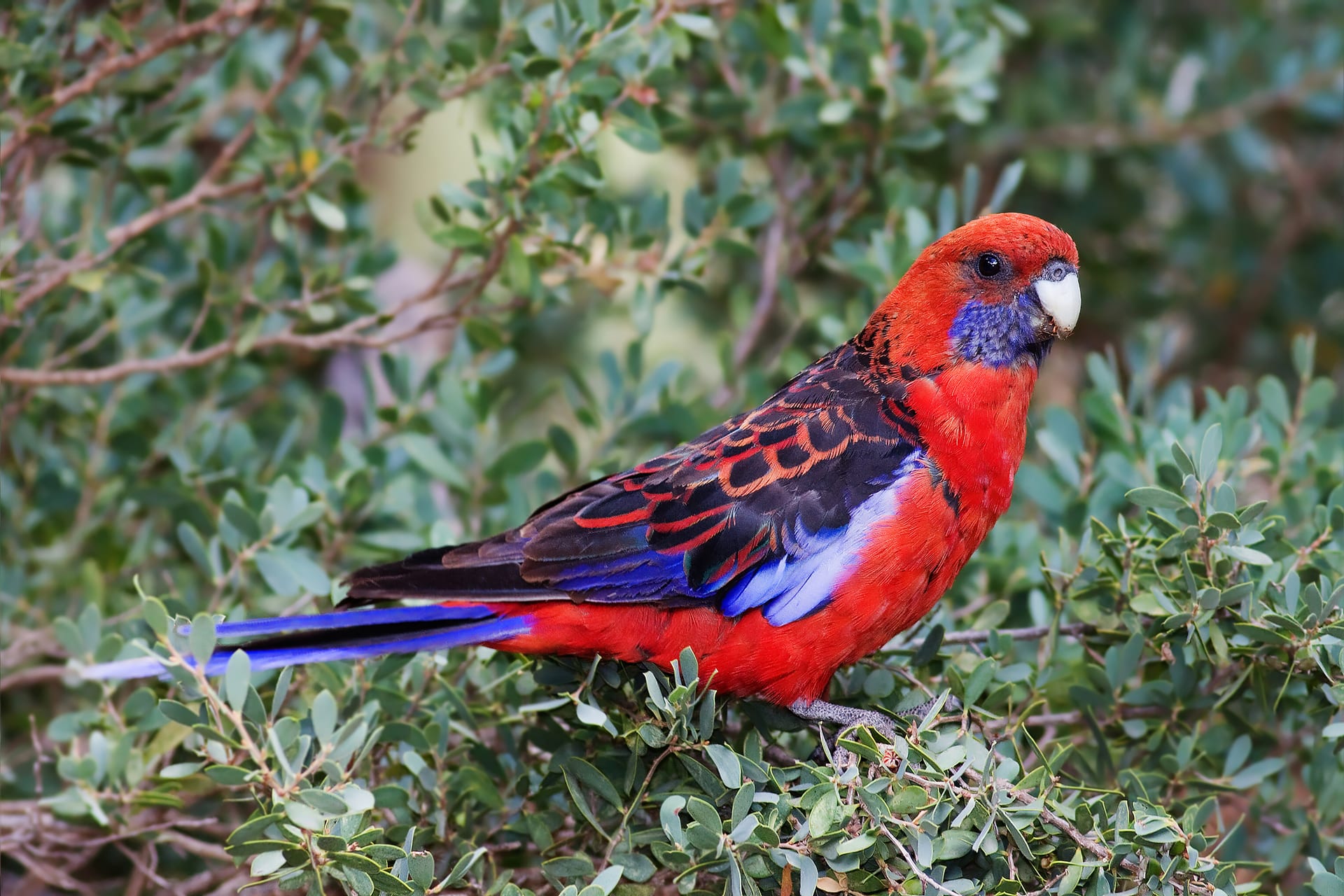
A medium parrot 36 cm long, deep red with purple-blue cheek patches and a black-and-red spotted mantle; much of its length is tail. Seven subspecies are recognised, including pale yellow and orange-red forms.
Difficulty
Intermediate
Temperature
15〜30℃
Lifespan
10-15 years
Size
36cm (115-170g)
Humidity
40〜60%
Diet
Mixed seed (canary seed, oats, safflower), seeding grasses, greens, fruit and vegetables, and pellets
About
The crimson rosella (Platycercus elegans) is a medium-sized parrot of eastern and southeastern Australia, introduced to New Zealand and Norfolk Island. The nominate elegans is dark red with purple-blue cheek patches, a black mantle and back spotted dark red, and a dark blue tail with a broad blue-white tip; females resemble males but have the tail washed dull green and a smaller bill. Seven subspecies including the nominate are recognised, and some differ greatly in colour - flaveolus is bright pale yellow and subadelaidae orange-red. In the north it occupies upland forest to 1,900 m, while south of the Hunter River valley it uses varied habitats at all altitudes. In captivity a walk-in flight 3 m long is recommended, with a vertical nest box about 23 x 23 x 61 cm; the birds like to scratch about, so clean sand is worth providing. Clutches run to five to eight eggs.
Source: Wikipedia (CC BY-SA 4.0)
Lifespan of the Crimson Rosella
The Crimson Rosella lives 10-15 years.
Size of the Crimson Rosella
The Crimson Rosella grows to 36cm (115-170g).
It is 36 cm long and weighs 115-170 g, much of that length being tail.
Basic Info
Origin
Eastern and southeastern Australia, introduced to New Zealand and Norfolk Island
Lifespan
10-15 years
Size
36cm (115-170g)
Care Specifications
Semi-aggressivePair
Sources: World Parrot Trust Parrot Encyclopedia / Wikipedia - Crimson rosella
References & Sources
Edited & verified by: BreederDirect editorial team
The taxonomic, regulatory, and husbandry data on this page are compiled and verified against the authoritative primary sources below.
Taxonomy & Authority
Accepted name: Platycercus elegans (Gmelin, 1788)
Synonyms: Psittacus elegans, Platycercus flaveolus
Authority databases: GBIF
Nomenclature follows global taxonomic authority databases.
Regulations & Conservation Status
CITES Appendix IIIUCN LC · Least Concern
Platycercus elegans. The order Psittaciformes is listed in CITES Appendix II except for species placed in Appendix I, so this species is Appendix II and international trade requires an export permit.
Sources: CITES Appendices (Appendix II) / IUCN Red List
Regulations may change. Always verify the latest information with the relevant authorities.
Crimson Rosella Listings
Loading latest listingsFind listings for this species