Source: Wikimedia Commons
Red-winged Parrot
AdvancedAprosmictus erythropterus
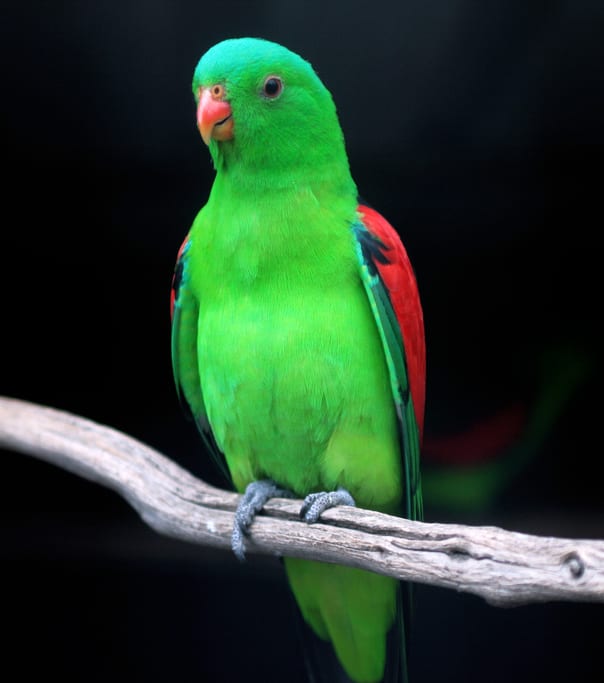
A medium parrot 30-35 cm long, green with vivid red wings; the male has a black nape and a blue lower back and rump.
Difficulty
Advanced
Temperature
15〜30℃
Lifespan
30-50 years
Size
30-35cm (120-210g)
Humidity
40〜60%
Diet
Mixed seed, nuts, fruit, blossom and nectar, greens and pellets; insects are also taken in the wild
About
The red-winged parrot (Aprosmictus erythropterus), also called the crimson-winged or blood-winged parrot, is native to Australia and New Guinea. Males have a black nape, a blue lower back and rump, a yellow tail tip, an orange bill and grey feet. It occurs up to 600 m in subtropical and semi-arid eucalypt woodland, forest edge, riverine woodland, acacia scrub, mangrove, farmland, cypress pine, casuarina groves and lowland savanna. Wild food includes eucalypt, acacia and hopbush seeds, mistletoe berries and Grevillea blossom, as well as insects. In captivity a walk-in flight at least 3 m long is recommended, and the bigger the aviary the better. The birds are acrobatic, so swings, ladders and perches of different diameters should be supplied. Clutches are of three to six eggs with fledging at five to six weeks.
Source: Wikipedia (CC BY-SA 4.0)
Lifespan of the Red-winged Parrot
The Red-winged Parrot lives 30-50 years.
Size of the Red-winged Parrot
The Red-winged Parrot grows to 30-35cm (120-210g).
It is typically 30-33 cm long, given as up to 35 cm in some sources, and weighs 120-210 g, with green plumage and vivid red wings.
Basic Info
Origin
Northern and eastern Australia and New Guinea
Lifespan
30-50 years
Size
30-35cm (120-210g)
Care Specifications
Semi-aggressivePair
Sources: World Parrot Trust Parrot Encyclopedia / Wikipedia - Red-winged parrot
References & Sources
Edited & verified by: BreederDirect editorial team
The taxonomic, regulatory, and husbandry data on this page are compiled and verified against the authoritative primary sources below.
Taxonomy & Authority
Accepted name: Aprosmictus erythropterus (Gmelin, 1788)
Synonyms: Psittacus erythropterus
Authority databases: GBIF
Nomenclature follows global taxonomic authority databases.
Regulations & Conservation Status
CITES Appendix IIIUCN LC · Least Concern
Aprosmictus erythropterus. The order Psittaciformes is listed in CITES Appendix II except for species placed in Appendix I, so this species is Appendix II and international trade requires an export permit.
Sources: CITES Appendices (Appendix II) / IUCN Red List
Regulations may change. Always verify the latest information with the relevant authorities.
Red-winged Parrot Listings
Loading latest listingsFind listings for this species