Rosella Care Guide | Personality, Diet, and Hand-Taming Tips for Australian Parakeets
A comprehensive guide to caring for Rosellas including Common Rosellas and Crimson Rosellas. Covers their vibrant plumage, the necessity of spacious cages (60–90cm width), pellet-based diet management, hand-rearing from chicks for taming, and prevention of chlamydiosis and megabacterial disease.
Key Takeaways
A comprehensive guide to caring for Rosellas including Common Rosellas and Crimson Rosellas. Covers their vibrant plumage, the necessity of spacious cages (60–90cm width), pellet-based diet management, hand-rearing from chicks for taming, and prevention of chlamydiosis and megabacterial disease.
Related Species
What is a Rosella?
Rosellas are parakeets native to Australia and Tasmania belonging to the parrot family (Psittacidae), characterized by their vibrant coloration and distinctive scalloped feather patterns. They are increasingly kept as pets in Japan and growing in popularity due to their beautiful colors and relatively manageable temperament.
Common Species
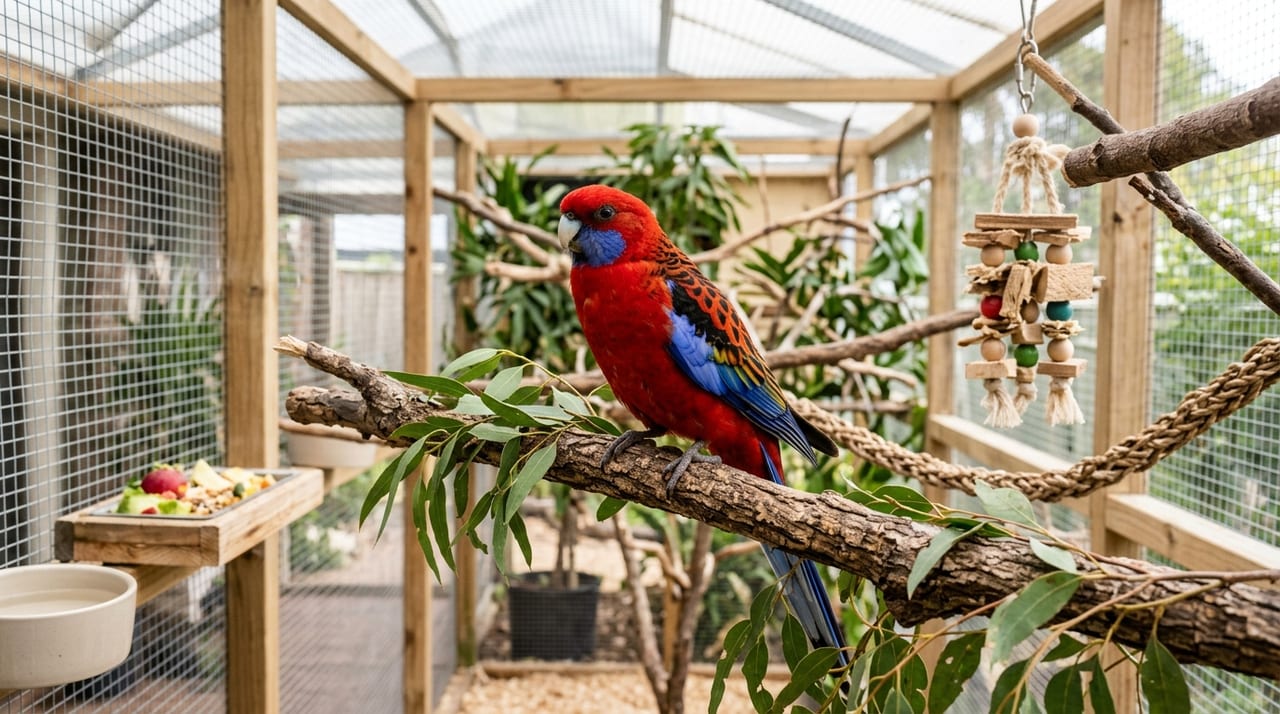
- Common Rosella: Bright red, blue, and yellow coloration. The most well-known Rosella species
- Crimson Rosella: Striking contrast between brilliant red and deep blue
- Eastern Rosella: Vibrant mix of red, white, green, and yellow
- Western Rosella: Scarlet and green coloration
- Pale-headed Rosella: Soft yellow-green, more subdued coloring
Basic Specifications
- Body length: 25–38cm (varies by species)
- Lifespan: 15–25 years
- Vocalizations: Clear, whistle-like calls. Relatively manageable volume compared to larger parrots
- Difficulty level: Intermediate (requires more care than budgerigars)
Rosella Personality and Characteristics
Rosellas are comparatively gentle and lack the extreme emotional displays seen in cockatoos or African greys. However, the following traits should be understood:
- High individual variation: Even within the same species, some individuals are easily hand-tamed while others are naturally wary
- Common Rosellas are relatively easy to hand-tame: Hand-reared chicks become affectionate toward humans
- Territorial awareness: During breeding season, territorial behavior intensifies
- Bite strength: Significantly stronger than smaller parakeets. Even hand-tamed birds may bite unexpectedly
Housing Setup
Cage Size
Rosellas are large and active, requiring cages at least 60–90cm wide. For multiple birds, a larger aviary is recommended.
Bar spacing should be 1.5–2cm. Wider spacing risks escape or injury from the bird's head getting caught.
Perches and Play Environment
Install natural wood branches (birch or eucalyptus) inside the cage to encourage chewing and play. Rosellas love gnawing, so rotate toys (wood, leather, or natural materials) regularly.
Temperature Control
Although Australian-origin Rosellas have moderate cold tolerance, 15–25°C is ideal. Avoid sudden temperature fluctuations and place cages away from drafts, direct sunlight, and windowsills.
Diet Management
Rosellas are omnivorous and consume seeds, fruits, flowers, and insects in the wild.
Main Diet (60–70%)
Large pellets (formulated for lorikeets or parakeets, such as Harrison's brand) provide the most balanced nutrition. Seed-only diets become deficient in nutrients, lacking proper fat and carbohydrate ratios. While many individuals prefer seeds, gradual transition to pellets is often necessary.
Supplementary Foods (30–40%)
- Vegetables: Broccoli, carrots, corn, bell peppers, leafy greens (spinach in moderation)
- Fruits: Apples (seeds removed), kiwi, blueberries, pears
- Greens and flowers: Dandelions, pansies, and other safe wild plants and flowers provide a natural feeding experience
Forbidden Foods
Avocado (lethal), chocolate, caffeine, alcohol, onions, garlic, high-sodium foods
Hand-Taming and Socialization
Hand-rearing Rosellas from the chick stage is the most reliable method for achieving hand-tameness.
- Acquire chicks at 4–6 weeks of age from a breeder
- Hand-feed 3–4 times daily using warm water-diluted commercial hand-feeding formula
- Wean to self-feeding around 8–10 weeks
- Daily interaction and practice with perching on hands
For adult birds, while more time-consuming, target training and gradual desensitization can be effective.
Health Management and Disease Prevention
Regular Veterinary Care
Annual to bi-annual check-ups with an avian veterinarian are recommended, including fecal examination, weight measurement, and oral cavity inspection.
Common Rosella Diseases
- Chlamydiosis (Psittacosis): Bacterial infection caused by Chlamydia. Zoonotic disease requiring caution
- Megabacterial Disease (AGY): Fungal gastric infection causing vomiting, weight loss, and digestive issues
- Beak and nail overgrowth: Some individuals require regular trimming
- Lead and zinc toxicity: Heavy metal poisoning from chewing galvanized or metal cage components
Signs of Stress
- Fluffed feathers with lethargy or lack of activity
- Excessive biting or aggression
- Self-plucking feathers
If these signs appear, environmental review and veterinary consultation are necessary.
Points When Acquiring a Rosella from a Breeder
Rosellas are bred and distributed among enthusiasts and breeders.
- Confirm species and color mutation: Verify whether Common, Eastern, Crimson, or other species
- Check parent bird temperament: Assess if they are docile and human-friendly
- Verify infectious disease testing: Confirm screening for chlamydiosis and PBFD
- Confirm age and hand-rearing history: For hand-tameness, chicks hand-reared from 4–6 weeks are essential
The beautiful plumage and clear vocalizations of Rosellas captivate bird enthusiasts. Given their long lifespan, acquire them only with thorough preparation and commitment.