Bourke's Parakeet Care Guide | A Calm and Gentle Small Parakeet
Learn how to care for the popular Bourke's parakeet, known for its gentle temperament. We cover cage selection, diet management, breeding season management, and breeding basics.
Key Takeaways
Learn how to care for the popular Bourke's parakeet, known for its gentle temperament. We cover cage selection, diet management, breeding season management, and breeding basics.
Related Species
Bourke's Parakeet: Overview
Bourke's parakeet (Neopsephotus bourkii) is a small parakeet native to the arid scrublands of Australia's interior. Body length reaches approximately 20–23 cm, with an average weight of 45–50 g. Its plumage displays a soft blend of pink, brown, and blue. Males feature striking blue tones on the belly and eyebrow stripe, while females are predominantly pale pink with more subdued coloration. In the wild, they exhibit crepuscular behavior—most active during dawn and dusk—a tendency that persists in captive birds.
Their greatest appeal lies in their "calm temperament and low aggression." Unlike many parrot species, they rarely bite and produce vocalizations well below the volume of budgies—remarkably quiet overall. This makes them ideal for apartment living and for those sensitive to bird noise. In recent years, they've gained attention from people seeking "quiet, laid-back companion birds." They are naturally social and thrive better in pairs or small groups than when kept alone, offering the added pleasure of observing bonded pair behavior.
Setting Up Your Breeding Environment
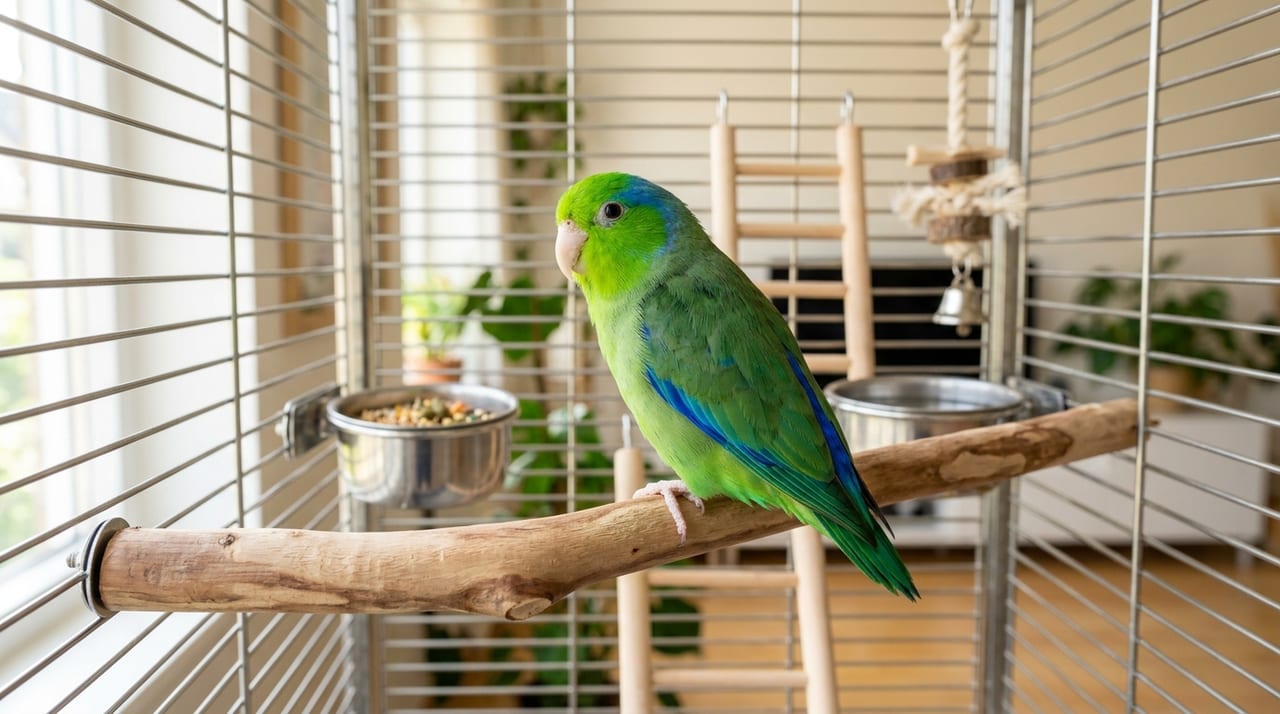
Cage Size: For a breeding pair, aim for dimensions of at least 60 cm wide × 40 cm deep × 60 cm tall. Bourke's parakeets engage in more vertical movement between perches than horizontal flight, so height is more important than floor space. For multi-bird or mixed flocks, an aviary setup with ample flight space is ideal.
Perches: Install natural wood branches (cherry, birch, cork, etc.) 12–16 mm in diameter at multiple heights. Uniform plastic perches alone can cause continuous pressure on the foot pad, leading to bumblefoot. Mixing different diameters and materials engages the foot muscles evenly and promotes long-term health.
Temperature and Humidity: Maintain a comfortable range of 18–28 °C. Below 10 °C, health declines noticeably—use a pet heater or panel heater for winter warmth. Aim for 40–60% humidity; excessive dryness degrades feather quality.
Sunlight and Lighting: 2–4 hours of indirect sunlight daily (avoid direct rays—heat stroke risk) or full-spectrum fluorescent lighting aids vitamin D3 synthesis and maintains proper calcium metabolism. Given their crepuscular nature, timer-controlled lighting that mimics dawn and dusk cycles is beneficial.
Diet and Nutrition
Bourke's parakeets have a strong preference for seeds, but a seed-only diet leads to excess fat and vitamin deficiencies. Balanced nutrition is essential for long-term health.
Main Diet (60–70%): Small bird seed mix centered on millet, canary seed, and panicum. High-fat seeds like sunflower and safflower are palatable but cause obesity—limit them to 10% or less.
Supplementary Foods (30–40%):
- Vegetables: Bok choy, mustard greens, cilantro, broccoli (excellent for calcium and vitamins)
- Fruits: Apple, pear, blueberries (in moderation—watch sugar intake)
- Pellets: Most nutritionally balanced but can take weeks to accept; mix gradually with seeds for smoother transition
- Cuttlebone powder: Offer continuously as a calcium source
Foods to Avoid: Avocado, chocolate, onions, chives, high-salt foods, alcohol, and caffeine—even small amounts can cause toxicity.
Daily Care and Health Management
Bathing: Bourke's parakeets enjoy water baths. Offer shallow water (1–2 cm deep) two to three times weekly. Bathing maintains feather hygiene and moisture. Keep it optional—set up the environment so the bird chooses to bathe naturally.
Nail Trimming: Natural wood and rough perches wear nails naturally, but if overgrowth occurs, use small animal nail clippers and trim only the tip. Use a light to locate blood vessels (the quick) and avoid them for safety.
Health Checks: Monitor daily for:
- Droppings (watery, black, or red-tinged droppings warrant concern)
- Appetite and water intake
- Feather gloss and fluffiness (puffed feathers often signal illness)
- Eye and nostril discharge
Parrots instinctively hide illness, so consult an avian veterinarian (experienced with exotic animals) at the first sign of change.
Breeding Season and Reproductive Management
Longer daylight in spring and summer triggers breeding readiness. You'll notice males pursuing females actively and performing courtship feeding—a sign of pair bonding.
Preventing Breeding: Keep daylight to 10 hours or less (use a cover), avoid excessive high-nutrition foods, and don't provide a nesting box or nesting material.
Facilitating Breeding: Install a horizontal nesting box (20–25 cm deep) near the top of the cage to encourage natural laying. Females typically lay 4–6 eggs per clutch; incubation lasts approximately 18 days, and chicks fledge 35–40 days after hatching. Females shoulder most incubation and chick-rearing, though males assist with feeding. Minimize human disturbance—a quiet, stable environment is key to breeding success.
Living Long-Term with Bourke's Parakeets
With proper care, these birds live 8–12 years. Although they appear low-maintenance and quiet, they still need mental stimulation: rearranging perches, rotating toys, and gentle daily interaction. Without enrichment, they may develop stress-related boredom.
Excessive handling isn't necessary, but brief daily conversation, or pair housing to fulfill social needs, supports psychological well-being. For those seeking a quiet companion bird, the Bourke's parakeet is an excellent long-term choice.