Source: Wikimedia Commons
Red-fronted Parrot (Jardine's Parrot)
IntermediatePoicephalus gulielmi
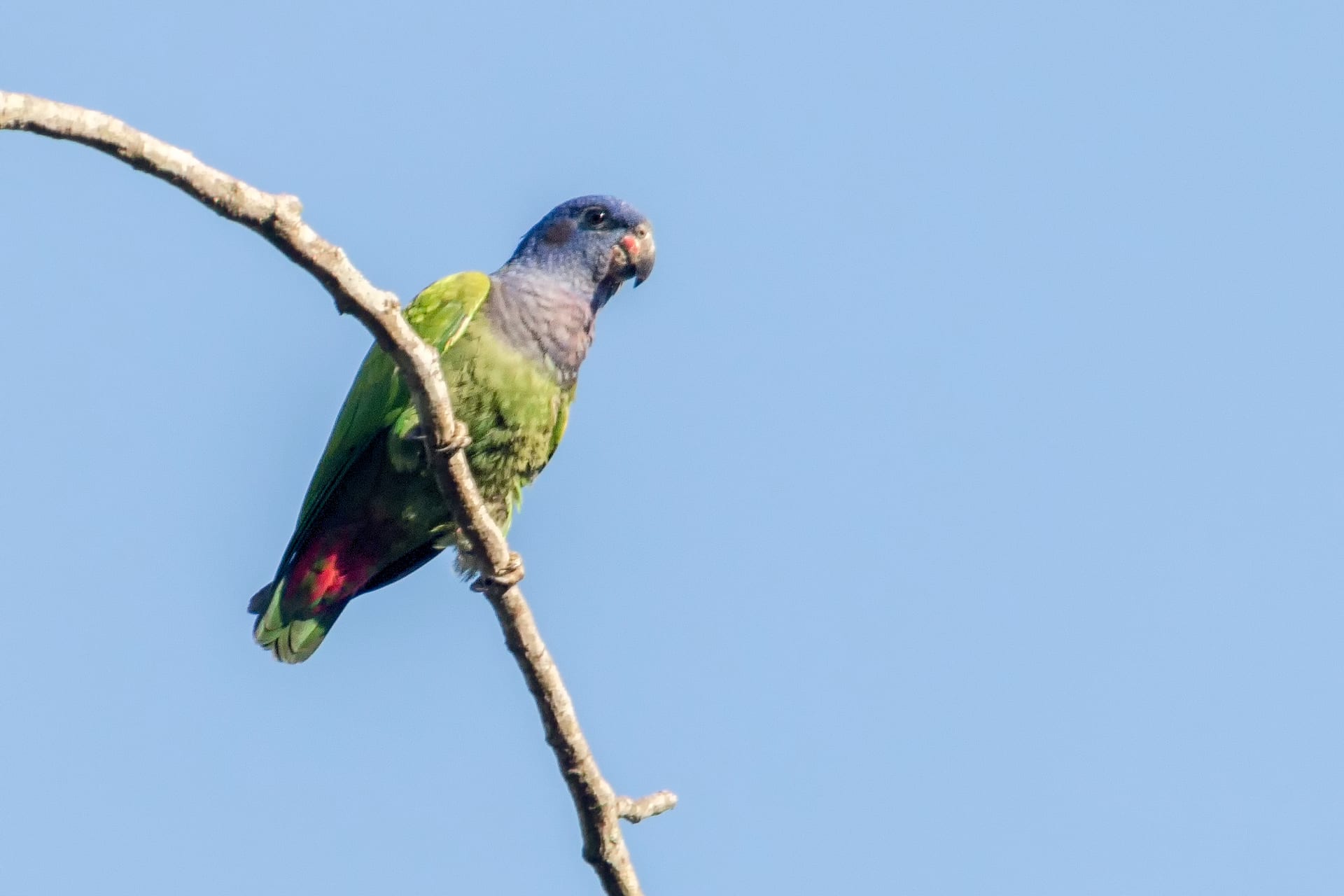
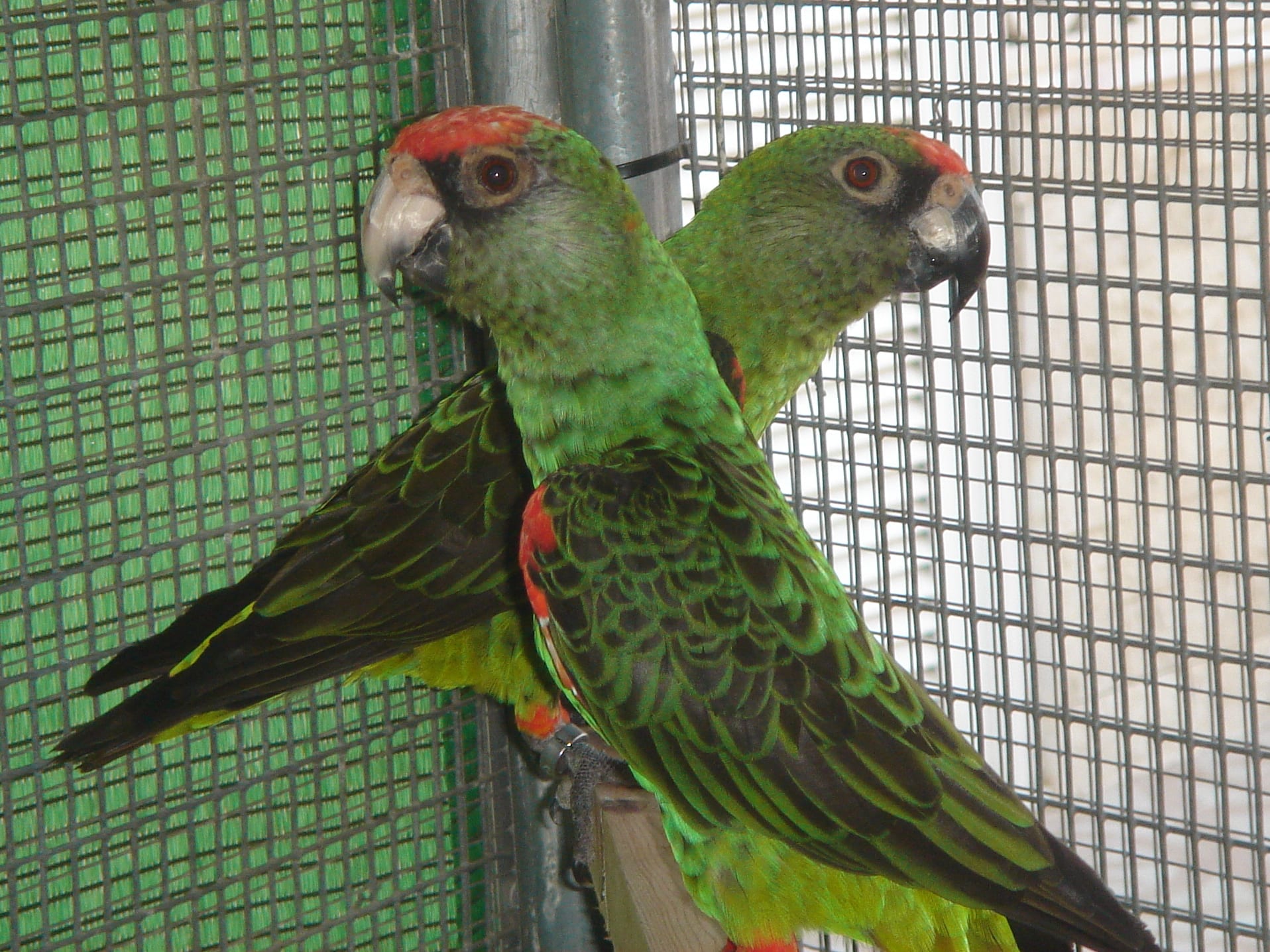
A medium parrot 28 cm long, mainly green with red or orange on the forehead, thighs and bend of the wing; the extent and shade vary by subspecies. Widespread in Africa, it is long-lived and can reach 30 years.
Difficulty
Intermediate
Temperature
15〜30℃
Lifespan
Up to 30 years
Size
28cm (200-227g)
Humidity
40〜60%
Diet
Mixed seed, nuts, fruit, greens, vegetables and pellets
About
The red-fronted parrot (Poicephalus gulielmi), also known as Jardine's parrot, is a medium-sized, mainly green parrot distributed across wide areas of Africa. The extent and shade of the red or orange plumage on its head, thighs and bend of wings vary depending on the subspecies; the irises are red-orange, the eyerings pinkish-grey and the legs grey-brown. In Kenya and Tanzania it occurs to 3,250 m in primary montane Juniperus and Podocarpus forest, while through the rest of its range it is restricted to lowland rainforest, and it is also seen in coffee plantations and secondary forest in Angola and Ghana. In captivity an aviary or suspended enclosure 3 m long is recommended, and as an avid chewer it needs unsprayed pine, willow, elder and fir wood, vegetable-tanned leather items, branches, foraging puzzles, ladders and swings, with a vertical nest box about 25 x 25 x 51 cm. Clutches are of three to four eggs with a long fledging period of ten to eleven weeks. The population is decreasing but the IUCN lists the species as Least Concern.
Source: Wikipedia (CC BY-SA 4.0)
Lifespan of the Red-fronted Parrot (Jardine's Parrot)
The Red-fronted Parrot (Jardine's Parrot) lives Up to 30 years.
Size of the Red-fronted Parrot (Jardine's Parrot)
The Red-fronted Parrot (Jardine's Parrot) grows to 28cm (200-227g).
It is 28 cm long and weighs 200-227 g.
Basic Info
Origin
Africa, from the montane forests of Kenya and Tanzania to the lowland forests of Ghana, Angola and the Congo basin
Lifespan
Up to 30 years
Care Specifications
Semi-aggressivePair
Sources: World Parrot Trust Parrot Encyclopedia / Wikipedia - Red-fronted parrot
References & Sources
Edited & verified by: BreederDirect editorial team
The taxonomic, regulatory, and husbandry data on this page are compiled and verified against the authoritative primary sources below.
Taxonomy & Authority
Accepted name: Poicephalus gulielmi (Jardine, 1849)
Synonyms: Pionias gulielmi
Authority databases: GBIF
Nomenclature follows global taxonomic authority databases.
Regulations & Conservation Status
CITES Appendix IIIUCN LC · Least Concern
Poicephalus gulielmi. The order Psittaciformes is listed in CITES Appendix II except for species placed in Appendix I, so this species is Appendix II and international trade requires an export permit.
Sources: CITES Appendices (Appendix II) / IUCN Red List
Regulations may change. Always verify the latest information with the relevant authorities.
Red-fronted Parrot (Jardine's Parrot) Listings
Loading latest listingsFind listings for this species