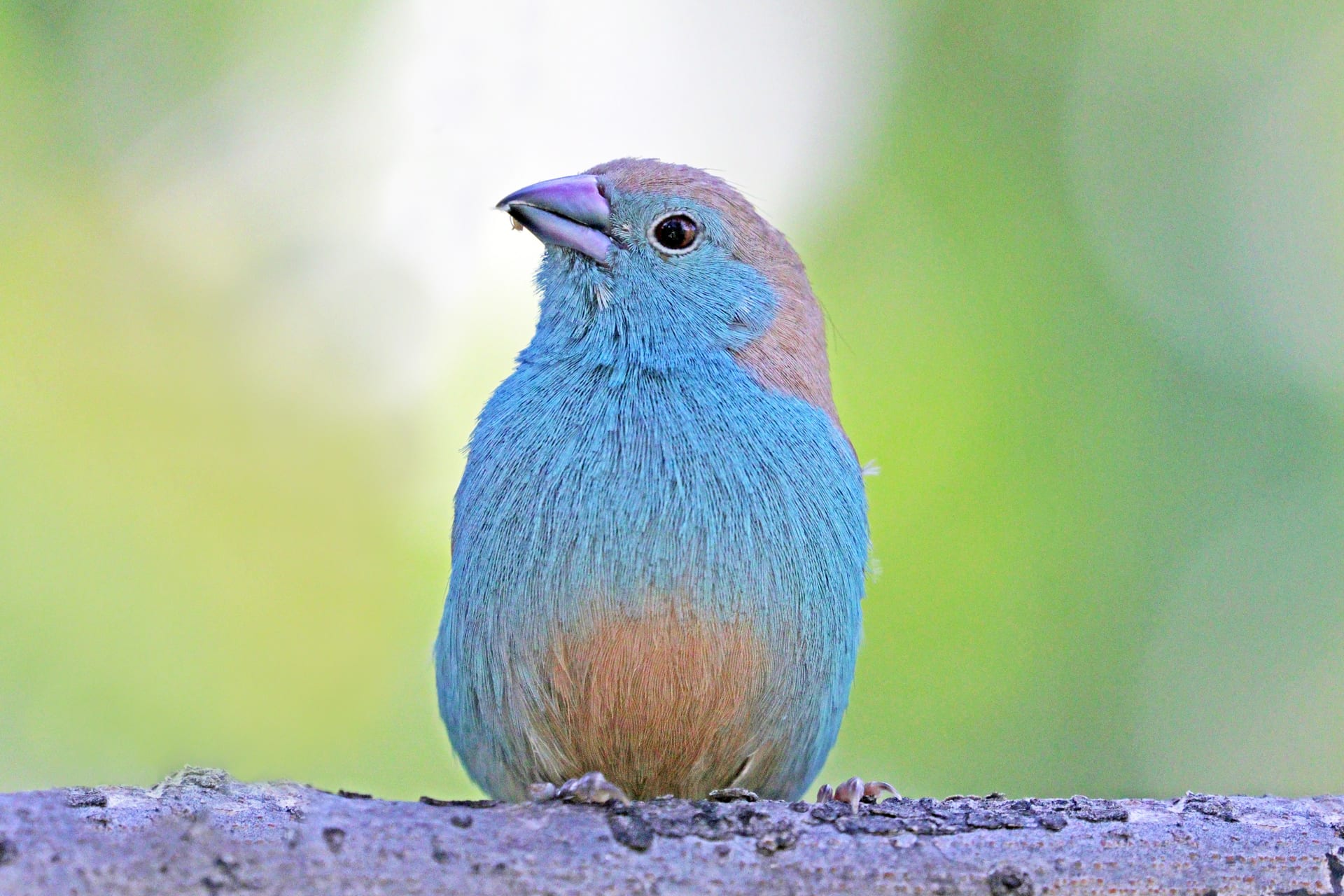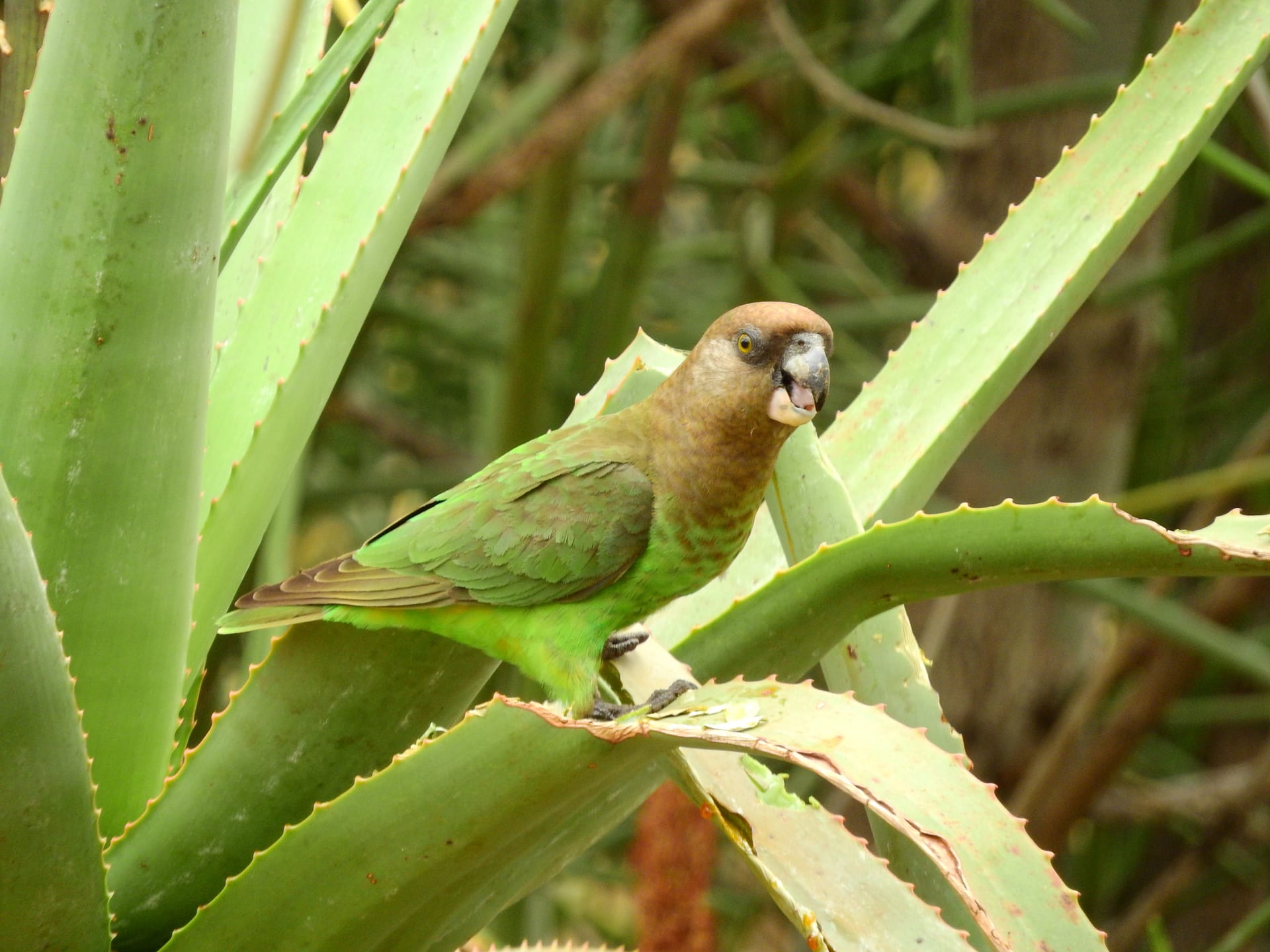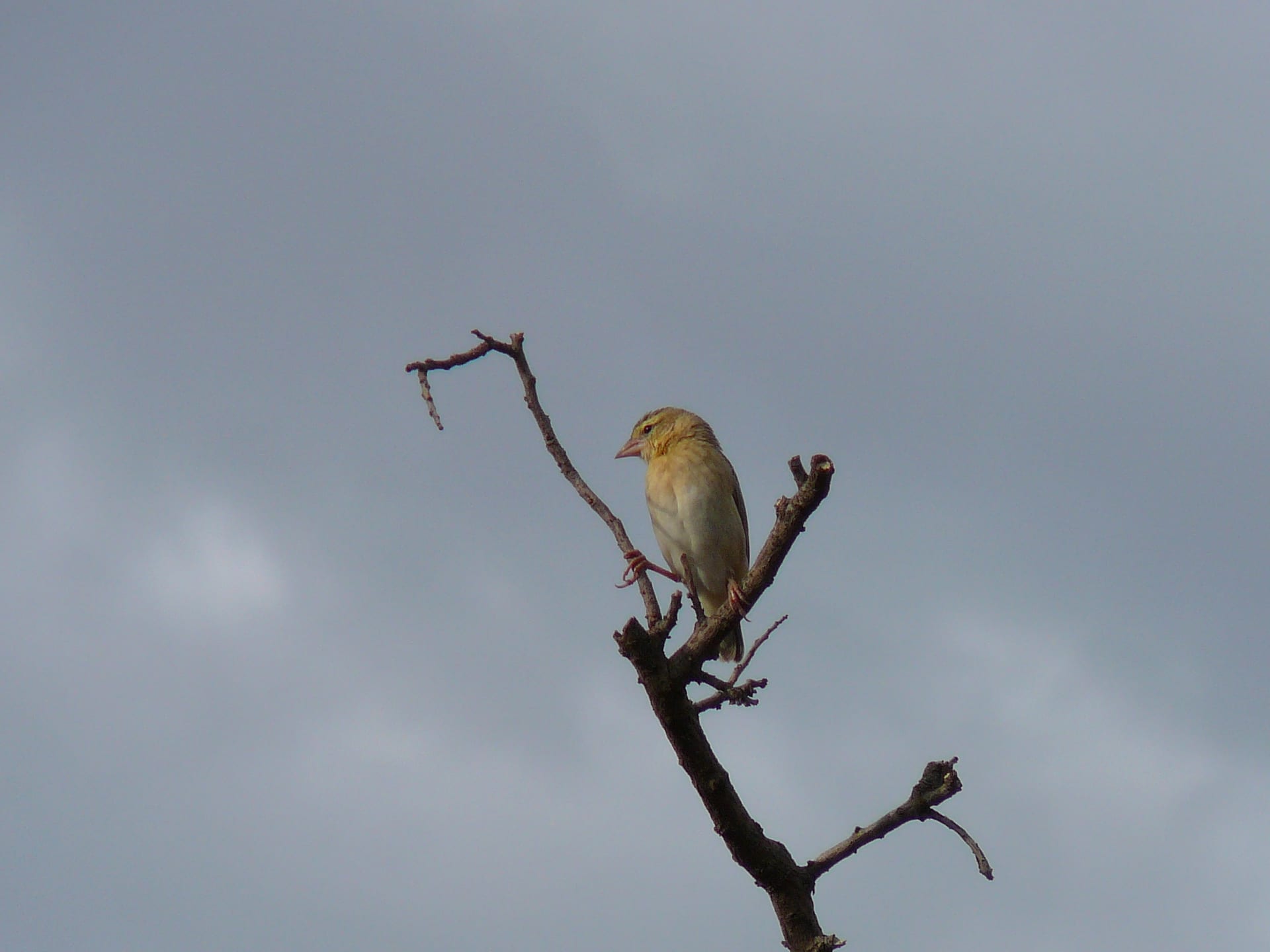
Source: Wikimedia Commons
Northern Red Bishop
IntermediateEuplectes franciscanus
A short-tailed weaver whose breeding male wears flaming red-orange and black. The red pigment comes from dietary carotenoids, so captive birds develop a different shade.
Difficulty
Intermediate
Temperature
15〜30℃
Lifespan
5-8 years
Size
About 11cm
Humidity
40〜60%
Diet
Mixed seed, spray millet, greens, carotenoid-rich vegetables, and small livefood when breeding
About
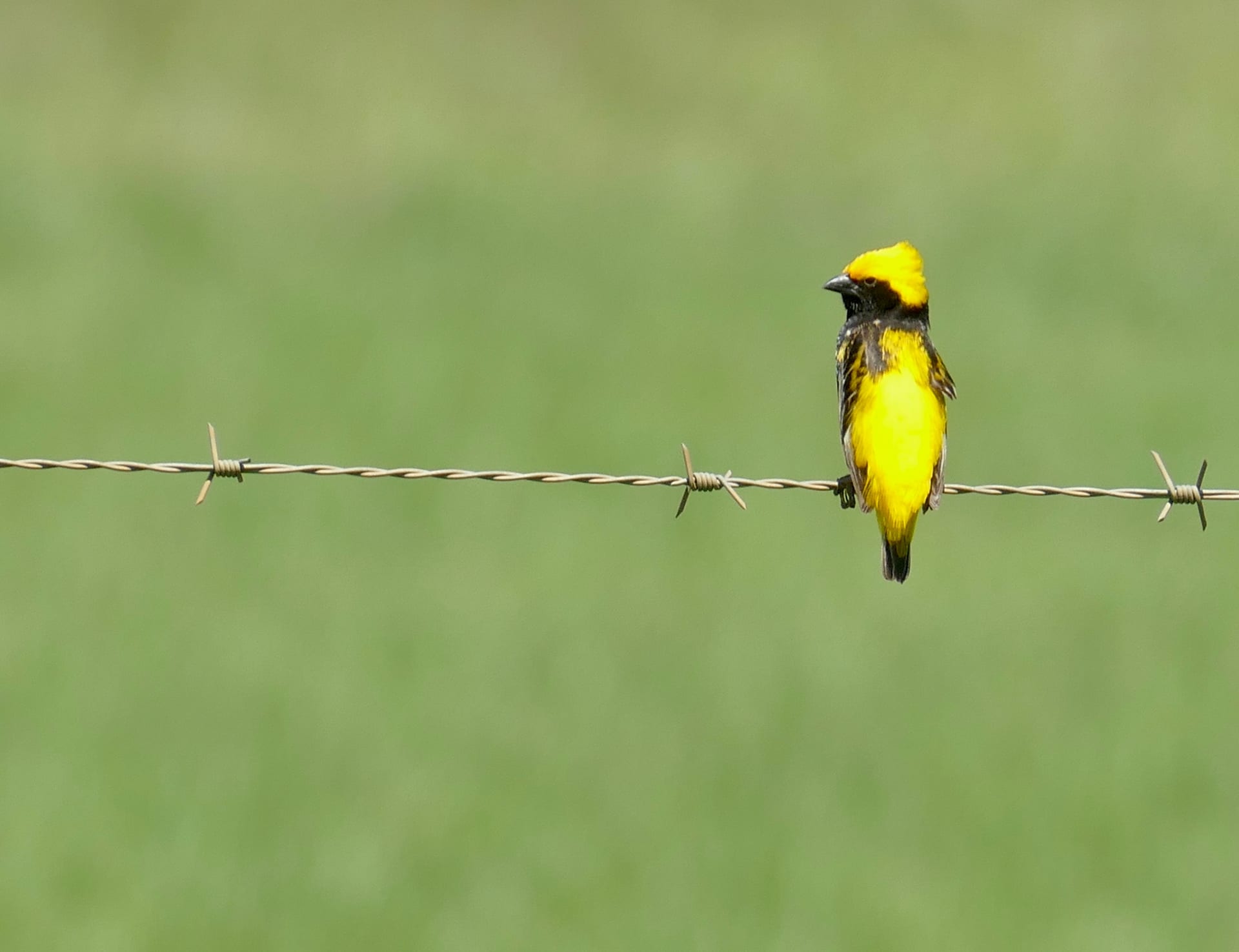
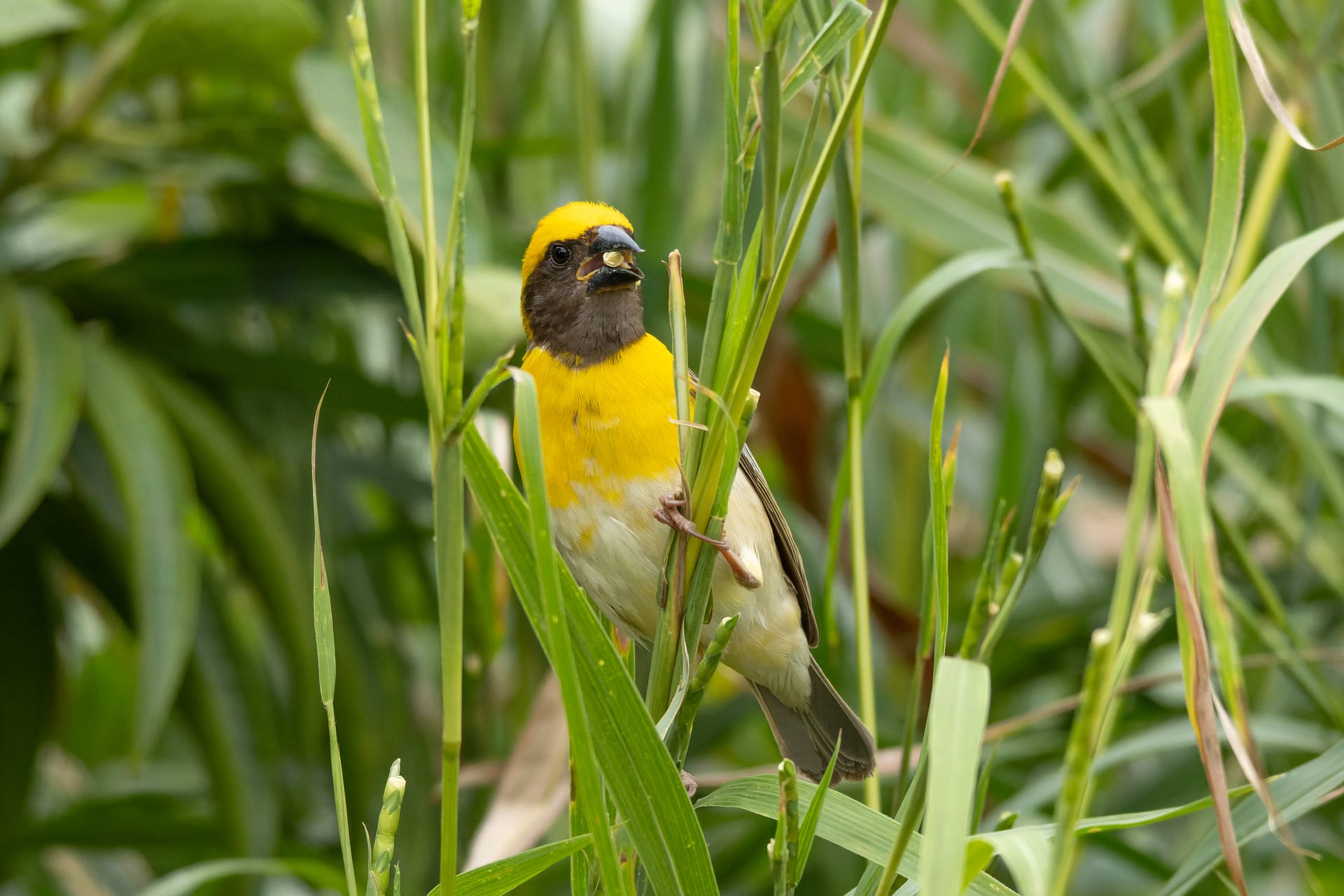
The northern red bishop (Euplectes franciscanus) is a short-tailed weaver widespread across northern Africa. The breeding male is covered in striking red-orange over the back, wrapping round from the chin to the back of the head, throat and breast, with a black crown, forehead, flanks and belly; the tail and upper wings are brown, the legs pale and the bill black. The red-orange comes from dietary carotenoids, lutein and two lutein-derived red fractions driving the colour in the wild. Captive birds lack the R2 red fraction in their diet and so never match wild colouring. The species is sexually dimorphic, males being larger, and is polygynous: once a female lands, courtship follows and the male builds a globular nest for her. The most striking males, which build the best nests and hold territories rich in food, have the highest reproductive success, so sexual selection acts strongly on both plumage and nest building. It is commonest in northern Africa but has also been introduced to the western hemisphere.
Source: Wikipedia (CC BY-SA 4.0)
Lifespan of the Northern Red Bishop
The Northern Red Bishop lives 5-8 years.
Size of the Northern Red Bishop
The Northern Red Bishop grows to About 11cm.
It is about 11 cm long and weighs 12-22 g.
Basic Info
Origin
Across northern Africa, including Senegambia, Guinea, Burkina Faso, southern Chad, Sudan, Ethiopia, northern Uganda, Kenya and Tanzania
Lifespan
5-8 years
Care Specifications
References & Sources
Edited & verified by: BreederDirect editorial team
The taxonomic, regulatory, and husbandry data on this page are compiled and verified against the authoritative primary sources below.
Taxonomy & Authority
Accepted name: Euplectes franciscanus (Isert, 1789)
Synonyms: Loxia franciscana
Authority databases: GBIF
Nomenclature follows global taxonomic authority databases.
Regulations & Conservation Status
Not CITES-listedIUCN LC · Least Concern
Euplectes franciscanus. The family Ploceidae is not listed in the CITES Appendices, so this species is not covered. The IUCN assesses it as Least Concern.
Sources: CITES Appendices (Ploceidae not listed) / IUCN Red List
Regulations may change. Always verify the latest information with the relevant authorities.
Northern Red Bishop Listings
Loading latest listingsFind listings for this species