Source: Wikimedia Commons
Yellow-crowned Bishop
IntermediateEuplectes afer
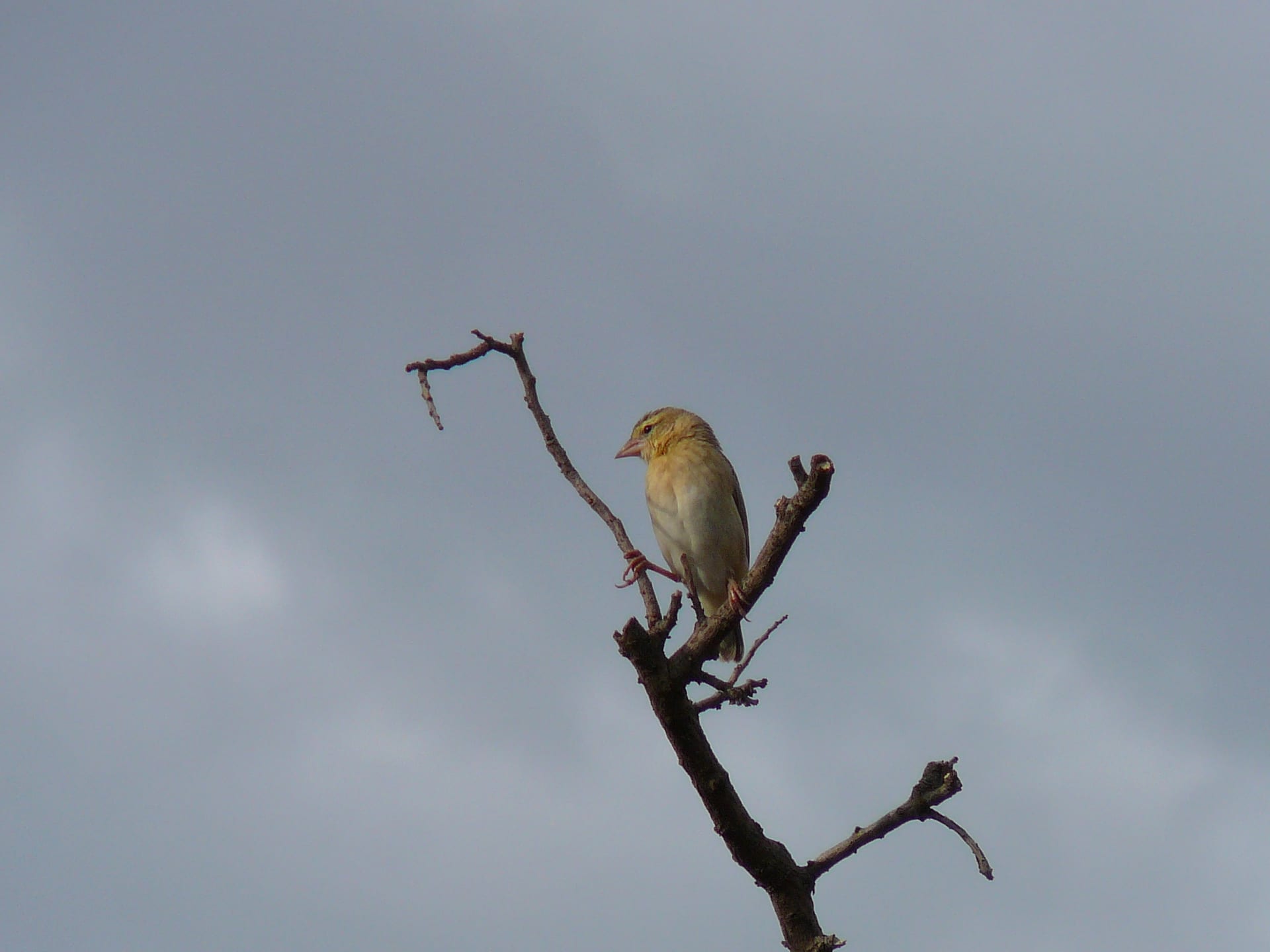
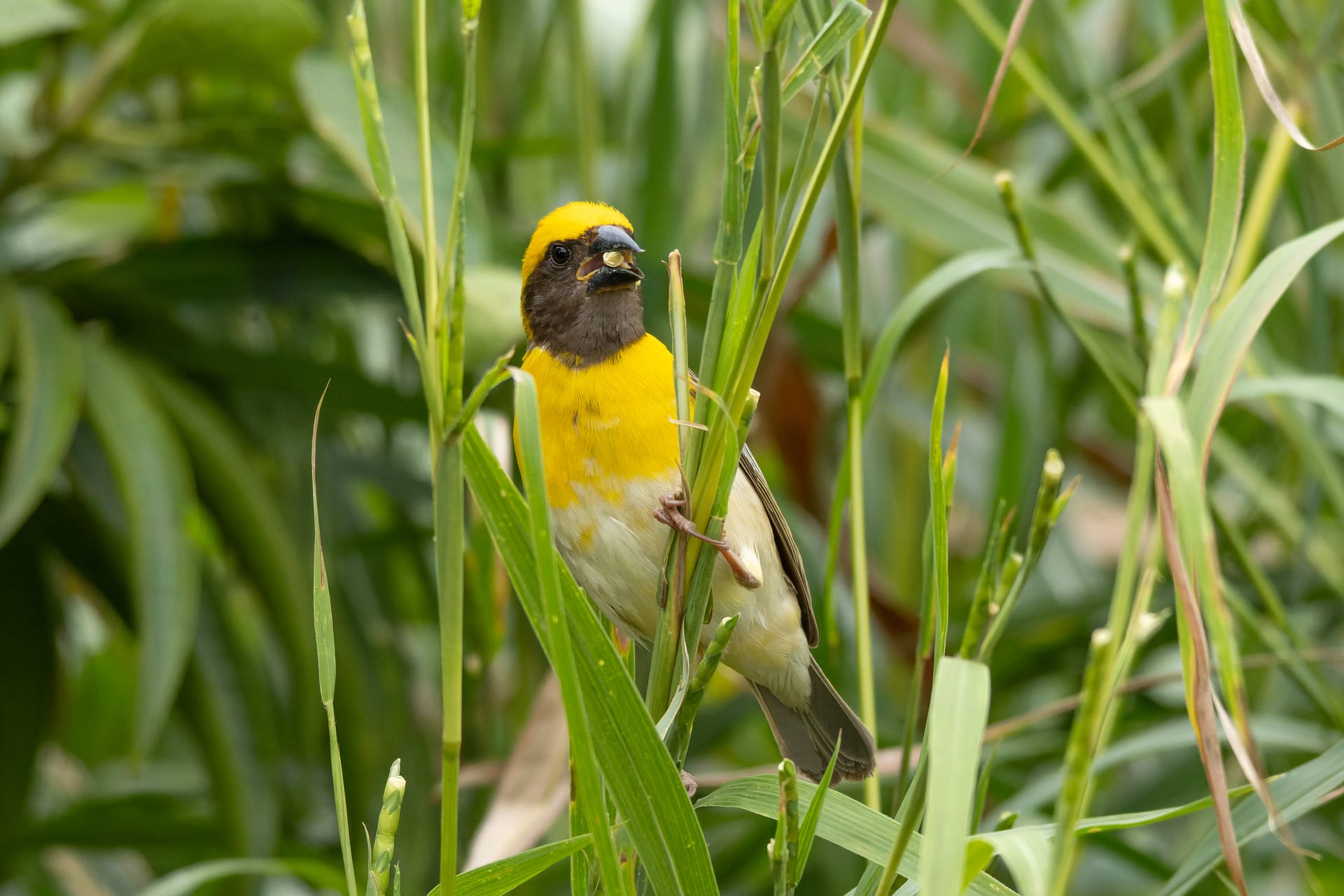
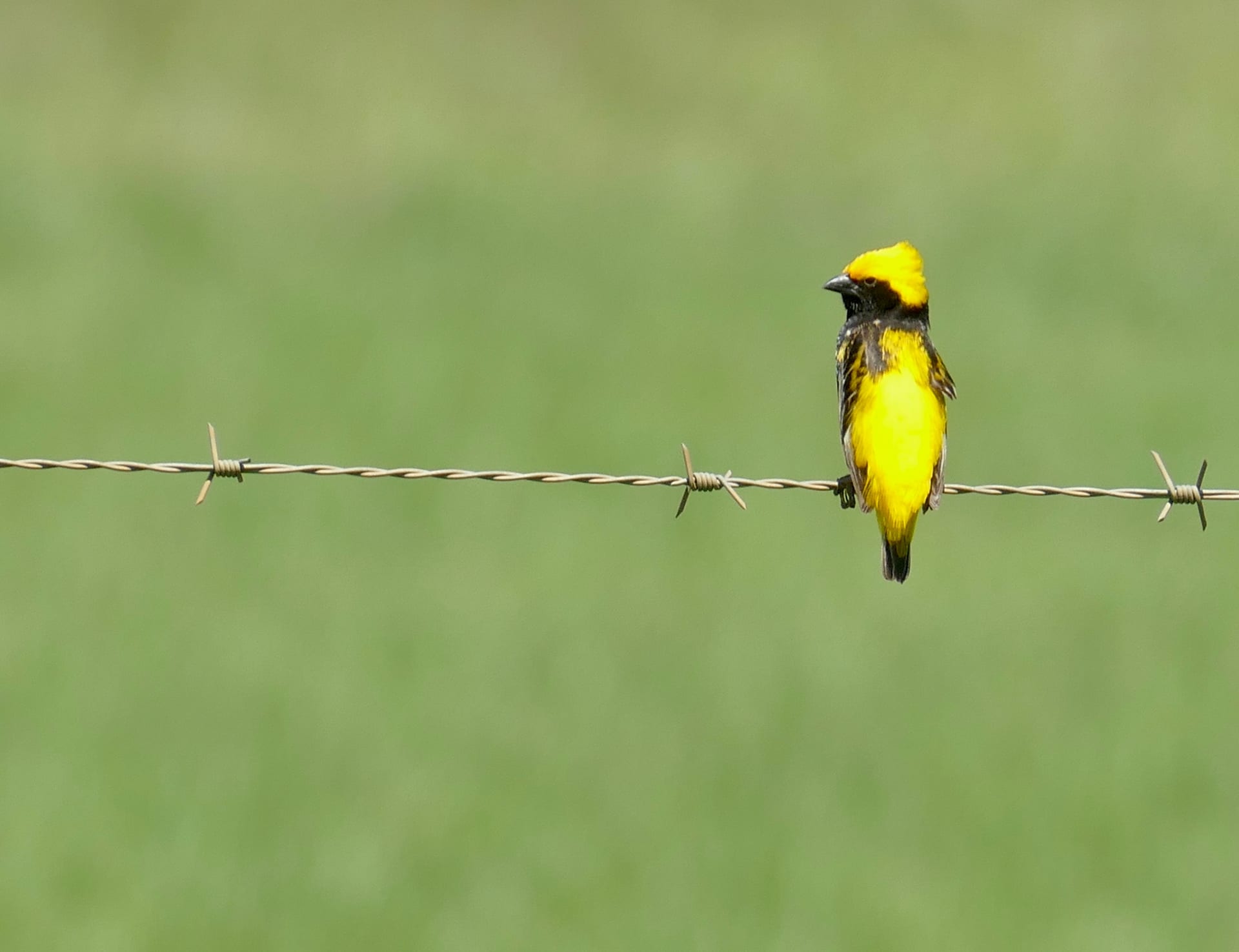
A weaver whose breeding male turns brilliant golden yellow and black, with yellow from forehead and crown to the rump. Outside the breeding season he moults into a dull, female-like plumage.
Difficulty
Intermediate
Temperature
15〜30℃
Lifespan
5-7 years
Size
9.5-10.5cm
Humidity
40〜60%
Diet
Mixed seed, spray millet, greens, small livefood when breeding
About
The yellow-crowned bishop (Euplectes afer) is a weaver found widely across Africa. The bill is short and conical in both sexes, black on the breeding male and horn coloured, as on the female, outside the breeding season, while the legs and feet are pinkish brown. The breeding male has a black lower face, throat, breast and belly, a wide black collar on the hindneck, and a brilliant yellow forehead, crown and hindcrown, with a yellow shoulder patch and a yellow rump and back; the wings and tail are brown. Out of season the male moults into dull female-like plumage. Nesting runs from November to May and peaks from December to March. Males are polygynous but, unlike some relatives, do not breed in colonies. The genus Euplectes was introduced by William Swainson in 1829 and now holds eighteen species.
Source: Wikipedia (CC BY-SA 4.0)
Lifespan of the Yellow-crowned Bishop
The Yellow-crowned Bishop lives 5-7 years.
Size of the Yellow-crowned Bishop
The Yellow-crowned Bishop grows to 9.5-10.5cm.
It is 95-105 mm long and weighs 15 g.
Basic Info
Origin
Widespread in Africa, including Angola, Botswana, Cameroon, Ethiopia, Kenya, Namibia, Nigeria, Senegal, South Africa and Tanzania
Lifespan
5-7 years
Size
9.5-10.5cm
Care Specifications
References & Sources
Edited & verified by: BreederDirect editorial team
The taxonomic, regulatory, and husbandry data on this page are compiled and verified against the authoritative primary sources below.
Taxonomy & Authority
Accepted name: Euplectes afer (Gmelin, 1789)
Synonyms: Loxia afra, Taha afer
Authority databases: GBIF
Nomenclature follows global taxonomic authority databases.
Regulations & Conservation Status
Not CITES-listedIUCN LC · Least Concern
Euplectes afer. The family Ploceidae is not listed in the CITES Appendices, so this species is not covered. The IUCN assesses it as Least Concern.
Sources: CITES Appendices (Ploceidae not listed) / IUCN Red List
Regulations may change. Always verify the latest information with the relevant authorities.
Yellow-crowned Bishop Listings
Loading latest listingsFind listings for this species