Source: Wikimedia Commons
Onagadori
AdvancedGallus gallus domesticus 'Onagadori'
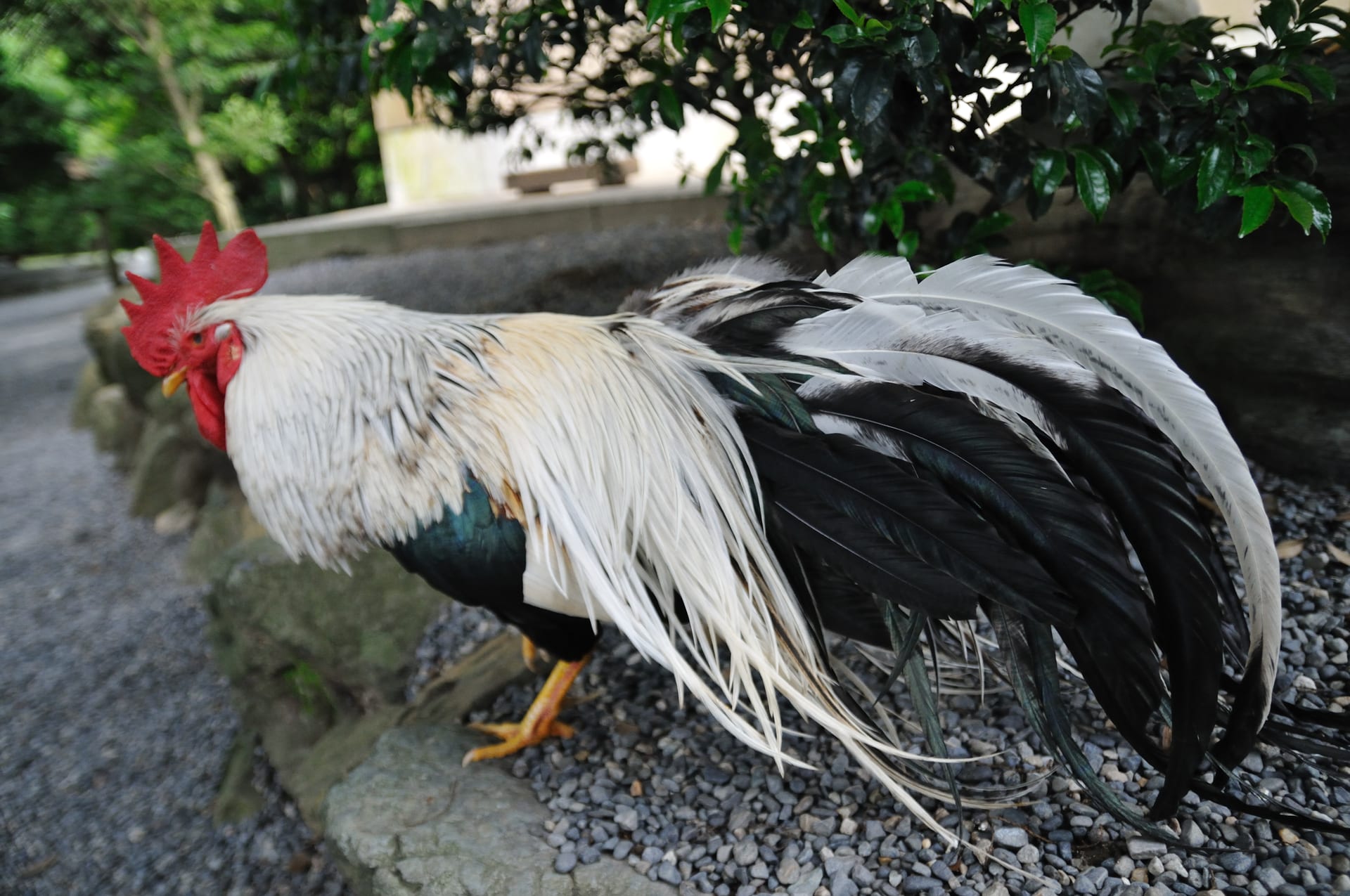
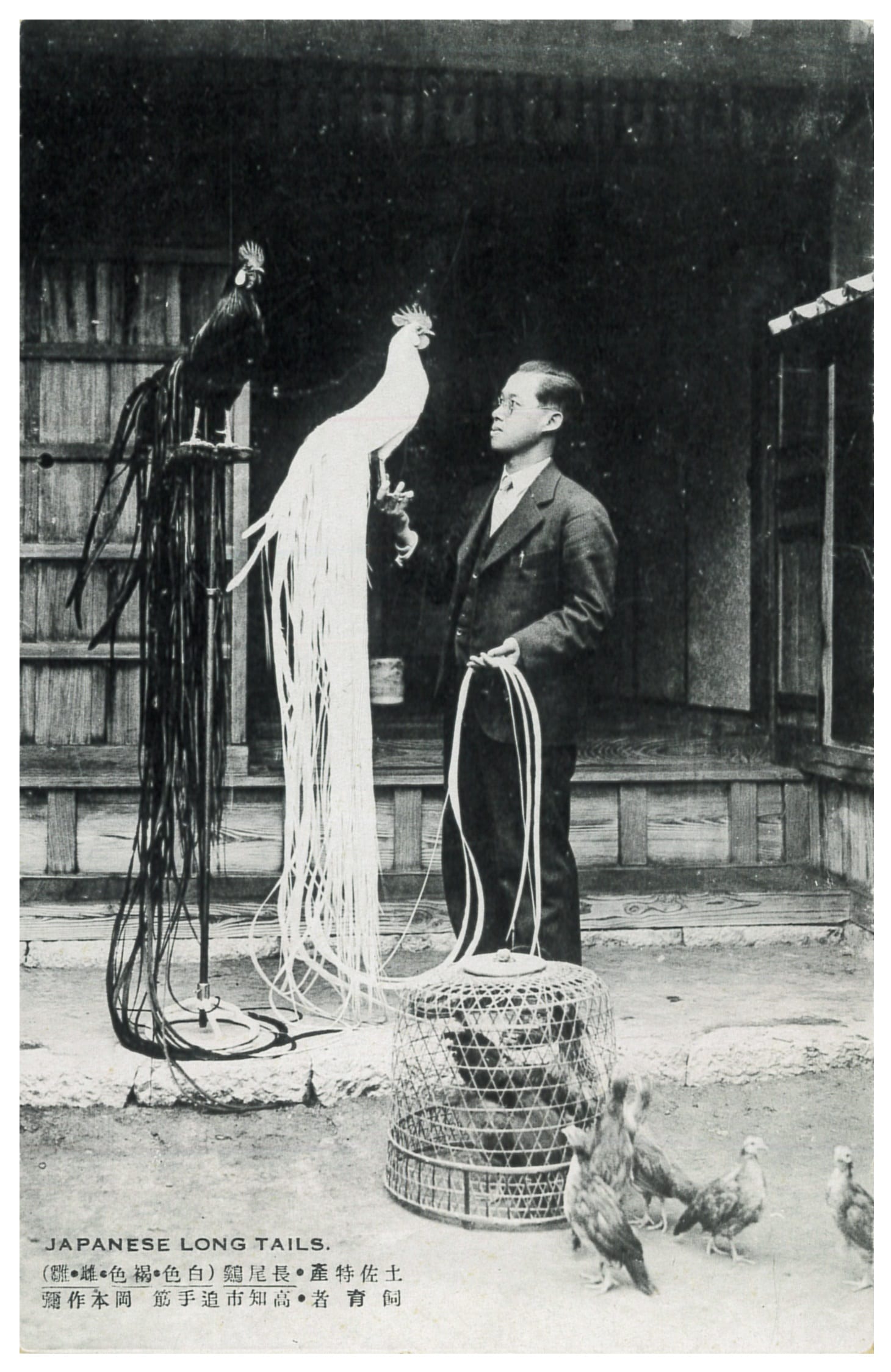
A chicken from Kochi Prefecture whose cock's tail feathers do not moult and keep growing, sometimes to several metres. Designated the Special Natural Monument 'Tosa no Onagadori', it is the only chicken breed with special status.
Difficulty
Advanced
Temperature
15〜30℃
Lifespan
Little data
Size
Little data
Humidity
40〜60%
Diet
Chicken rations and greens; traditionally animal protein was added to support tail growth
About
The Onagadori is a Japanese chicken breed created in Tosa, now Kochi Prefecture. It is said to have begun when the Yamauchi lords of Tosa collected long tail feathers from farmers to decorate spears carried in processions, and Takechi Riemon is said to have created the foundation Shirafuji type around 1655-1657. Its hallmark is that the cock's tail feathers do not moult but keep growing, by about 80 cm to 1 m a year in young birds, and long-lived birds have exceeded 10 m. A distinctive method of keeping birds in tall narrow boxes (tomebako) to restrict movement and protect the tail developed in the Taisho era. Varieties include Shirafuji, white and brown. It was designated a natural monument in 1923 and, on 29 March 1952, the Special Natural Monument 'Tosa no Onagadori', without regional limitation. Numbers fell to nine birds during the war, and because inbreeding has recently reduced tail growth, Nankoku City is running a conservation programme. The Western 'Yokohama' is a different chicken descended from the Minohiki and others, whose tail feathers do moult, and should not be confused with it. Keeping it requires special housing to protect the tail and considerable skill, and its lines are maintained mainly by preservation societies and fanciers in Kochi.
Source: Wikipedia (CC BY-SA 4.0)
Basic Info
Origin
Japan (around Nankoku, Kochi Prefecture, former Tosa Province)
Lifespan
Little data
Size
Little data
Temperature
15〜30℃
Humidity
40〜60%
Diet
References & Sources
Edited & verified by: BreederDirect editorial team
The taxonomic, regulatory, and husbandry data on this page are compiled and verified against the authoritative primary sources below.
Primary sources
- Wikipedia
- Kochi Prefecture - list of national special natural monuments
- Law for the Protection of Cultural Properties (Article 125)
- Act on Domestic Animal Infectious Diseases Control (Articles 12-3, 12-4)
- Enforcement Order (Article 4, animals subject to hygiene standards)
- Enforcement Regulation (Articles 21-5, 21-6, deadline and items)
- Agency for Cultural Affairs database - Tosa no Onagadori (designated 1923, special 1952)
- Wikipedia - Onagadori (16-18 tail feathers, growth per year, ornamental use)
- GBIF
Taxonomy & Authority
Regulations & Conservation Status
Not CITES-listed
Designated under the Law for the Protection of Cultural Properties as the Special Natural Monument 'Tosa no Onagadori' (natural monument 1923, special natural monument 29 March 1952, without regional limitation). Under Article 125 of the Law for the Protection of Cultural Properties, altering the state of a natural monument or acting in ways that affect its preservation requires permission from the Commissioner for Cultural Affairs, so check with the relevant board of education before transferring, exporting or cross-breeding birds. Under the Act on Domestic Animal Infectious Diseases Control, chickens are livestock subject to hygiene management standards, and anyone keeping even one bird must report the number kept to the prefecture (livestock hygiene service centre) by 15 June every year. Keepers of fewer than 100 birds file a simplified report, and those shipping no birds or eggs need no attachments.
Sources: Kochi Prefecture - list of national special natural monuments / Law for the Protection of Cultural Properties (Article 125) / Act on Domestic Animal Infectious Diseases Control (Articles 12-3, 12-4) / Enforcement Order (Article 4, animals subject to hygiene standards) / Enforcement Regulation (Articles 21-5, 21-6, deadline and items)
Regulations may change. Always verify the latest information with the relevant authorities.
Onagadori Listings
Loading latest listingsFind listings for this species