Source: Wikimedia Commons
Sebright
AdvancedGallus gallus domesticus 'Sebright'
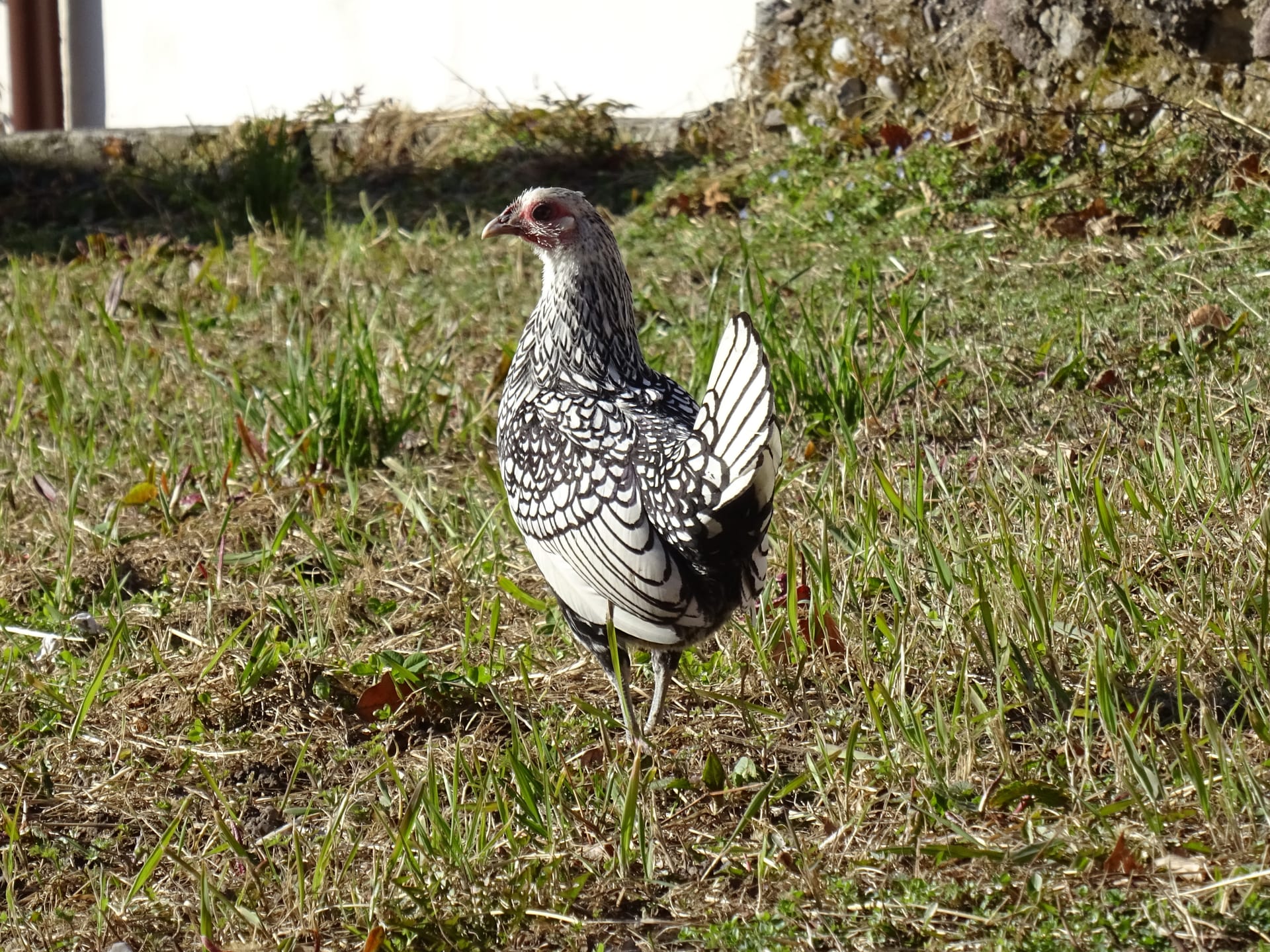
A British bantam whose gold or silvery-white feathers are evenly laced with black. A true bantam with no large counterpart, its cocks are hen-feathered, lacking long sickle and hackle feathers.
Difficulty
Advanced
Temperature
15〜30℃
Lifespan
Little data
Size
About 620 g (male), 570 g (female)
Humidity
40〜60%
Diet
Chicken rations for each growth stage, greens and oyster shell for layers
About
The Sebright is a British bantam created as an ornamental breed by Sir John Saunders Sebright in the early 19th century, and a true bantam with no large counterpart. It is one of the oldest recorded British bantams, and around 1810 the first single-breed club for chickens was founded for it. It is very small, with males averaging 620 g and females 570 g, and has a short back, full breast and drooping wings that give an angular, jaunty look. The UK recognises gold and silver, each with a dark gold or whitish silver ground evenly laced with black; other colours such as lemon and white-laced buff have been bred in Europe. The legs are clean with slate-blue skin, and the comb is a rose comb covered with fine points. Its hallmark is hen feathering in the cocks, which lack the long sickle, hackle and saddle feathers of most roosters. Hens lay some 60-80 eggs a year, and it is purely ornamental rather than a meat or egg bird. Hens rarely go broody, chick mortality is high and some males are infertile, so it is considered hard to breed for beginners. Adults are hardy but especially susceptible to Marek's disease. Like many bantams it flies well and is often kept confined. In Japan it is available from ornamental poultry fanciers and specialist shops.
Source: Wikipedia (CC BY-SA 4.0)
Size of the Sebright
The Sebright grows to About 620 g (male), 570 g (female).
Basic Info
Origin
United Kingdom (created by Sir John Sebright in the early 19th century)
Lifespan
Little data
Size
About 620 g (male), 570 g (female)
Temperature
References & Sources
Edited & verified by: BreederDirect editorial team
The taxonomic, regulatory, and husbandry data on this page are compiled and verified against the authoritative primary sources below.
Taxonomy & Authority
Regulations & Conservation Status
Not CITES-listed
A domestic ornamental bantam chicken, not covered by CITES, the species conservation law or the cultural properties law. Under the Act on Domestic Animal Infectious Diseases Control, chickens are livestock subject to hygiene management standards, and anyone keeping even one bird must report the number kept to the prefecture (livestock hygiene service centre) by 15 June every year. Keepers of fewer than 100 birds file a simplified report, and those shipping no birds or eggs need no attachments.
Sources: Act on Domestic Animal Infectious Diseases Control (Articles 12-3, 12-4) / Enforcement Order (Article 4, animals subject to hygiene standards) / Enforcement Regulation (Articles 21-5, 21-6, deadline and items)
Regulations may change. Always verify the latest information with the relevant authorities.
Sebright Listings
Loading latest listingsFind listings for this species