Source: Wikimedia Commons
Helmeted Guineafowl
IntermediateNumida meleagris
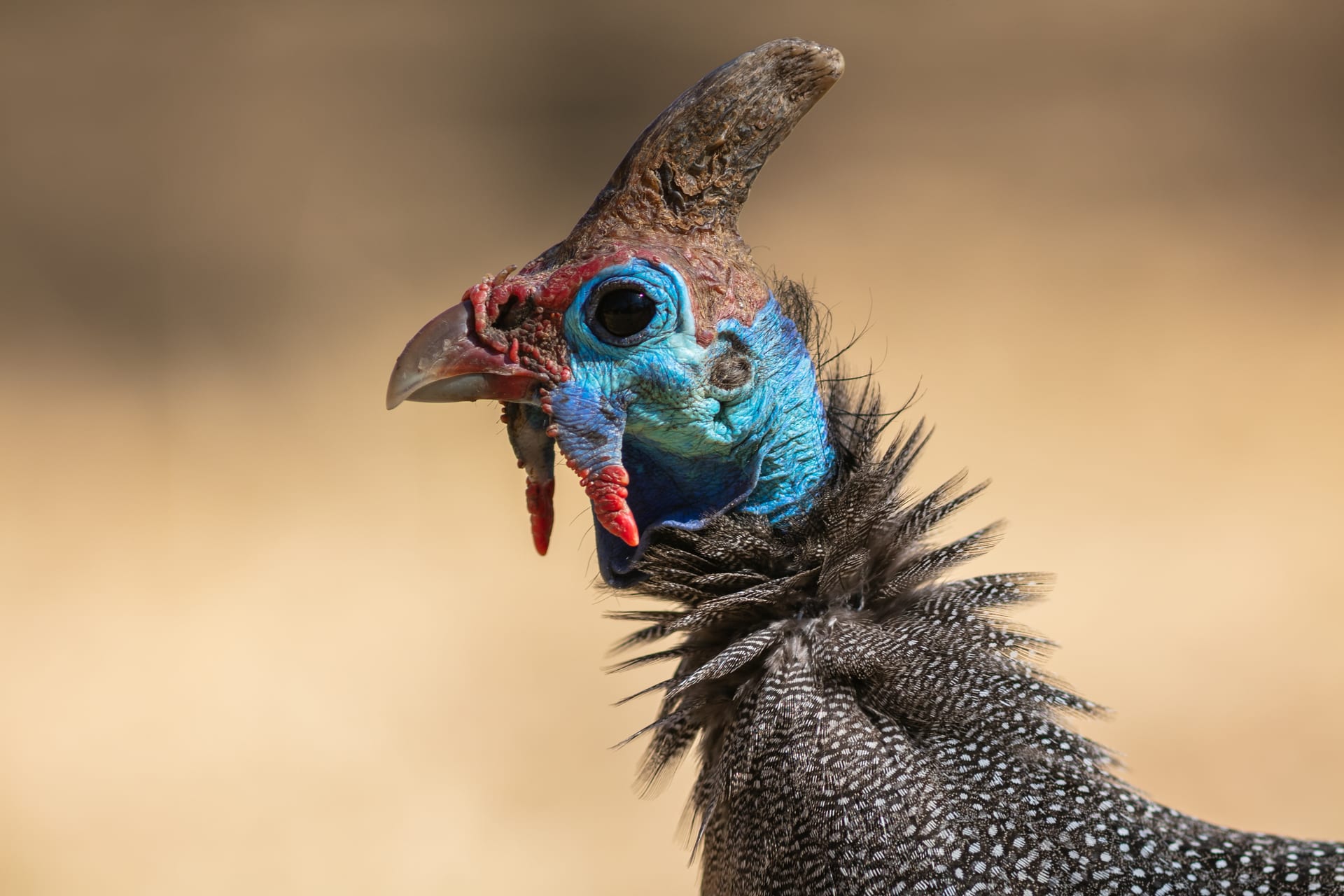
A galliform bird with white spots scattered over a dark body and a bony casque on its bare head. Domesticated from African stock, it is kept worldwide for meat, tick control and as a watchful alarm bird. An alarmed bird runs rather than flies.
Difficulty
Intermediate
Temperature
15〜30℃
Lifespan
Up to 12 years in the wild
Size
53-58cm (about 1.3kg)
Humidity
40〜60%
Diet
Poultry feed, grain and greens; in the wild insects, arthropods, seeds and fruit
About
The helmeted guineafowl (Numida meleagris) is widespread in Africa south of the Sahara and is the only member of the genus Numida. Linnaeus described it as Phasianus meleagris in 1758 and moved it to his new genus Numida in 1764. The dark plumage is densely speckled with white; the head is unfeathered, carrying a dull yellow to reddish bony casque, bare red, blue or black skin and throat wattles, all larger in the male. Nine subspecies are recognised. The wings and tail are short, an alarmed bird runs rather than flies, and wild birds are recorded living up to twelve years. Outside the breeding season it forms flocks of about 25 birds that roost together in trees. Because it eats large numbers of ticks, it is often kept around farms and gardens for pest control. Its Japanese name is thought to derive from the name used when Dutch ships brought the bird to Japan in the Edo period.
Source: Wikipedia (CC BY-SA 4.0)
Lifespan of the Helmeted Guineafowl
The Helmeted Guineafowl lives Up to 12 years in the wild.
Size of the Helmeted Guineafowl
The Helmeted Guineafowl grows to 53-58cm (about 1.3kg).
It is 53-58 cm long and weighs about 1.3 kg.
Basic Info
Origin
Africa, mainly south of the Sahara; introduced as a domestic bird to the West Indies, North and South America, Australia and Europe
Lifespan
Up to 12 years in the wild
Size
Care Specifications
Semi-aggressiveGroup
Sources: Wikipedia - Helmeted guineafowl / Wikipedia - Helmeted guineafowl, Japanese edition (morphology, ecology)
References & Sources
Edited & verified by: BreederDirect editorial team
The taxonomic, regulatory, and husbandry data on this page are compiled and verified against the authoritative primary sources below.
Taxonomy & Authority
Accepted name: Numida meleagris (Linnaeus, 1758)
Synonyms: Phasianus meleagris
Authority databases: GBIF
Nomenclature follows global taxonomic authority databases.
Regulations & Conservation Status
Not CITES-listedIUCN LC · Least Concern
Numida meleagris. The family Numididae is not listed in the CITES Appendices, and the species does not appear in the Japanese schedule of designated dangerous animals.
Sources: CITES Appendices (species not listed) / IUCN Red List / Cabinet Order under the Act on Welfare and Management of Animals, appended table (designated dangerous animals)
Regulations may change. Always verify the latest information with the relevant authorities.
Helmeted Guineafowl Listings
Loading latest listingsFind listings for this species