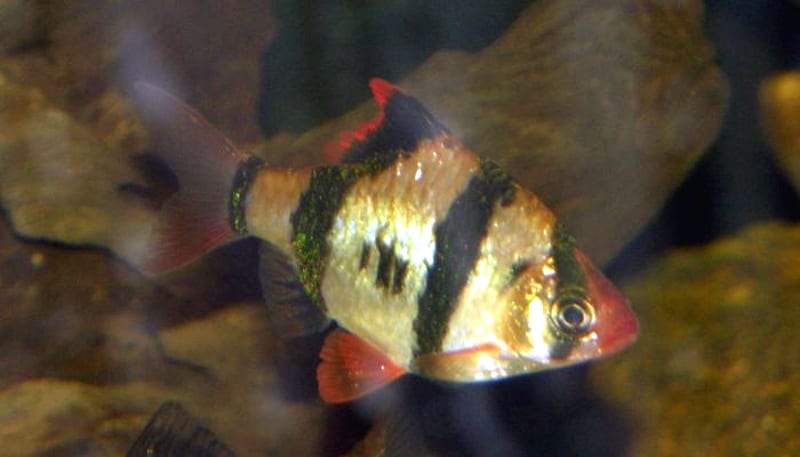
 © Derek Ramsey (Ram-Man) / CC BY-SA 2.5
Tiger Barb
The Tiger Barb is a small, active schooling fish known for its tan-gold body marked with four bold black bands and fins that blush red at the edges. It's a hardy species that adapts well to a range of conditions, making it a popular choice for those new to fishkeeping. That said, Tiger Barbs have a well-earned reputation for nipping the fins of tankmates, and keeping too few of them tends to concentrate this behavior on a single target. Housing them in a group of eight or more spreads that energy out and keeps the school noticeably calmer. For anyone who enjoys watching quick, coordinated group movement, this is a rewarding fish to observe.
View Tiger Barb encyclopedia →0% commission on your first sales!Register by September 30, 2026 and your first 2 sales are commission-free!
Breeder Wanted!
List on BreederDirect and sell directly to customers nationwide!
Our 6 Transparency Commitments
All Tropical Fish listings include water quality, temperament, and tank size information from verified Breeder.
- Origin Disclosed
- Real Photos
- Water Quality Disclosed
- Recommended Tank Size
- Temperament Disclosed
- Breed Line Disclosed
Browse all 301 breeds
Water Type
Care Level
No listings match your filters
Adjust your filters, or get notified when new listings arrive.
Getting alerts is free with a member account. When new listings match your saved search, we'll notify you by email and in-app.
Browse other categories
Verified breeders (preview)
Are you raising tropical fish?
Register as a breeder and connect with buyers directly.
Apply as a breederAbout Tiger Barb
Tiger Barb: a hardy, beginner-friendly schooling fish with bold black bands and red-tinged fins. Best kept in groups of eight or more to curb fin-nipping.
7 things to know before welcoming a Tiger Barb
1Must Be Kept in Groups
Tiger Barbs are notorious fin-nippers, and in small numbers that behavior tends to focus on one unlucky tankmate. Keeping a group of eight or more spreads their energy out and noticeably calms the tank.
2Choose Tankmates Carefully
Fast and energetic, Tiger Barbs can be rough on slow-moving, long-finned fish like bettas or angelfish, often nipping at their fins. Pair them with similarly active, hardy species for a peaceful community tank.
3Expect Adult Size
Adults reach up to about 7 cm. Since they're best kept in groups, plan tank space around their full-grown size and the number you intend to keep together.
4Hardy, But Not Maintenance-Free
Tiger Barbs are known for tolerating a range of water conditions, which makes them forgiving for beginners. Still, regular water changes and filtration are what keep their colors and activity at their best.
5Match Tank Size to Group
Housing eight or more Tiger Barbs together means giving them enough open swimming room. Check that your planned tank size can comfortably fit the whole group before bringing them home.
6Open Swimming Space Matters
This species prefers cruising in a group over hiding in cover. Keep the layout from feeling too cramped and leave open stretches where the school can move together.
7Acclimate Slowly
When introducing Tiger Barbs to a new tank, float the bag to match temperature, then gradually mix in tank water before release. Sudden changes in water conditions can stress the fish.
Frequently asked questions about Tiger Barb
- Q.How many Tiger Barbs should I keep together?
- A.We recommend a group of eight or more. In smaller numbers, their fin-nipping tends to focus on one individual, while larger groups spread that behavior out and keep things calmer.
- Q.Can Tiger Barbs live with other fish?
- A.They mix well with similarly active, hardy tankmates. Slow-moving, long-finned fish like bettas are more likely to get their fins nipped, so it's best to avoid pairing them.
- Q.Are Tiger Barbs suitable for beginners?
- A.Yes, they're considered beginner-friendly thanks to their hardiness and tolerance for varying water conditions. Regular water changes and consistent care are still needed to keep them healthy.
- Q.How big do Tiger Barbs get?
- A.Adults reach up to about 7 cm. Since they're kept in groups, it helps to plan your tank size around their full-grown size ahead of time.
- Q.Are Tiger Barbs regulated under CITES?
- A.No, Tiger Barbs are not subject to CITES.
Useful tools for Tiger Barb care
Learn more about Tiger Barb in the encyclopedia
View Tiger Barb encyclopedia entry →
Care difficulty, lifespan, size and diet — all basics covered.
Tiger Barb related articles
Tiger Barb & Cherry Barb Care Guide | Barb Species Characteristics, Tank Mates & Breeding
Comprehensive guide to caring for Tiger Barbs (Puntigrus tetrazona) and Cherry Barbs (Pethia titteya). Learn the importance of group housing, fin-nipping compatibility risks and suitable tank mates, pairing with acidic water and aquatic plants, and breeding methods—a practical guide for long-term barb species care.
Tiger Barb Care Guide | Active Schooling Fish Management and Considerations for Keeping Multiple Species
Tiger Barbs are popular tropical fish known for their vibrant striped pattern and active swimming. While they have semi-aggressive tendencies, making tankmate selection important, beginners can enjoy keeping them with proper care conditions and schooling composition. This guide covers care, breeding, and multi-species tank management in detail.
More in this category
Can't find the one you're looking for?
Post your wishes for free and breeders with matching animals will contact you with introductions.