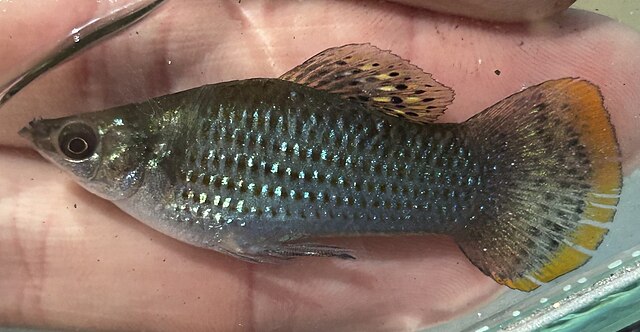
 © (c) James-LaFontaine, some rights reserved (CC BY) / CC BY 4.0
Molly
The molly is a livebearing fish closely related to the platy, prized for its beginner-friendly nature and wide variety of forms. From the round, balloon-bodied balloon molly to the sleek, all-black black molly, mollies offer plenty of visual variety to suit different tastes. They have a calm temperament that makes them easy to keep alongside other peaceful fish, and a shoal of mollies swimming together adds lively movement to any tank. Mollies also tolerate brackish water in addition to freshwater, giving keepers some flexibility, and they are generally hardy, making them a solid choice for anyone new to the tropical fish hobby.
View Molly encyclopedia →0% commission on your first sales!Register by September 30, 2026 and your first 2 sales are commission-free!
Breeder Wanted!
List on BreederDirect and sell directly to customers nationwide!
Our 6 Transparency Commitments
All Tropical Fish listings include water quality, temperament, and tank size information from verified Breeder.
- Origin Disclosed
- Real Photos
- Water Quality Disclosed
- Recommended Tank Size
- Temperament Disclosed
- Breed Line Disclosed
Browse all 301 breeds
Water Type
Care Level
No listings match your filters
Adjust your filters, or get notified when new listings arrive.
Getting alerts is free with a member account. When new listings match your saved search, we'll notify you by email and in-app.
Browse other categories
Verified breeders (preview)
Are you raising tropical fish?
Register as a breeder and connect with buyers directly.
Apply as a breederAbout Molly
A livebearer related to the platy, molly fish come in many varieties—from round-bodied balloon mollies to sleek black mollies. They tolerate brackish water and suit beginner aquarists.
7 things to know before welcoming a Molly
1Peaceful and community-friendly
Mollies have a calm temperament and generally mix well with other peaceful fish of similar size. Because they are a shoaling species, keeping several together tends to help them settle in and feel secure.
2Adapts to fresh or brackish water
Mollies can adapt to both freshwater and brackish setups, giving keepers some flexibility in tank design. They tolerate a certain range of water conditions, which helps make day-to-day care more forgiving.
3A wide range of varieties
From the rounded body of the balloon molly to the glossy all-black coloring of the black molly, mollies come in a wide range of body shapes and colors, making it fun to choose one that matches your taste.
4Grows moderately large
Adult mollies reach roughly 6 to 12 cm, somewhat larger than many small tropical fish. It's worth planning tank size and tankmate balance with this eventual size in mind.
5Lifespan of about 3 to 5 years
Mollies typically live around 3 to 5 years. Consistent water changes and water-quality maintenance go a long way toward helping them live a long, healthy life.
6Livebearer that breeds easily
Like the platy, mollies are livebearers that give birth to free-swimming fry rather than laying eggs. Keeping males and females together often leads to natural breeding, so keep an eye on the sex ratio if you want to manage population growth.
7What to prepare before bringing one home
Before bringing mollies home, set up and cycle the tank in advance, and prepare for gradual acclimation. Stabilizing water quality and temperature with a filter and heater beforehand helps reduce stress during the transition.
Frequently asked questions about Molly
- Q.Is the molly easy for beginners to keep?
- A.Yes, mollies are generally considered beginner-friendly. They tolerate a reasonable range of water conditions, so consistent basic care is usually enough to keep them healthy.
- Q.Can mollies be kept with other fish?
- A.Because of their calm temperament, mollies generally mix well with other peaceful fish of similar size. It's best to avoid pairing them with more aggressive species.
- Q.How large a tank do mollies need?
- A.Since adults can reach 6 to 12 cm, it's reassuring to provide a tank with enough swimming space. If keeping several together, allow even more room.
- Q.Should mollies be kept in freshwater or brackish water?
- A.Mollies can adapt to either freshwater or brackish water. Which to choose depends on your tank setup and compatibility with any other fish you plan to keep.
- Q.Why do mollies seem to multiply on their own?
- A.Mollies are livebearers like platies, giving birth to fry directly, so numbers can increase before you notice. Adjusting the male-to-female ratio can help manage population growth.
Useful tools for Molly care
Learn more about Molly in the encyclopedia
View Molly encyclopedia entry →
Care difficulty, lifespan, size and diet — all basics covered.
Molly related articles
Complete Guide to Platy and Molly Breeding | The Mechanics of Livebearing and Practical Techniques for Fry Protection
A comprehensive guide to the breeding ecology, fry protection, and management methods of platies and mollies. Introduces practical techniques for identifying pregnancy, protecting fry using breeding boxes, aquatic plants, and dedicated tanks, from initial feeding to growth management and preventing overpopulation.
Platy and Molly Care and Breeding Guide | The Appeal and Varieties of Livebearing Fish
Learn about platy and molly care methods and breeding techniques. Introduction to popular varieties, proper water conditions and care environments, raising fry, and notes on keeping with other fish.
More in this category
Can't find the one you're looking for?
Post your wishes for free and breeders with matching animals will contact you with introductions.