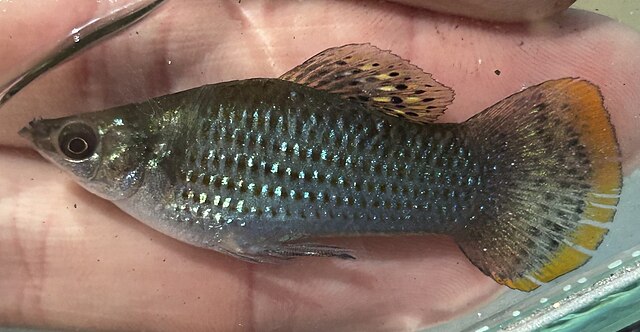
Source: Wikimedia Commons
Molly
BeginnerLivebearing fish like platy but slightly larger. Many varieties including balloon and black molly. Tolerates brackish water.
Difficulty
Beginner
Temperature
22〜28℃
Lifespan
3-5 years
Size
6-12cm
Diet
Pellets, algae, frozen food
About
Mollies (Poecilia sphenops and related species) are livebearing fish widely distributed from the Gulf Coast of Mexico to northern South America, remarkable for their ability to thrive in both freshwater and brackish water environments. Reaching 6–12 cm, they are available in numerous selectively bred color forms — black, white, gold, dalmatian — including the popular 'balloon' variety with its distinctively rounded abdomen. Mollies prefer slightly alkaline, moderately hard water and benefit from the addition of a small amount of aquarium salt (3–5 g/L), which enhances vitality and disease resistance. Generally peaceful, their relatively larger size can intimidate small fish, so tankmates of similar size are preferred. As prolific livebearers, females produce fry regularly, requiring management to prevent overcrowding. Mollies have a notably herbivorous tendency — spirulina flakes, blanched spinach, and algae wafers complement their diet alongside standard tropical fish foods. Their appetite for algae also provides a minor but appreciated cleaning function in planted aquariums.
Lifespan of the Molly
The Molly lives 3-5 years.
Size of the Molly
The Molly grows to 6-12cm.
Temperature & humidity for the Molly
The ideal water temperature for the Molly is 18〜28℃.
Optimal temperature is 25–28°C.
Basic Info
Origin
coastal rivers and brackish zones from the Gulf Coast of Mexico to northern South America
Lifespan
Care Specifications
- pH
- 7.5–8.2
- Hardness (GH)
- 11–30 dGH
- Water Temp.
- 18–28℃
- Min. Tank
- 81 L
PeacefulGroupBreeding: Easy
Sources: FishBase / Seriously Fish
References & Sources
Edited & verified by: BreederDirect editorial team
The taxonomic, regulatory, and husbandry data on this page are compiled and verified against the authoritative primary sources below.
Primary sources
Regulations & Conservation Status
Not CITES-listed
"Molly" is a collective term. Confirmed for the representative species Poecilia sphenops. No CITES-listed species within the genus Poecilia.
Sources: FishBase / Seriously Fish / CITES Appendices (Checklist)
Regulations may change. Always verify the latest information with the relevant authorities.
Molly Listings
Loading latest listingsFind listings for this species