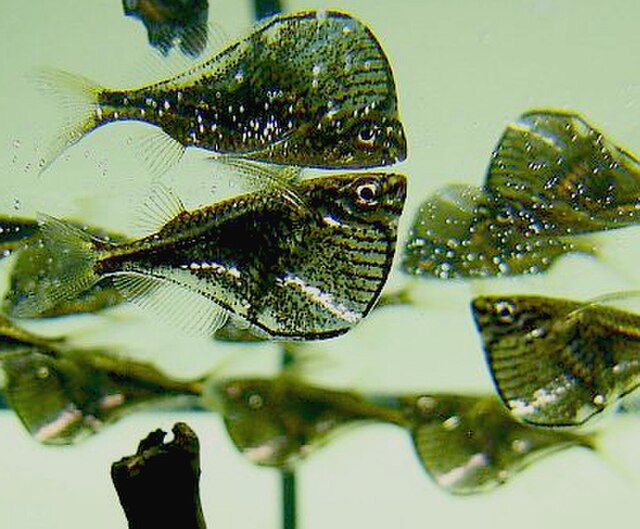
 © Tsunamicarlos / Public domain
Hatchetfish
The hatchetfish is a tropical fish named for its distinctive body shape, resembling the blade of a hand axe. As a surface-dwelling species that spends most of its time just beneath the water's surface, a school of hatchetfish swimming together creates a beautiful, dynamic layer of movement in the upper part of the tank. They have a calm temperament and generally get along well with other small fish, but they're also known for leaping suddenly when startled, which makes them prone to jumping out of open tanks. With a lifespan of 3 to 5 years and an adult size of just 3 to 6 cm, they're compact but somewhat sensitive to water quality and environmental changes, making them better suited to keepers with some prior experience. They take a bit more care to keep well, but that effort is rewarded with a genuinely striking and rewarding fish to watch.
View Hatchetfish encyclopedia →0% commission on your first sales!Register by September 30, 2026 and your first 2 sales are commission-free!
Breeder Wanted!
List on BreederDirect and sell directly to customers nationwide!
Our 6 Transparency Commitments
All Tropical Fish listings include water quality, temperament, and tank size information from verified Breeder.
- Origin Disclosed
- Real Photos
- Water Quality Disclosed
- Recommended Tank Size
- Temperament Disclosed
- Breed Line Disclosed
Browse all 301 breeds
Water Type
Care Level
No listings match your filters
Adjust your filters, or get notified when new listings arrive.
Getting alerts is free with a member account. When new listings match your saved search, we'll notify you by email and in-app.
Browse other categories
Verified breeders (preview)
Are you raising tropical fish?
Register as a breeder and connect with buyers directly.
Apply as a breederHatchetfish key facts
- Care level
- Intermediate
- Lifespan
- 3-5 years
- Size
- 3-6cm
- Diet
- Floating pellets, frozen brine shrimp
- Container & Tank
- It swims in groups just below the surface, so a gap-free lid is an absolute must. A wide tank with room to swim along the surface suits it.
- Swimming
- Swims just below surface. Adds surface activity
- Water Temperature & Quality
- Suited to 24-28°C and slightly acidic to neutral water (pH 6.0-7.5). It is sensitive to water changes, so avoid sudden shifts.
- Diet & Feeding
- Feed floating foods and flakes that stay at the surface. It also eagerly takes small insects such as cricket nymphs.
- Health & Cautions
- Fairly sensitive to transport stress and water changes, so take plenty of time acclimatising it when first introduced.
- Notes
- Extremely prone to jumping — seal lid completely
About Hatchetfish
Hatchetfish are surface-dwelling tropical fish known for their distinctive axe-shaped body and stunning schooling behavior. Living 3-5 years and reaching 3-6 cm, this species requires a secure lid and is best suited to intermediate keepers.
7 things to know before welcoming a Hatchetfish
1A Secure Lid Is Essential
Hatchetfish are known for leaping suddenly out of the water when startled, so any gap in the tank cover can lead to a fish jumping out. Before bringing them home, make sure you have a lid that covers the entire tank, including any gaps around cords or filters.
2A Surface-Swimming Fish
Hatchetfish spend most of their time swimming just beneath the water's surface. Arranging your tank layout to leave open swimming space in the upper layer will let you fully enjoy the sight of them schooling together.
3Best Kept in Groups
As a strongly schooling species, hatchetfish tend to seem unsettled and don't show their natural swimming beauty when kept alone or in very small numbers. Keeping a decent-sized group together brings out their appeal as a school.
4Feed Floating Foods
Since hatchetfish feed near the water's surface, floating pellets or flakes and frozen brine shrimp suit them better than sinking foods. Offer amounts they can finish before the food sinks out of reach.
5Peaceful and Community-Friendly
Hatchetfish are generally peaceful and mix well with other calm, similarly sized small fish. Avoid housing them with aggressive tankmates, as being startled increases the risk of jumping.
6Sensitive to Water Changes
This species can be somewhat sensitive to sudden changes in water conditions. Take your time with drip acclimation when introducing them, and keep water parameters stable day to day to help them thrive.
7Suited to Intermediate Keepers
Hatchetfish are considered suitable for intermediate keepers. Being prepared to put in a bit of extra effort beforehand — securing the tank and setting up a proper schooling environment — will help you enjoy them for the long term.
Frequently asked questions about Hatchetfish
- Q.Can beginners keep hatchetfish?
- A.Hatchetfish are generally considered suitable for intermediate keepers rather than complete beginners. Preventing jumping and setting up a proper schooling environment both take some know-how, so it helps to have some prior tropical fish experience first.
- Q.How many should I keep together?
- A.Because they're strongly schooling fish, hatchetfish tend to settle down and display their natural swimming behavior better in a decent-sized group rather than alone or in pairs. Choose a group size appropriate for your tank.
- Q.Do hatchetfish jump out of tanks?
- A.Yes, hatchetfish are known for leaping out of the water when startled, and jumping accidents are relatively common with this species. Covering the tank securely with a gap-free lid is the basic precaution.
- Q.What should I feed them?
- A.Since they feed near the surface, floating pellets/flakes and frozen brine shrimp work well. Sinking foods are more likely to go uneaten, so it's best to avoid relying on them.
- Q.What is their lifespan?
- A.Their typical lifespan is 3 to 5 years. While they stay compact at 3 to 6 cm as adults, maintaining stable water quality is key to helping them live a healthy, full life.
Useful tools for Hatchetfish care
Learn more about Hatchetfish in the encyclopedia
View Hatchetfish encyclopedia entry →
Care difficulty, lifespan, size and diet — all basics covered.
Hatchetfish related articles
See more Hatchetfish articles →More in this category
Can't find the one you're looking for?
Post your wishes for free and breeders with matching animals will contact you with introductions.