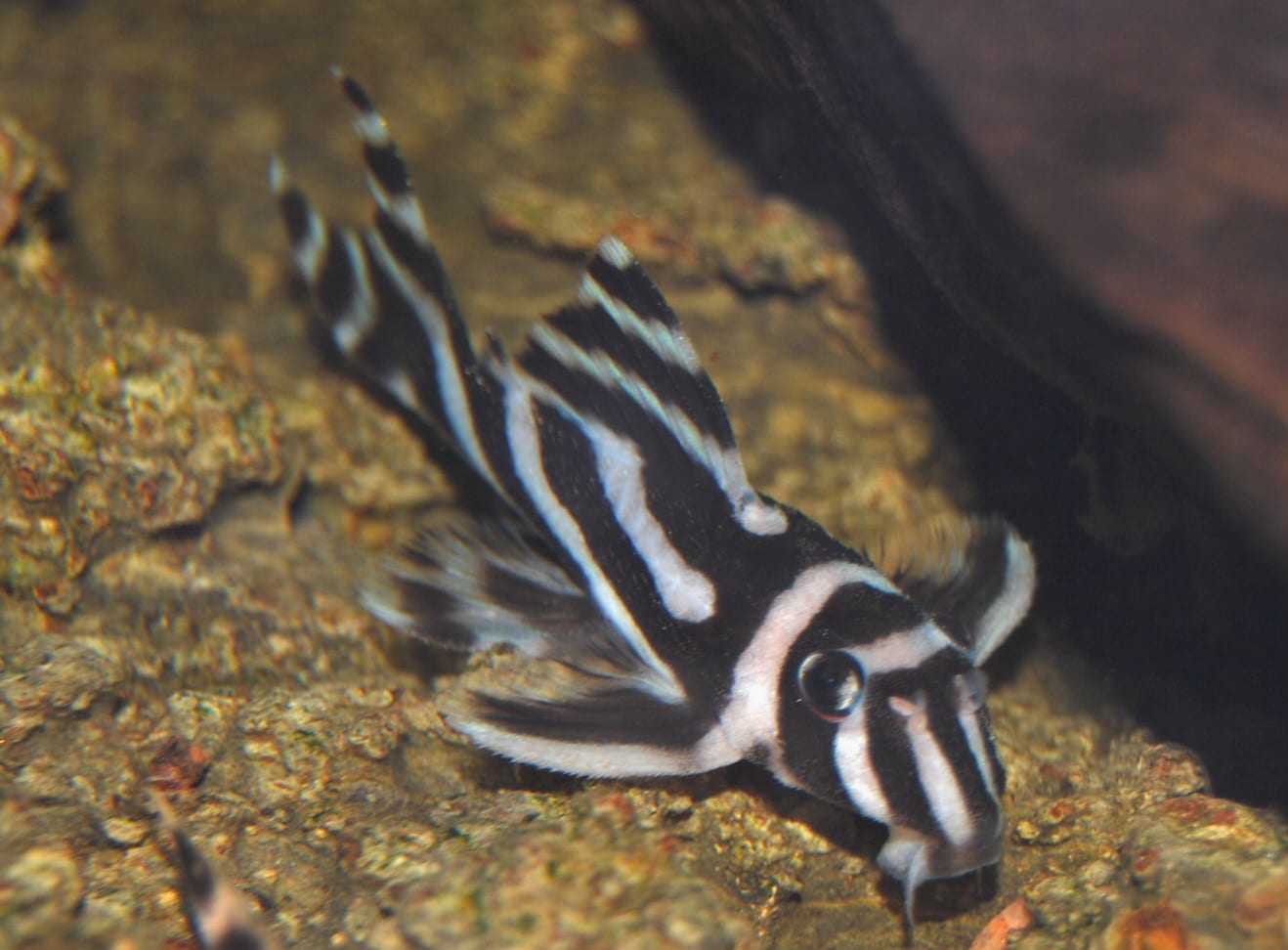
 © Birger A / CC BY-SA 3.0
Zebra Pleco
The Imperial Zebra Pleco is a small, striking catfish known for its bold black-and-white striped pattern. In the wild, it's found only in a limited stretch of Brazil's Xingu River, making it a naturally rare species. Calm and somewhat reclusive by nature, it tends to spend much of its time tucked away among driftwood and rocks. Because it thrives in warm, well-oxygenated water with strong current and needs a more meat-based diet than typical plecos, keeping one successfully takes some prior fishkeeping experience. Most specimens available today are captive-bred domestically, and their crisp black-and-white contrast has long made them a favorite among aquarists.
View Zebra Pleco encyclopedia →0% commission on your first sales!Register by September 30, 2026 and your first 2 sales are commission-free!
Breeder Wanted!
List on BreederDirect and sell directly to customers nationwide!
Our 6 Transparency Commitments
All Tropical Fish listings include water quality, temperament, and tank size information from verified Breeder.
- Origin Disclosed
- Real Photos
- Water Quality Disclosed
- Recommended Tank Size
- Temperament Disclosed
- Breed Line Disclosed
Browse all 301 breeds
Water Type
Care Level
No listings match your filters
Adjust your filters, or get notified when new listings arrive.
Getting alerts is free with a member account. When new listings match your saved search, we'll notify you by email and in-app.
Browse other categories
Verified breeders (preview)
Are you raising tropical fish?
Register as a breeder and connect with buyers directly.
Apply as a breederZebra Pleco key facts
- Care level
- Intermediate
- Lifespan
- 10-15 years
- Size
- 6-7cm
- Temperature
- 26〜30℃
- Diet
- Frozen bloodworm, chopped prawn and mussel, sinking dried foods
- Tank
- Seriously Fish suggests a 60 x 30cm base of about 54 litres. Build caves from smooth pebbles and rocks over a sandy substrate and add driftwood. Use a powerhead to provide strong flow and high oxygen levels.
- Water Temperature & Quality
- Keep it warm at 26-30C; it does poorly in cooler water. pH 6.0-7.5 and 2-15dGH. FishBase records 23-26C in the wild. It needs pristine water and will not tolerate a dirty tank.
- Tank Mates
- Peaceful but shy and easily outcompeted at feeding time, so it is not a good general community fish and is best kept alone in a biotope. If tankmates are used, choose small, quiet species that also like high temperatures. It is moderately territorial with its own kind.
- Diet & Feeding
- Except when very young it prefers meaty foods such as bloodworm, chopped mussel and prawn, and sinking dried foods. Algae and vegetables are rarely taken, though it may nibble a slice of cucumber or courgette.
- Breeding & Spawning
- Bred fairly often in the hobby. The male traps the female in a cave to spawn and then guards the eggs. The fry swim after about seven days and absorb the yolk sac within two weeks. Growing on a group of six or more juveniles is the surest way to obtain a pair.
- Health & Notes
- Brazil banned export in 2004, so legitimate trade is dominated by captive-bred fish. The species is in CITES Appendix II with a zero export quota for wild specimens taken for commercial purposes, and the IUCN assesses it as Critically Endangered.
About Zebra Pleco
A guide to the Imperial Zebra Pleco's striking black-and-white pattern, native habitat, and temperament, along with the water conditions and diet needed to keep this small catfish successfully.
7 things to know before welcoming a Zebra Pleco
1Recreate Its Habitat
In the wild it lives in warm, highly oxygenated water, so the tank should maintain elevated temperatures, strong current, and good aeration. Adding driftwood and rocks for hiding spots helps it settle in.
2Feed a Meat-Based Diet
Unlike many plecos that graze mainly on algae, this species needs food leaning toward a carnivorous diet, such as meat-based pellets or frozen foods. Relying only on algae wafers can lead to a nutritional imbalance.
3Stays Small as an Adult
Adults typically reach only about 6 to 7 cm, making it easier to plan a tank layout than with larger pleco species. Despite its small size, it can be territorial, so providing several hiding spots helps keep it calm.
4Prioritize Stable Water Quality
This species is sensitive to shifts in water quality, so it's best introduced to a tank that has been fully cycled with stable parameters. Regular water changes and monitoring are essential habits to keep up.
5Calm and Reclusive
It has a quiet temperament and often stays hidden among driftwood or rocks during the day. Not seeing it often doesn't necessarily mean something is wrong — staying out of sight is simply natural behavior for this fish.
6Territorial With Its Own Kind
Because of its territorial nature, keeping multiple individuals or similar-looking plecos in a small tank can lead to conflict. If you plan to keep more than one, provide ample space and multiple separated hiding spots.
7Research Before You Bring One Home
As this species is considered suited to intermediate keepers, it helps to review key care points — temperature, water flow, and feeding — before bringing one home. Prior experience with other plecos or water quality management makes things easier.
Frequently asked questions about Zebra Pleco
- Q.Can beginners keep this fish?
- A.It's generally considered suited to intermediate keepers rather than complete beginners. Having prior experience managing water quality with other fish will make things much easier.
- Q.Can it be kept with other fish?
- A.Because it can be territorial, housing it with the same species or similarly shaped plecos may lead to conflict. With enough hiding spots and tank space, it can generally be combined with other, non-competing fish.
- Q.What should I feed it?
- A.Offer food leaning toward a carnivorous diet, such as meat-based pellets or frozen foods, rather than algae-focused fare. Relying solely on plant-based wafers can result in an unbalanced diet.
- Q.Does the striped pattern vary between individuals?
- A.Yes, the width and arrangement of the stripes vary from fish to fish, and some individuals show especially sharp, high-contrast patterns. No two fish look exactly alike, which is part of the appeal.
- Q.Is it regulated under CITES?
- A.Zebra Pleco is listed in CITES Appendix II. International trade requires a permit from the exporting country, but as far as CITES is concerned, no registration is needed to buy or sell individuals already legally in Japan.
Useful tools for Zebra Pleco care
Learn more about Zebra Pleco in the encyclopedia
View Zebra Pleco encyclopedia entry →
Care difficulty, lifespan, size and diet — all basics covered.
More in this category
Can't find the one you're looking for?
Post your wishes for free and breeders with matching animals will contact you with introductions.