Source: Wikimedia Commons
Zebra Pleco
IntermediateHypancistrus zebra
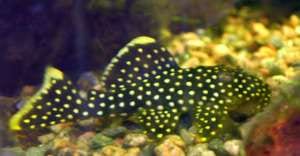
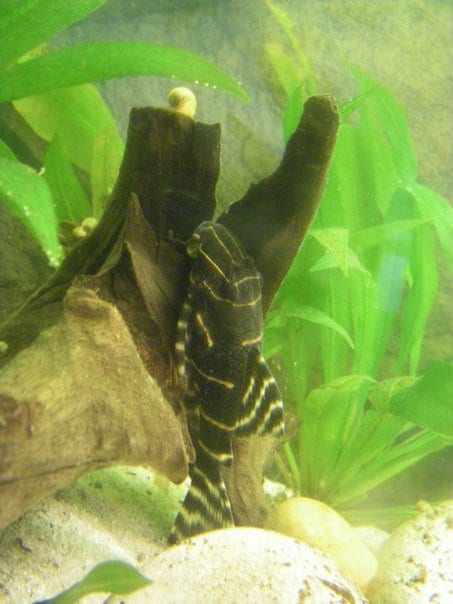
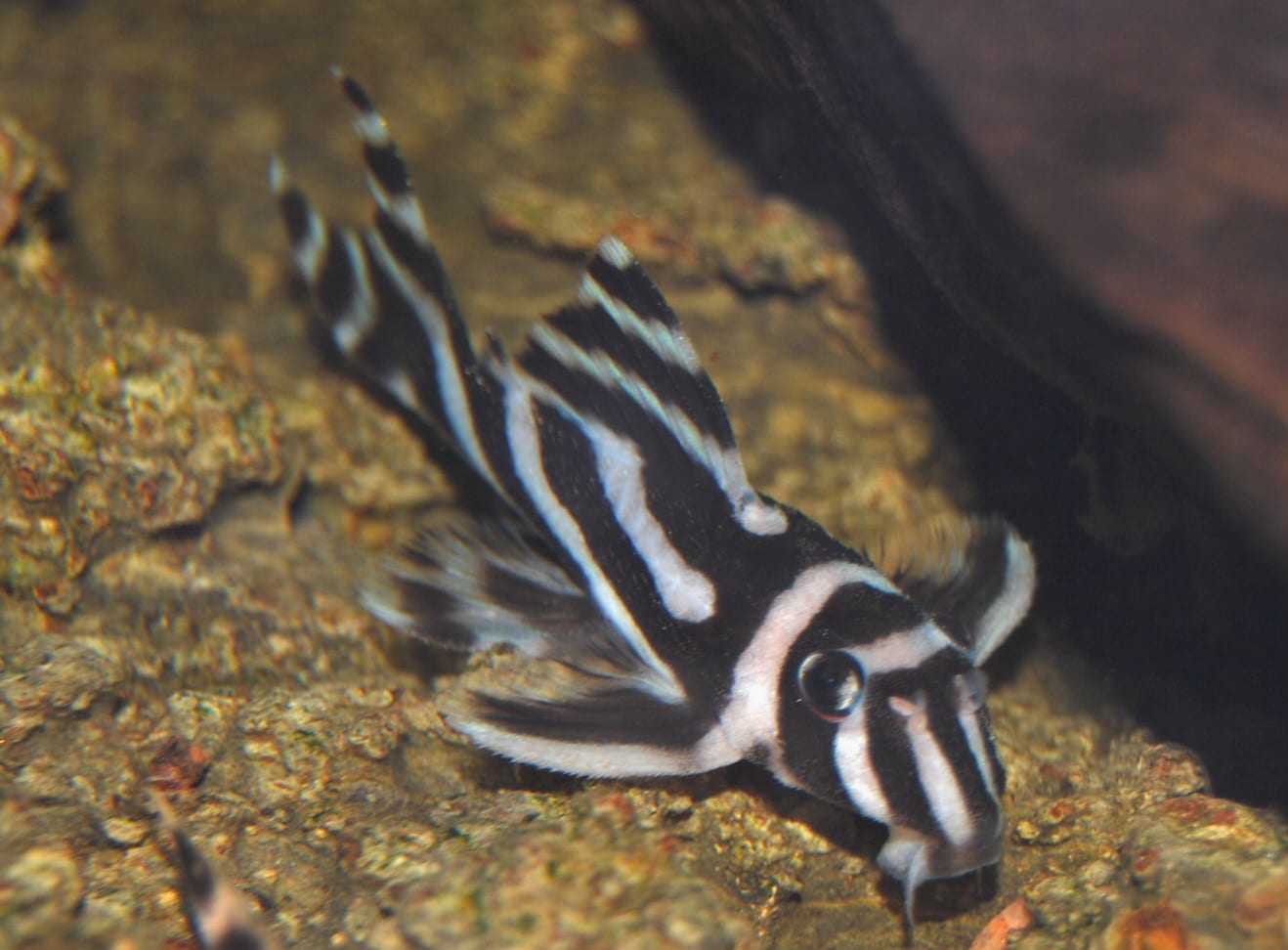
A small pleco with black stripes on a white ground, restricted to a short stretch of the Rio Xingu in Brazil. It wants warm, highly oxygenated water with strong flow and a largely meaty diet. Captive-bred fish dominate the trade.
Difficulty
Intermediate
Temperature
26〜30℃
Lifespan
10-15 years
Size
6-7cm
Diet
Frozen bloodworm, chopped prawn and mussel, sinking dried foods
About
Hypancistrus zebra is a small loricariid catfish restricted to a short stretch of the Rio Xingu downstream of Altamira in Brazil. Described in 1991, it reaches 7.0cm total length according to FishBase and 6.4cm standard length according to Wikipedia. The black-and-white striping gives the fish its name, and two L-numbers, L046 and L098, refer to the same species. Seriously Fish gives 26-30C, pH 6.0-7.5, 2-15dGH and a 60 x 30cm base of about 54 litres, noting that it fails to thrive in cooler water. Unusually for a pleco it prefers meaty foods and rarely grazes algae. It spawns in caves and the male guards the eggs. Flow reduction caused by the Belo Monte dam led the IUCN to assess it as Critically Endangered, and Brazil banned its export in 2004. It is listed in CITES Appendix II with a zero export quota for wild specimens taken for commercial purposes.
Source: Wikipedia (CC BY-SA 4.0)
Lifespan of the Zebra Pleco
The Zebra Pleco lives 10-15 years.
Size of the Zebra Pleco
The Zebra Pleco grows to 6-7cm.
Temperature & humidity for the Zebra Pleco
The ideal temperature for the Zebra Pleco is 26〜30℃.
Basic Info
Origin
South America (Rio Xingu, the big bend below Altamira, Brazil)
Lifespan
10-15 years
Care Specifications
- pH
- 6–7.5
- Hardness (GH)
- 2–15 dGH
- Water Temp.
- 26–30℃
- Min. Tank
- 54 L
PeacefulBreeding: Moderate
Sources: FishBase / Seriously Fish / Wikipedia
References & Sources
Edited & verified by: BreederDirect editorial team
The taxonomic, regulatory, and husbandry data on this page are compiled and verified against the authoritative primary sources below.
Taxonomy & Authority
Accepted name: Hypancistrus zebra Isbrücker & Nijssen, 1991
Authority databases: FishBase
Nomenclature follows global taxonomic authority databases.
Regulations & Conservation Status
CITES Appendix IIIUCN CR · Critically Endangered
Sources: CITES Appendix II (zero export quota for wild specimens for commercial purposes) / IUCN Red List
Regulations may change. Always verify the latest information with the relevant authorities.
Zebra Pleco Listings
Loading latest listingsFind listings for this species