Pleco (Loricariidae) Complete Care Guide | Species-by-Species Care, Feeding, and Breeding
Comprehensive guide to caring for Loricariidae plecos including Bushynose, Common, and Zebra plecos by species. Detailed coverage of tank size, filtration, feeding, breeding tips, and tankmate compatibility.
Key Takeaways
Comprehensive guide to caring for Loricariidae plecos including Bushynose, Common, and Zebra plecos by species. Detailed coverage of tank size, filtration, feeding, breeding tips, and tankmate compatibility.
What Are Plecos?
✍️
BreederDirect Editorial
The BreederDirect editorial team specializes in care information for animals, covering veterinary care and breeding to deliver beginner-friendly guides.
Find Tropical Fish on BreederDirect
Buy directly from verified breeders
Browse Related Listings
Find Tropical Fish listings related to this article on BreederDirect. Buy directly from verified breeders.
Pleco is a collective term for freshwater fish belonging to the order Siluriformes, family Loricariidae. Native to South and Central America, over 1,000 species are currently known. They are characterized by extraordinary diversity in size, pattern, and behavior, including commonly seen species such as "Common pleco," "Bushynose (Ancistrus)," and "Zebra pleco."
The body is covered with armor-like scales called bony plates, and they are striking in appearance as they cling to glass surfaces, driftwood, and live rock with their sucker-like mouths. While famous as algae eaters, their diet, size, and required care environment vary greatly depending on the species.
Main Types and Characteristics of Plecos
Bushynose Pleco (Ancistrus genus)
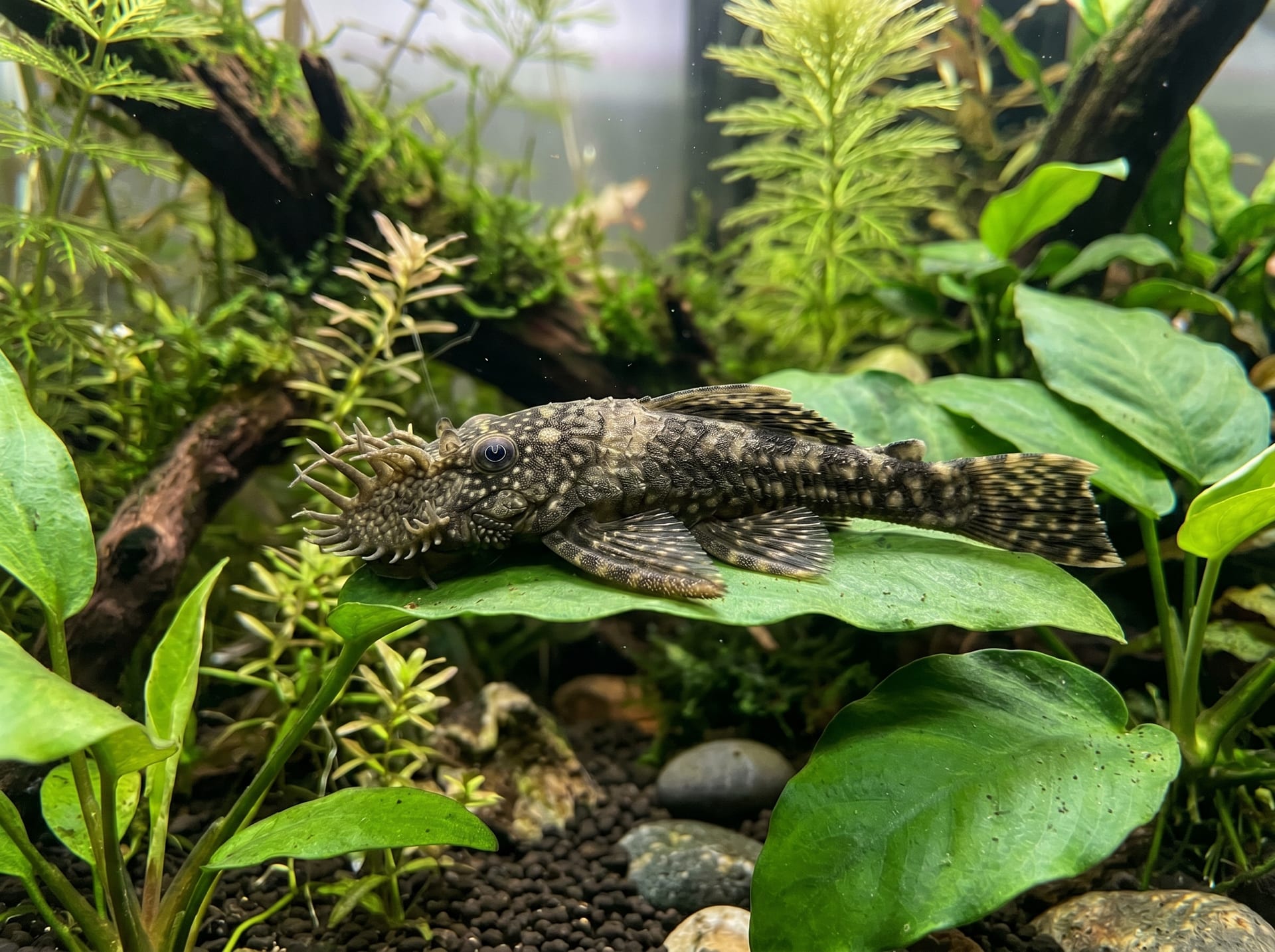
The most popular small pleco. Adult fish reach approximately 10–15 cm in length and can be kept for life even in a 60 cm tank. Males develop characteristic whisker-like barbels at the nose. Omnivorous and algae-eating, they also enjoy vegetables (cucumber, zucchini) and pleco-specific tablets. Breeding is relatively easy, and spawning and fry-rearing can be observed by installing a breeding pipe (pleco shelter).
Common Pleco (Hypostomus genus)
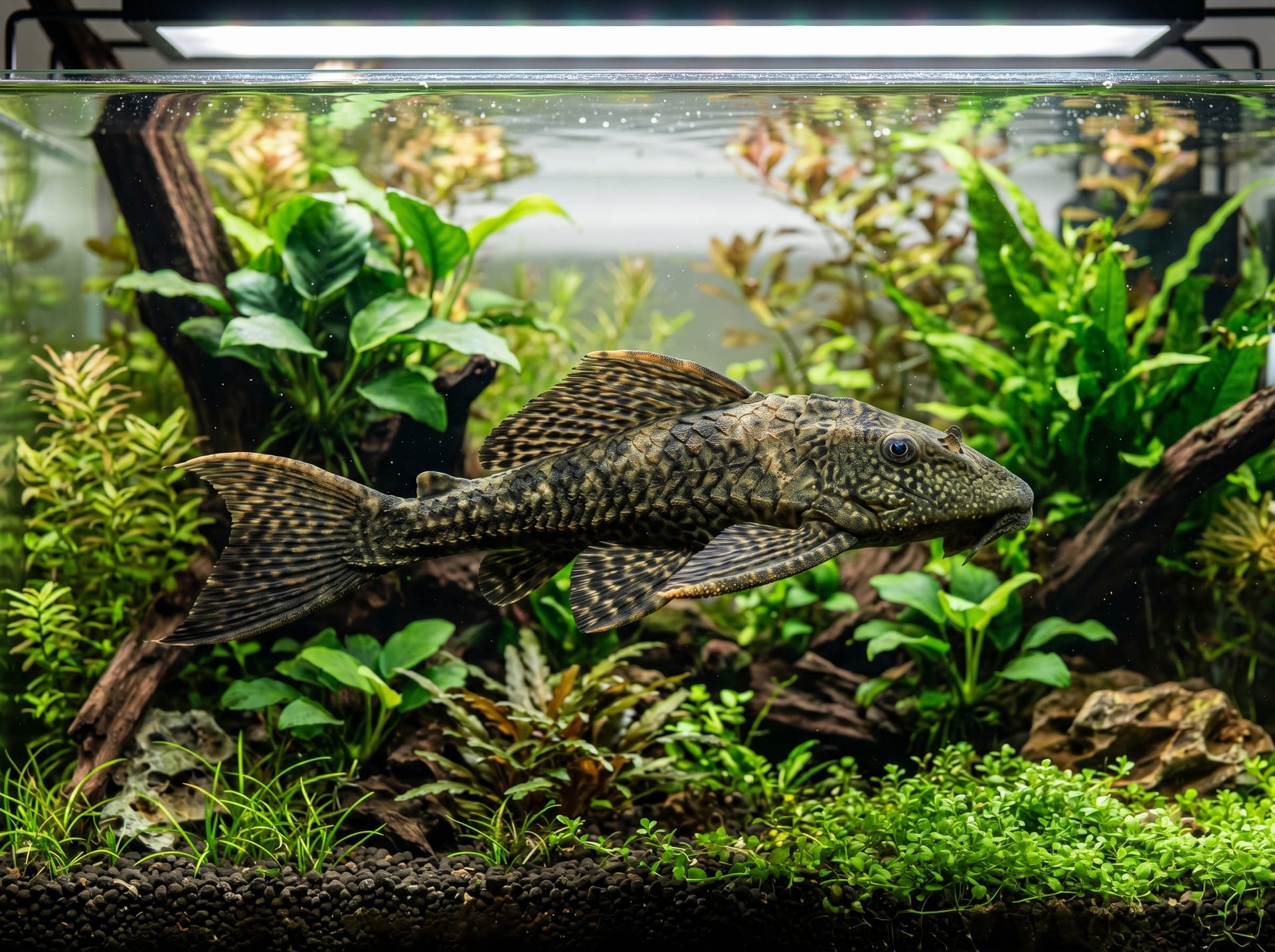
The most commonly available large species. Adults can reach 40–60 cm or more. While juveniles are sold inexpensively, they grow extremely large when mature, requiring a minimum tank of 120 cm or larger. This species is notorious for the problem "I bought a small pleco for algae control and it grew huge," so be sure to verify the final size before purchase.
Zebra Pleco (Hypancistrus zebra / L046)
A premium species with beautiful black and white stripes. Native to the Xingu River in Brazil, wild-caught exports are prohibited due to CITES restrictions. Only captive-bred individuals are currently available in the trade. They eat little algae and are strongly carnivorous. They require high temperatures of 28–30 °C and slightly acidic water.
King Royal Pleco (Panaque nigrolineatus / L191)
A xylivorous pleco. It possesses specialized gut bacteria capable of digesting wood (cellulose) and is a species that must consume driftwood. Long-term maintenance is difficult without driftwood. Adults reach 30–40 cm.
Tiger Pleco (Panaqolus genus)
A medium-sized species (15–20 cm) with beautiful striped patterns. Herbivorous in tendency but also requires carnivorous supplementary foods. Loves driftwood.
Required Care Equipment
Tank Size
Species
Minimum Tank Size
Bushynose (15 cm or less)
60 cm (60 L or larger)
Medium species (20–30 cm)
90–120 cm
Common pleco (40 cm or larger)
120–150 cm or larger
Zebra pleco (15 cm)
60–90 cm
Filtration Equipment
Plecos are heavy feeders and prolific waste producers. Especially large species generate large quantities of organic matter, requiring oversized filtration such as dual external filters or a combination of an external canister filter and a hang-on filter.
The substrate readily traps waste, making regular siphon cleaning essential.
Installing Driftwood
Most plecos require driftwood as a hiding place. Additionally, for wood-eating species, driftwood also serves as a "food source" since they consume cellulose. Driftwood should be boiled or soaked to remove tannins before use.
Water Quality
Parameter
Recommended Range
Temperature
24–28 °C (Zebra: 28–30 °C)
pH
6.0–7.5 (species-dependent)
GH
4–12
Nitrate
20 ppm or below
Oxygen Supply
Plecos have high oxygen requirements, so aeration or water flow in the layout is recommended. Especially during summer when temperatures rise, watch out for oxygen depletion.
Feeding and Diet
Pleco diet varies greatly depending on the species.
Even if kept for algae control, algae alone causes nutritional deficiency. Feed pleco-specific tablets (such as catfish pellets and pleco tablets) or blanched vegetables 2–3 times per week.
How to Offer Vegetables
Cut cucumber, zucchini, and spinach into small pieces, fix them with a weight, and offer them
Remove them the next day (to prevent water quality deterioration from decay)
Always wash thoroughly to remove pesticides
Tankmate Compatibility
Keeping plecos together should generally be avoided. In particular, same-species individuals engage in fierce territorial disputes and injure each other. If keeping multiple individuals, provide plenty of hiding places in a large tank.
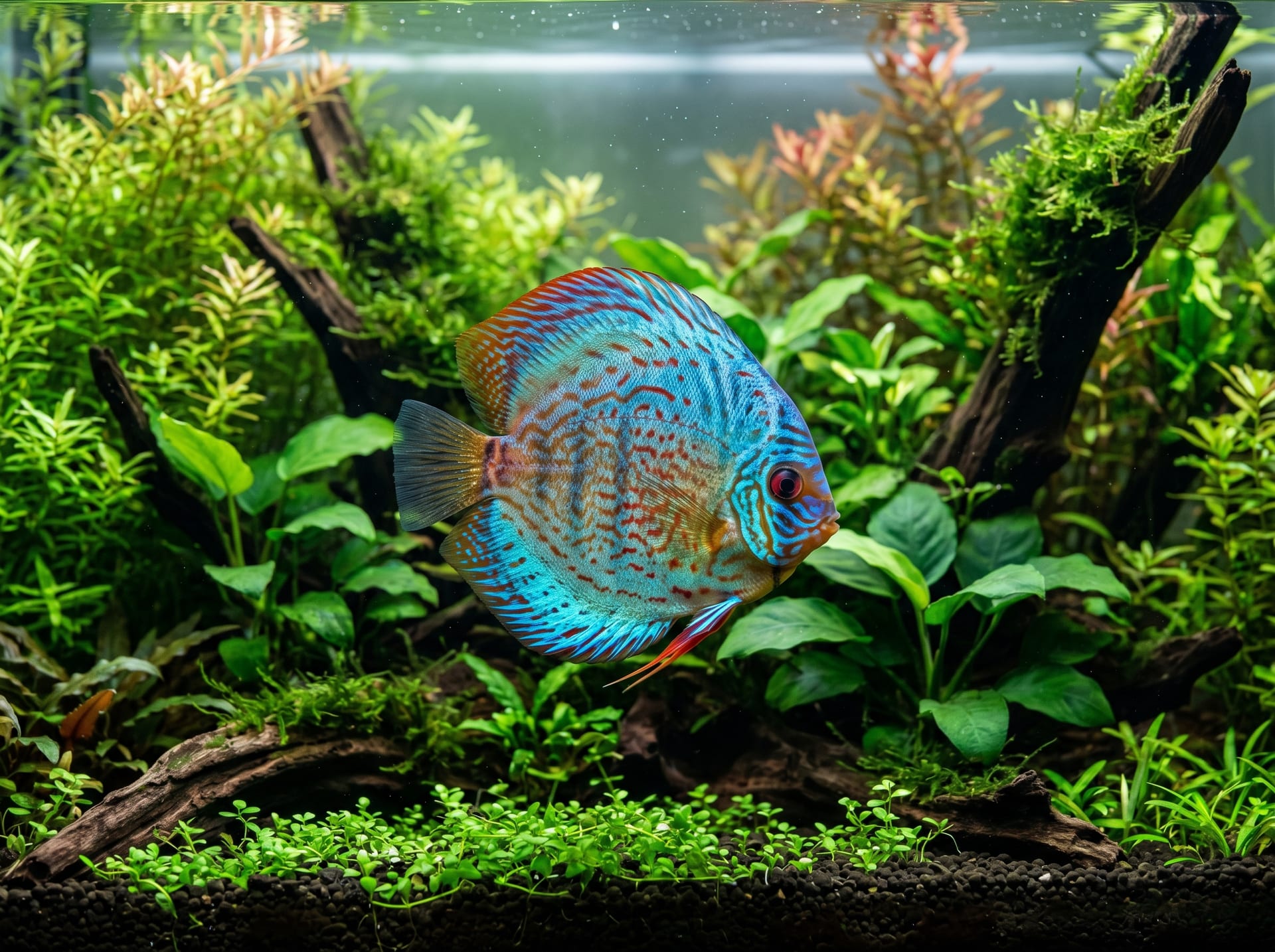
Large plecos are strongly nocturnal, and "suction incidents" can occur at night when they attach to other fish and lick their slime coating or body surface. Care must be taken when keeping them with discus fish or large fish.
Breeding (Bushynose)
Bushynose plecos breed relatively easily.
Install a breeding pipe (pleco shelter) (PVC pipe 4–5 cm diameter, 15–20 cm length)
Condition the fish: increase water changes and provide high-protein foods such as bloodworms
Spawning: The male entices the female into the pipe, and the female lays eggs. The male guards the eggs
Hatching: Eggs hatch in 7–10 days. After fry absorb their yolk sack, feed them spirulina tablets and fry food
Fry management: Growth is rapid, and males and females can be distinguished within 3 months
Common Problems and Solutions
Algae Not Eaten at All
If food is too abundant, they become accustomed to artificial feed and ignore algae
Withholding artificial food for 2–3 days and allowing them to become hungry may encourage algae consumption
Not Clinging to Glass, Lying on the Bottom
A sign of oxygen depletion or water quality deterioration. Increase aeration and perform water changes
If disease (white spot disease, body wounds) is present, consider medication
Injuring Other Fish
Nocturnal suction incidents. Isolate injured fish and reconsider tankmates
The Necessity of Driftwood (Wood)
Plecos, particularly Royal plecos and Panaque species, are among the few fish capable of digesting wood. They possess specialized gut bacteria that aid in cellulose degradation, and they obtain nutrition by scraping and consuming driftwood.
Driftwood is essential in tanks housing these species. Without it, they may gradually weaken.
For Common plecos and Bushynose plecos as well, driftwood is beneficial as a stress reducer, hiding place, and source of microorganisms. When introducing it, pre-treat driftwood by boiling or soaking for 1–2 weeks to remove tannins before use.
Conclusion
Plecos are popular tropical fish for their beautiful patterns, unique form, and tank-cleaning ability. However, large species such as "Common pleco" quickly lead to overcrowding and water quality deterioration if kept without proper equipment. Before purchasing, verify the final size and required tank size, and we recommend starting with easy-to-manage species such as Bushynose. By obtaining captive-bred individuals from breeders, you can acquire healthy and robust fish.