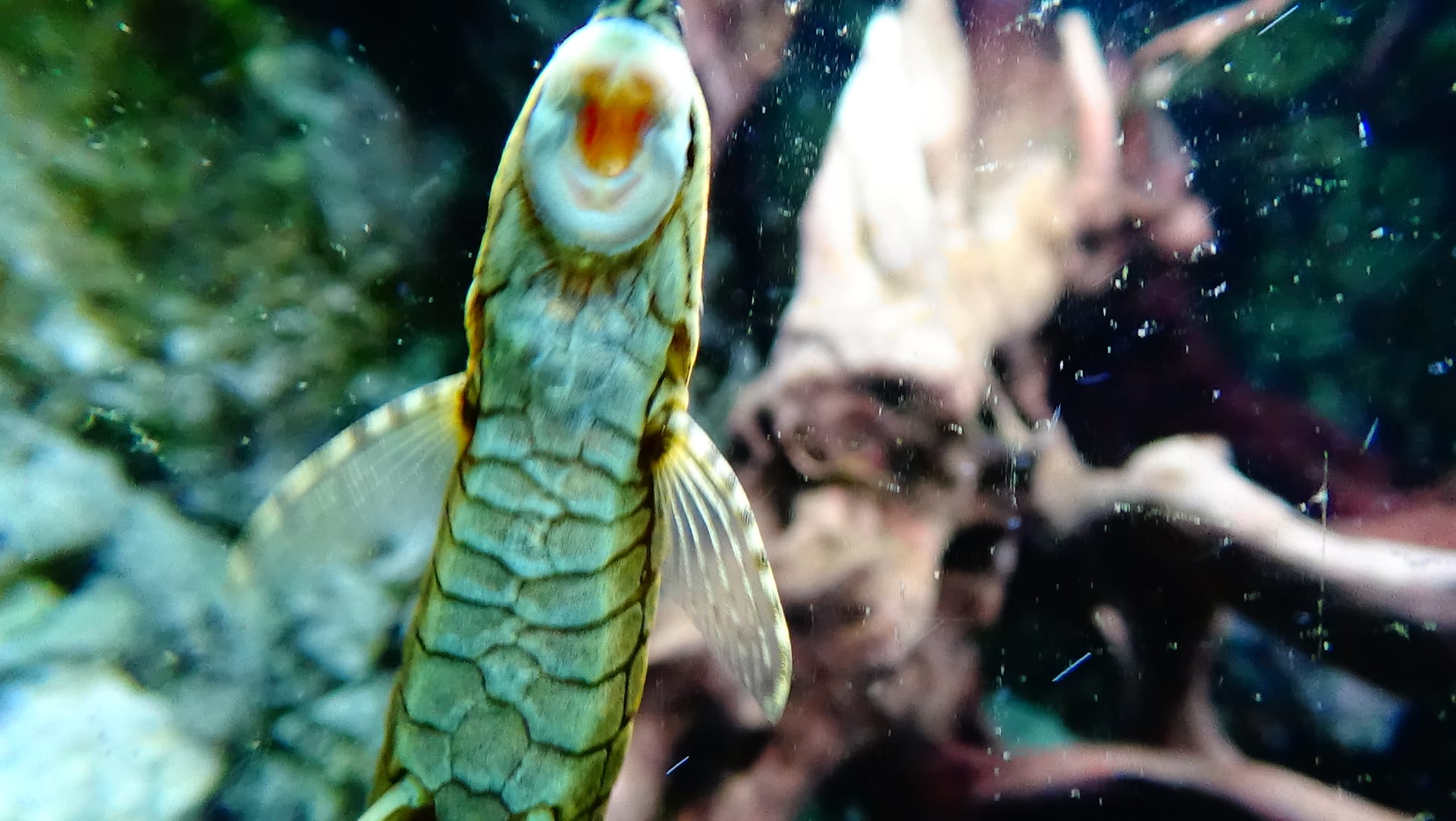
 © Cedricguppy - Loury Cédric / CC BY-SA 4.0
Twig Catfish
The Twig Catfish (Farlowella) is a slender, elongated catfish whose twig-like body lets it blend almost invisibly among driftwood in the aquarium. Its olive-to-tan coloring is marked with irregular dark bands running from head to tail. As an algae grazer, it spends much of its time quietly grazing surfaces clean, making it a popular addition to planted tanks. However, it is highly sensitive to changes in water quality, and large water changes can sometimes cause it to decline or even die. For these reasons, it's best suited to experienced keepers who can maintain stable, well-established water conditions.
View Twig Catfish encyclopedia →0% commission on your first sales!Register by September 30, 2026 and your first 2 sales are commission-free!
Breeder Wanted!
List on BreederDirect and sell directly to customers nationwide!
Our 6 Transparency Commitments
All Tropical Fish listings include water quality, temperament, and tank size information from verified Breeder.
- Origin Disclosed
- Real Photos
- Water Quality Disclosed
- Recommended Tank Size
- Temperament Disclosed
- Breed Line Disclosed
Browse all 301 breeds
Water Type
Care Level
No listings match your filters
Adjust your filters, or get notified when new listings arrive.
Getting alerts is free with a member account. When new listings match your saved search, we'll notify you by email and in-app.
Browse other categories
Verified breeders (preview)
Are you raising tropical fish?
Register as a breeder and connect with buyers directly.
Apply as a breederTwig Catfish key facts
- Care level
- Advanced
- Lifespan
- 3-6 years
- Size
- 14-16cm
- Temperature
- 24〜26℃
- Diet
- Algae, spirulina tablets and blanched vegetables
- Tank
- Wikipedia recommends a tank of at least 60cm or about 35 US gallons, roughly 132 litres. Fill it with bogwood, vine roots, vertical twigs and slender plant stems so the fish can rest against them and behave naturally.
- Water Temperature & Quality
- FishBase gives 24-26C, pH 6.0-7.0 and 3-8dH; Wikipedia suggests neutral pH and 22-25C. Large water changes can kill it, so make a few small changes a week using aged water.
- Tank Mates
- Peaceful and sociable, and can be kept singly or in a group, but it is easily outcompeted for food, so pair it with quiet species such as small characins, rasboras or Corydoras. Avoid barbs, cichlids and larger catfishes.
- Diet & Feeding
- Mainly algae and vegetable matter, supplied as algae wafers and spirulina tablets. It will take worms and similar foods but does poorly on such a diet, and striking the right feeding balance is difficult.
- Breeding & Spawning
- It will spawn at any time if in good condition. The male cleans a hard surface, usually the aquarium glass, and the female lays a clutch of 60 to 80 eggs at night or early morning. The male tends them with his mouth and pectoral fins and they hatch in six to ten days.
- Health & Notes
- Extremely sensitive to sudden changes in water chemistry. The IUCN assesses it as Vulnerable, with both disjunct populations affected by habitat degradation. Most fish in the trade are reported to be the related Farlowella vittata, so labels often do not match reality.
About Twig Catfish
Farlowella, the Twig Catfish, is a slender, twig-shaped catfish known for its algae-grazing diet and sensitivity to water quality changes. Best suited to experienced aquarists; adults reach 14–16cm.
7 things to know before welcoming a Twig Catfish
1For Experienced Keepers
Farlowella is extremely sensitive to sudden shifts in water quality, and large water changes can cause it to decline or even die. It's best suited to keepers who already have aquarium experience and can maintain stable water conditions.
2Change Water Gradually
To avoid sudden shifts in water chemistry, water changes should be small and frequent rather than large and infrequent. When introducing a new fish, take extra time with slow acclimation.
3Diet: Algae Grazer
As an algae eater, it's often seen grazing on biofilm and algae within the tank. In tanks with little algae growth, supplement its diet with sinking, plant-based foods.
4Twig-Like Camouflage
Its slender olive-to-tan body with irregular dark bands lets it blend seamlessly with driftwood and plants, resembling an actual twig. Providing plenty of driftwood gives it secure places to rest.
5Calm Temperament
Slow-moving and docile, it doesn't fare well alongside aggressive tankmates. Pairing it with other peaceful species helps maintain a calm environment.
6Adults Reach 14–16cm
Fully grown individuals reach around 14 to 16cm in length. Make sure the tank offers enough swimming space and depth of layout for its elongated body.
7Established Tanks Only
Avoid adding it to a newly set-up tank with unstable water parameters; wait until biological filtration is well established. Continue monitoring water quality after introduction to catch changes early.
Frequently asked questions about Twig Catfish
- Q.Is the Twig Catfish suitable for beginners?
- A.Farlowella is considered a species for experienced keepers due to its sensitivity to sudden changes in water quality. It's best suited to those already comfortable with tank cycling and water quality management.
- Q.Will it help control algae in my tank?
- A.It does graze on algae, but in tanks with little algae growth, its food supply may not be sufficient on its own. Supplementing with sinking, plant-based foods is recommended.
- Q.Can it be kept with other fish?
- A.It's docile and slow-moving, so avoid pairing it with aggressive or overly active tankmates. Peaceful, similarly calm species make the best companions.
- Q.What should I watch for during water changes?
- A.It's extremely sensitive to sudden water quality shifts caused by large water changes, which can affect its health. Perform smaller, more frequent water changes instead.
- Q.Is the Twig Catfish subject to CITES?
- A.The Twig Catfish is not subject to CITES.
Useful tools for Twig Catfish care
Learn more about Twig Catfish in the encyclopedia
View Twig Catfish encyclopedia entry →
Care difficulty, lifespan, size and diet — all basics covered.
More in this category
Can't find the one you're looking for?
Post your wishes for free and breeders with matching animals will contact you with introductions.