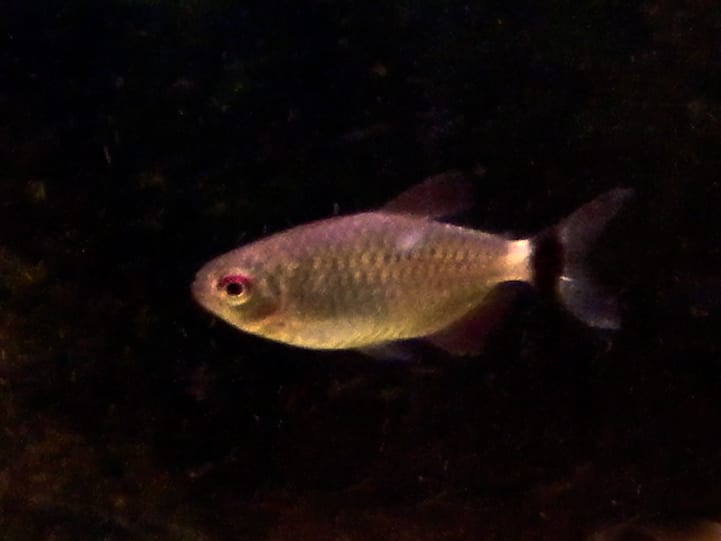
 © Jhartshorn / CC BY-SA 4.0
Red Eye Tetra
The Red Eye Tetra is a mid-sized characin known for its silvery body, a ruby-red crescent above each eye, and a bold black band across the base of its tail. Hardy and adaptable, it's a great choice for beginners, and its active swimming brings constant motion and color to a planted tank. Because it thrives in groups, keeping a proper school is the best way to enjoy its natural behavior and dazzling flash. One thing to watch for: Red Eye Tetras can nip at the fins of slower tankmates, especially when kept alone, so choose companions carefully.
View Red Eye Tetra encyclopedia →0% commission on your first sales!Register by September 30, 2026 and your first 2 sales are commission-free!
Breeder Wanted!
List on BreederDirect and sell directly to customers nationwide!
Our 6 Transparency Commitments
All Tropical Fish listings include water quality, temperament, and tank size information from verified Breeder.
- Origin Disclosed
- Real Photos
- Water Quality Disclosed
- Recommended Tank Size
- Temperament Disclosed
- Breed Line Disclosed
Browse all 301 breeds
Water Type
Care Level
No listings match your filters
Adjust your filters, or get notified when new listings arrive.
Getting alerts is free with a member account. When new listings match your saved search, we'll notify you by email and in-app.
Browse other categories
Verified breeders (preview)
Are you raising tropical fish?
Register as a breeder and connect with buyers directly.
Apply as a breederRed Eye Tetra key facts
- Care level
- Beginner-friendly
- Lifespan
- 3-5 years
- Size
- About 7cm
- Temperature
- 22〜26℃
- Diet
- Dried foods, frozen bloodworm, Daphnia, brine shrimp and some plant matter
- Tank
- Seriously Fish suggests a base of at least 90 by 38cm, about 103 litres at 30cm depth, and FishBase likewise recommends a tank of 80cm or more. It dislikes very bright or bare surroundings, so plant densely or shade the tank with driftwood and leaf litter.
- Water Temperature & Quality
- Seriously Fish gives 22-26C, pH 6.0-8.0 and 3-20 dGH; FishBase gives pH 6.0-8.0, 5-19 dH and 22-26C. Its home waters change greatly between wet and dry seasons, so it adapts widely, and farmed fish are hardier still.
- Tank Mates
- It is boisterous, and quiet fish such as anabantoids or dwarf cichlids can be intimidated by it. Pair it with active fish of similar size. It has a reputation as a fin nipper, but keeping six or more, preferably ten or more, largely settles the behaviour.
- Diet & Feeding
- It eats almost anything. Base the diet on dried food and mix in frozen bloodworm, Daphnia and brine shrimp for colour and condition, adding plant matter such as spinach or an algae-based flake. FishBase records worms, insects, crustaceans and plant matter in the wild.
- Breeding & Spawning
- The species is farmed commercially in huge numbers and virtually every fish on sale is captive bred. To spawn it at home, use a dimly lit separate tank with fine-leaved plants or a spawning mop and remove the adults as soon as eggs appear.
- Health & Notes
- FishBase lists it as IUCN Least Concern, not on the CITES appendices and harmless to people. It is hardy and suits beginners, but kept in small numbers it turns to fin nipping, so always introduce it as a proper group.
About Red Eye Tetra
A hardy, beginner-friendly mid-sized tetra with a silvery body, red eyes, and a bold black tail band. Best kept in schools, but prone to nipping fins, so choose tankmates carefully.
7 things to know before welcoming a Red Eye Tetra
1Best Kept in Schools
Red Eye Tetras can become restless and are more likely to nip at other fish's fins when kept alone. Housing them in a group lets them display their natural schooling behavior and brings lively movement to the whole tank.
2Hardy and Beginner-Friendly
This species tolerates fluctuations in water quality and temperature fairly well, making it a solid choice for a first tropical fish tank. Even so, don't let its resilience make you complacent — keep up with regular water changes and basic tank maintenance.
3Watch for Fin-Nipping
Red Eye Tetras have a tendency to nip at other fish's fins, a habit that becomes more pronounced when they're kept singly rather than in a group. It's best to avoid pairing them with slow-moving, long-finned fish such as veiltail guppies.
4Choosing Tankmates
As fast, active swimmers, Red Eye Tetras do well alongside similarly hardy fish that can keep pace with them. Slower fish or those with large, flowing fins are more likely to get nipped, so choose companions with that in mind.
5Adult Size to Expect
Fully grown, Red Eye Tetras reach about 7 cm in length. Since they're often sold smaller, it's worth planning your tank size and group numbers around their eventual adult size.
6Red Eyes and a Black Band
A silvery body, a red glow across the upper half of each eye, and a broad black band at the base of the tail give this fish its name and its signature look. The contrast between the red and black stands out even more when the fish swim together in a group.
7An Active Swimmer
Red Eye Tetras spend most of their time swimming actively through the middle and upper levels of the tank, and a group brings constant motion to the whole aquarium. Give them plenty of open swimming space in your layout so they can show off this behavior.
Frequently asked questions about Red Eye Tetra
- Q.Is the Red Eye Tetra suitable for beginners?
- A.Yes — it tolerates fluctuations in water quality and temperature fairly well, which makes it a solid choice for people new to the hobby. As long as you keep up with basic maintenance like regular water changes, it isn't a difficult fish to keep.
- Q.How many should I keep together?
- A.It's best to keep a group rather than a single fish. Schooling brings out their natural behavior and also reduces how often they nip at each other's fins.
- Q.How big do they get?
- A.Adults reach about 7 cm in length. Since they're usually sold smaller, it helps to plan your tank size around their full-grown size in advance.
- Q.Can they live with other fish?
- A.Because they're active and prone to nipping fins, fast, hardy tankmates work best. It's best to avoid pairing them with slow swimmers or fish that have large, flowing fins.
- Q.What should I consider for tank layout?
- A.Since they swim actively in groups, a layout with plenty of open swimming space suits them well. Adding plants or hiding spots can also help keep the group's dynamics calm.
Useful tools for Red Eye Tetra care
Learn more about Red Eye Tetra in the encyclopedia
View Red Eye Tetra encyclopedia entry →
Care difficulty, lifespan, size and diet — all basics covered.
More in this category
Can't find the one you're looking for?
Post your wishes for free and breeders with matching animals will contact you with introductions.