Source: Wikimedia Commons
Red Eye Tetra
BeginnerBario sanctaefilomenae
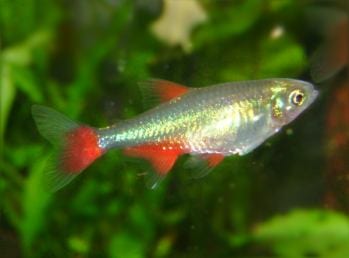
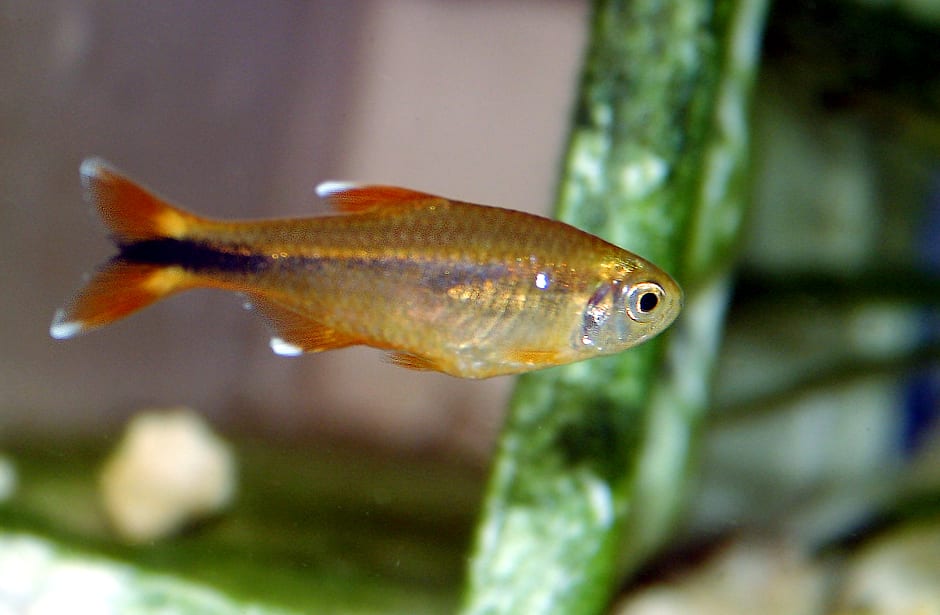
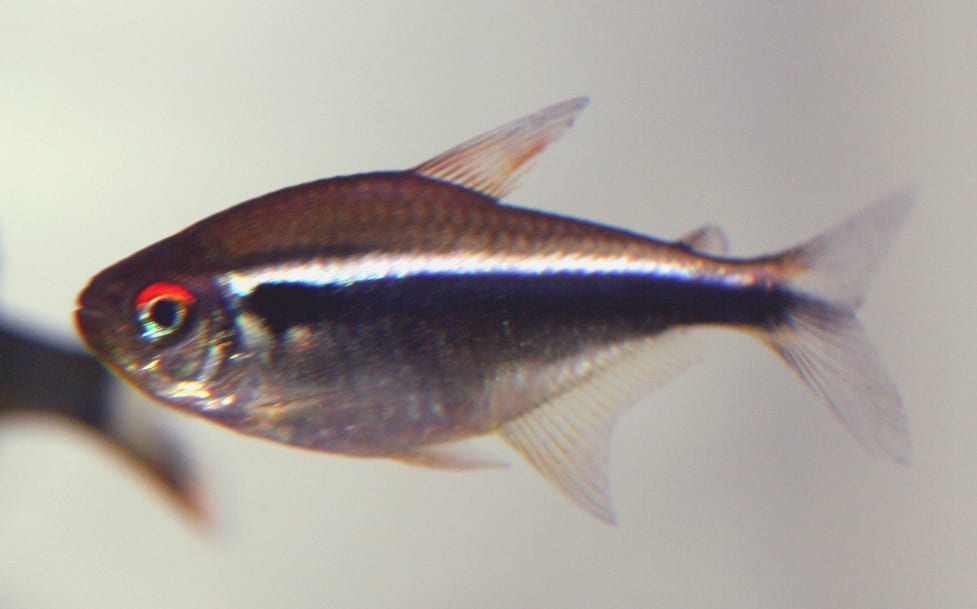
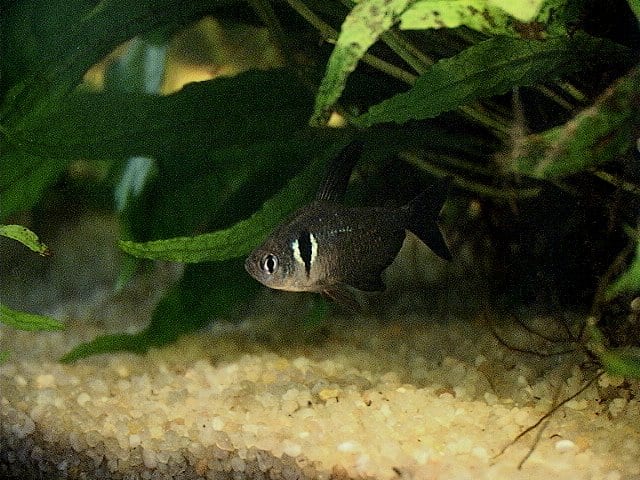
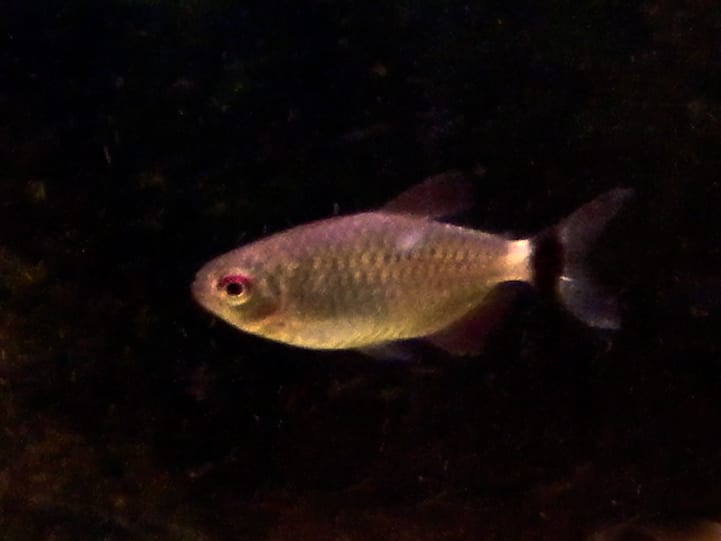
A mid-sized characin, silver with a red upper iris and a broad black bar on the caudal peduncle. Hardy, inexpensive and always on the move, a shoal brings activity to a tank. It has a habit of nipping fins, which shows most when kept alone.
Difficulty
Beginner
Temperature
22〜26℃
Lifespan
3-5 years
Size
About 7cm
Diet
Dried foods, frozen bloodworm, Daphnia, brine shrimp and some plant matter
About
Bario sanctaefilomenae is a mid-sized characin of the Paranaiba, Sao Francisco, upper Parana, Paraguay and Uruguay basins. FishBase gives 7.0cm SL, pH 6.0-8.0, 5-19 dH and 22-26C, and recommends groups of five or more in a tank of 80cm or longer, while Seriously Fish gives 22-26C, pH 6.0-8.0, 3-20 dGH and a base of at least 90 by 38cm. The body is silver, the upper half of the iris glows red, and a broad black bar crosses the caudal peduncle. Because its home waters swing widely between wet and dry seasons it is untroubled by water chemistry. Practically every fish on sale is farmed, and most of those in the UK come from eastern Europe. It dislikes very bright or sparsely furnished tanks and looks best among dense planting. It is an active fish, so avoid pairing it with sedate species.
Source: Wikipedia (CC BY-SA 4.0)
Lifespan of the Red Eye Tetra
The Red Eye Tetra lives 3-5 years.
Size of the Red Eye Tetra
The Red Eye Tetra grows to About 7cm.
Temperature & humidity for the Red Eye Tetra
The ideal temperature for the Red Eye Tetra is 22〜26℃.
Basic Info
Origin
South America (the Paranaiba, Sao Francisco, upper Parana, Paraguay and Uruguay river basins)
Lifespan
3-5 years
Care Specifications
- pH
- 6–8
- Hardness (GH)
- 3–20 dGH
- Water Temp.
- 22–26℃
- Min. Tank
- 103 L
Semi-aggressiveGroup
Sources: Seriously Fish / FishBase
References & Sources
Edited & verified by: BreederDirect editorial team
The taxonomic, regulatory, and husbandry data on this page are compiled and verified against the authoritative primary sources below.
Taxonomy & Authority
Regulations & Conservation Status
Not CITES-listedIUCN LC · Least Concern
Sources: CITES Appendices (species not listed) / IUCN Red List
Regulations may change. Always verify the latest information with the relevant authorities.
Red Eye Tetra Listings
Loading latest listingsFind listings for this species