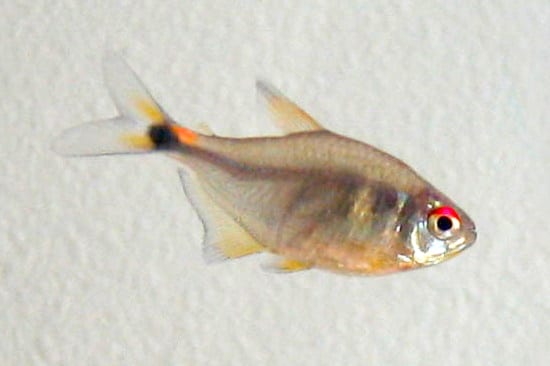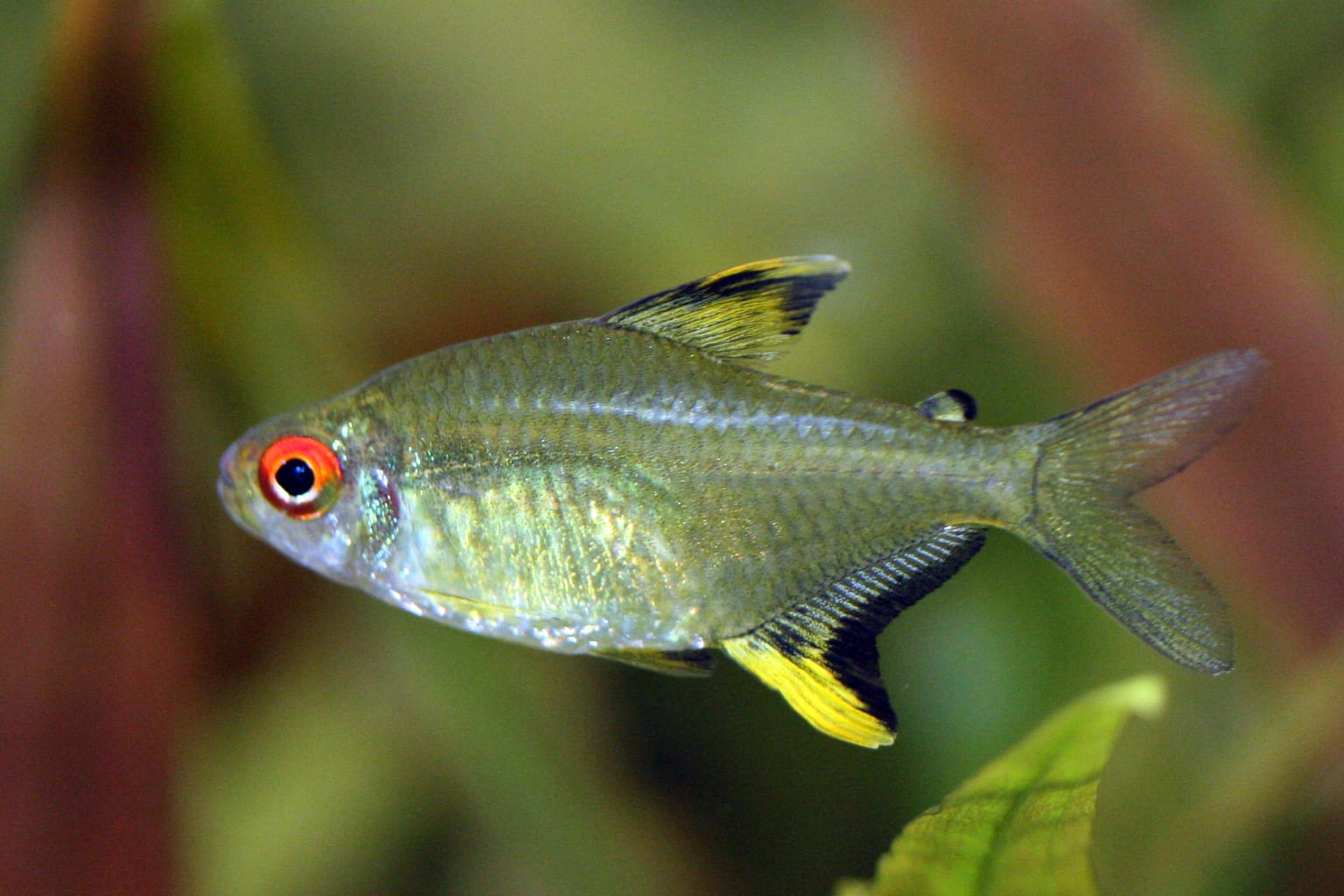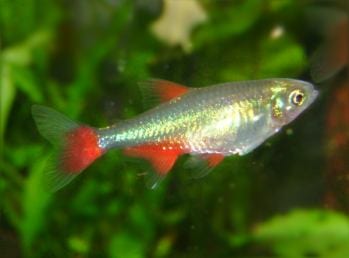
Source: Wikimedia Commons
Bloodfin Tetra
BeginnerAphyocharax anisitsi
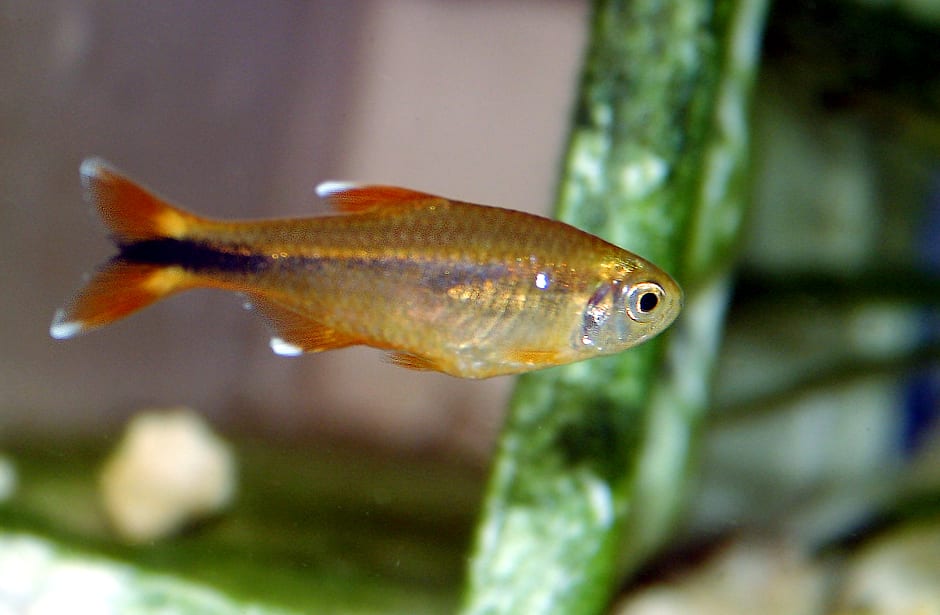
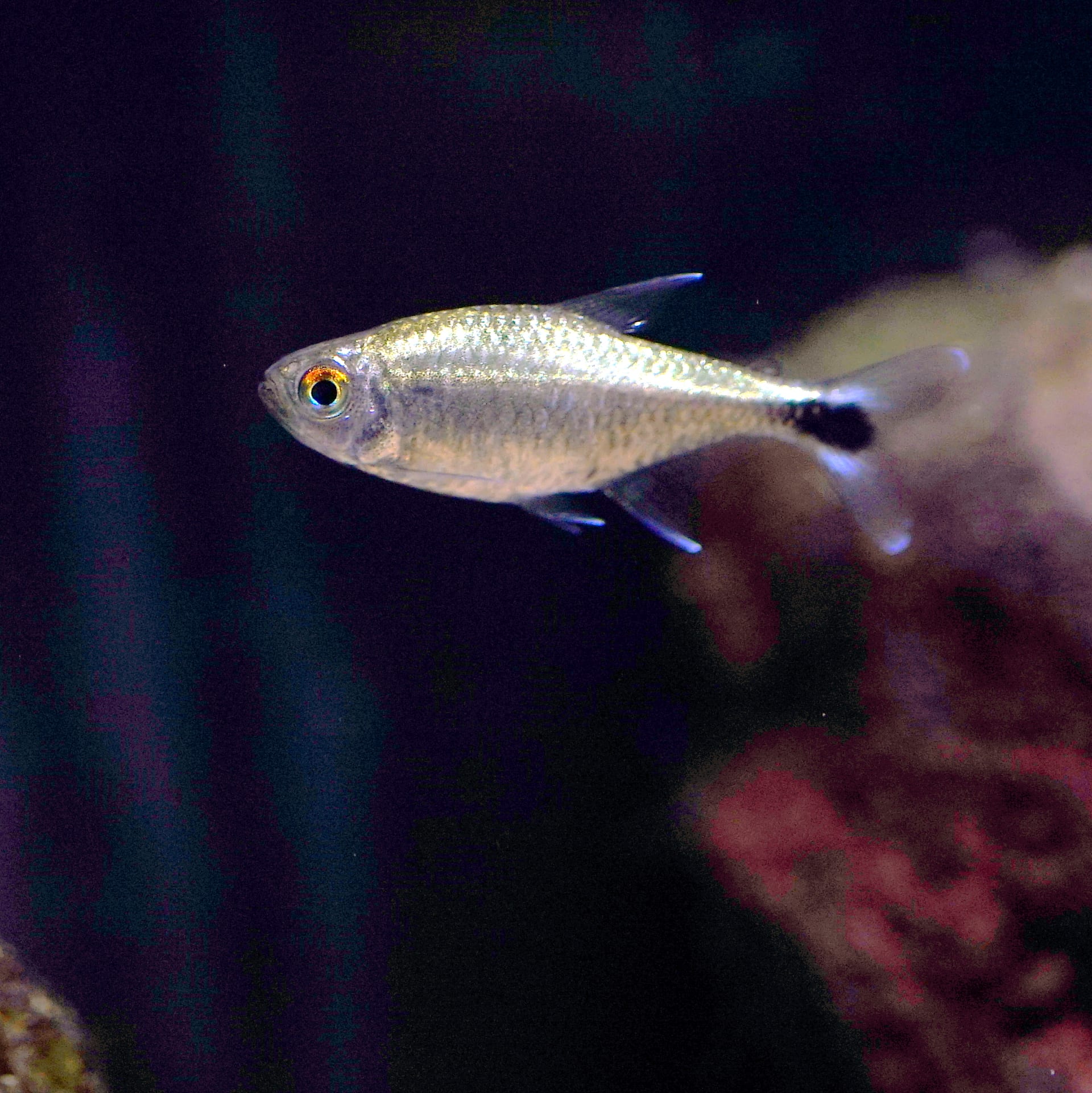
A small silver characin whose caudal, anal and pelvic fins are flushed blood red. Hardy and tolerant of a wide range of water, it swims in the upper and middle layers, and captive fish are known to pass ten years of age.
Difficulty
Beginner
Temperature
18〜28℃
Lifespan
Captive fish are known to pass ten years
Size
About 5.5cm
Diet
Dried foods, frozen bloodworm, brine shrimp, Daphnia
About
Aphyocharax anisitsi is a small characin of the Parana basin in South America. FishBase gives 5.5cm TL, pH 6.0-8.0, hardness to 30 dH and 18-28C, treating it as a subtropical fish, while Seriously Fish gives 5.5cm SL, 18-28C, pH 6.0-8.0, 3-25 dGH and a base of at least 60 by 30cm. The name comes from the blood-red caudal, anal and pelvic fins set against a silver body. It is hardy and takes a wide range of water; in a well-insulated house it can even be kept unheated, though it colours less well that way. It is long-lived, and captive fish over ten years old are not unusual. It swims in the upper and middle layers and settles under floating plants, but it jumps, so the cover must close tightly. It is peaceful enough, nipping only a little at long-finned or slow-moving tank mates.
Source: Wikipedia (CC BY-SA 4.0)
Size of the Bloodfin Tetra
The Bloodfin Tetra grows to About 5.5cm.
Temperature & humidity for the Bloodfin Tetra
The ideal temperature for the Bloodfin Tetra is 18〜28℃.
Basic Info
Origin
South America (the Parana basin; some sources include the Paraguay and Uruguay drainages)
Lifespan
Captive fish are known to pass ten years
Size
About 5.5cm
Temperature
18〜28℃
Care Specifications
- pH
- 6–8
- Hardness (GH)
- 3–25 dGH
- Water Temp.
- 18–28℃
- Min. Tank
- 54 L
PeacefulGroupBreeding: Moderate
Sources: Seriously Fish / FishBase
References & Sources
Edited & verified by: BreederDirect editorial team
The taxonomic, regulatory, and husbandry data on this page are compiled and verified against the authoritative primary sources below.
Taxonomy & Authority
Regulations & Conservation Status
Not CITES-listedIUCN LC · Least Concern
Sources: CITES Appendices (species not listed) / IUCN Red List
Regulations may change. Always verify the latest information with the relevant authorities.
Bloodfin Tetra Listings
Loading latest listingsFind listings for this species