Source: Wikimedia Commons
Golden Tetra
BeginnerHemigrammus rodwayi
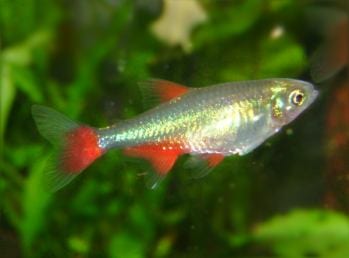
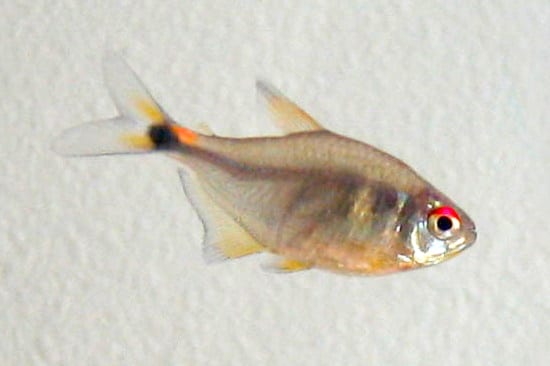
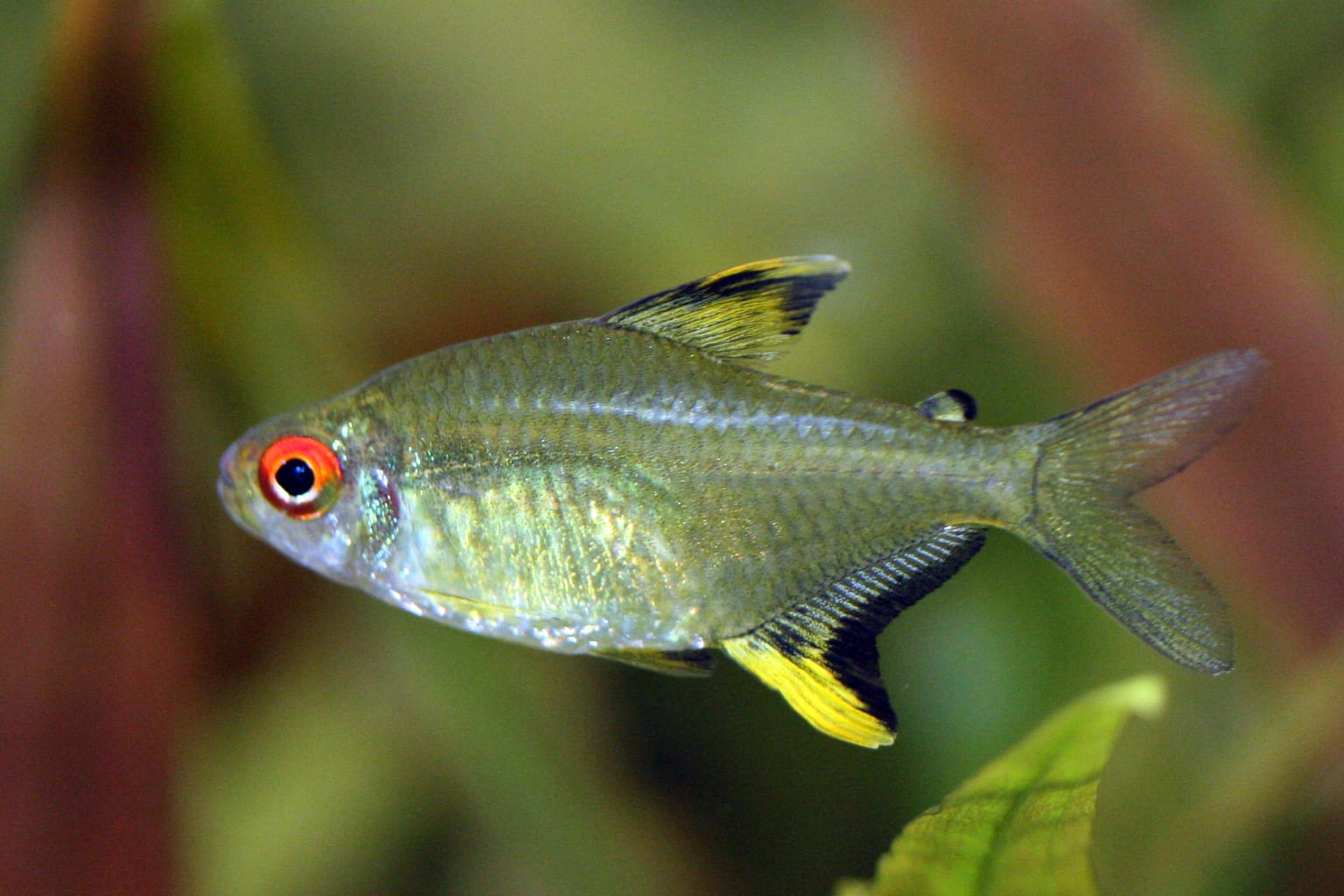
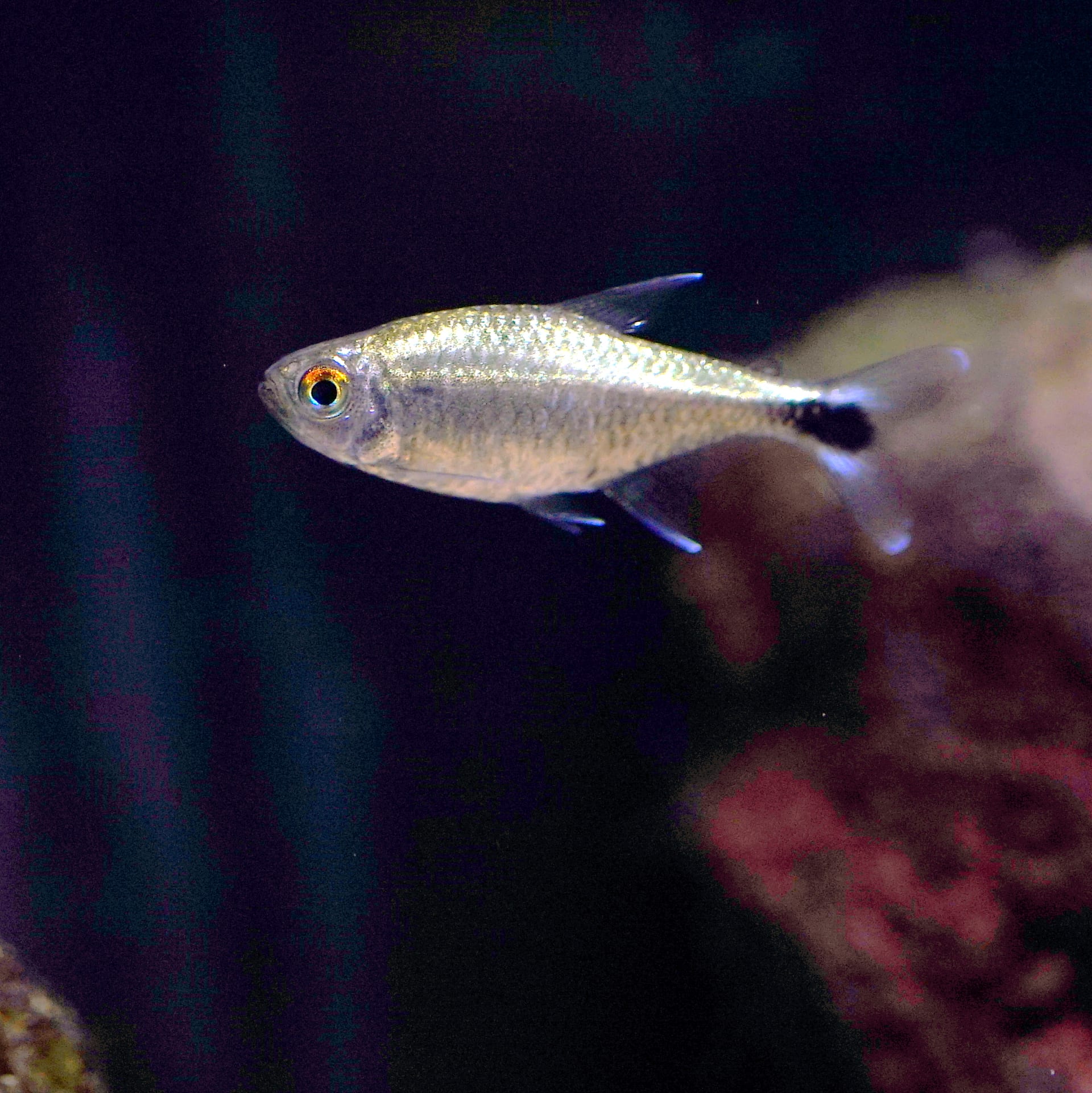
A small characin that is normally dull silver-grey, but in the wild a trematode infection provokes a guanine deposit in the skin that turns it a metallic gold. Those gold fish are what the trade name refers to. Peaceful and hardy.
Difficulty
Beginner
Temperature
24〜28℃
Lifespan
Up to 4 years (reported)
Size
About 5.3cm TL
Diet
Dried foods, frozen bloodworm, Daphnia, brine shrimp
About
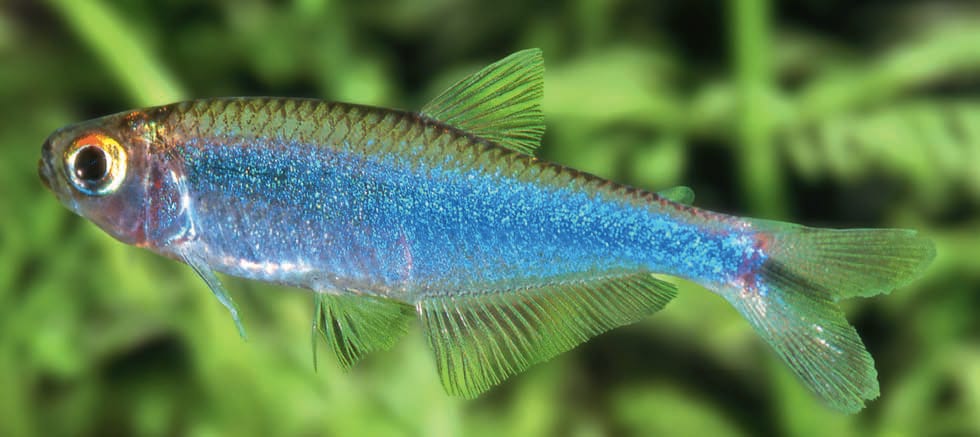
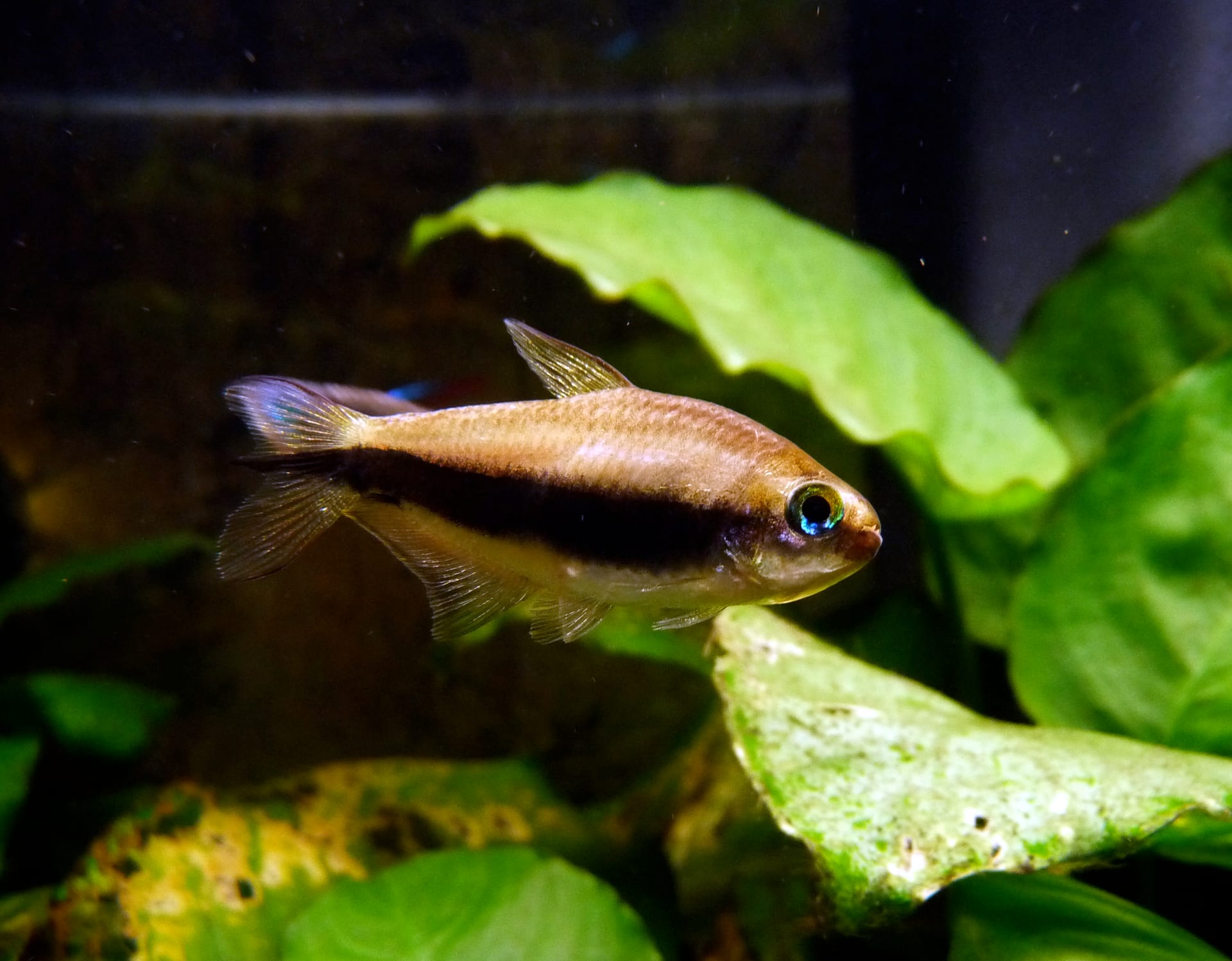
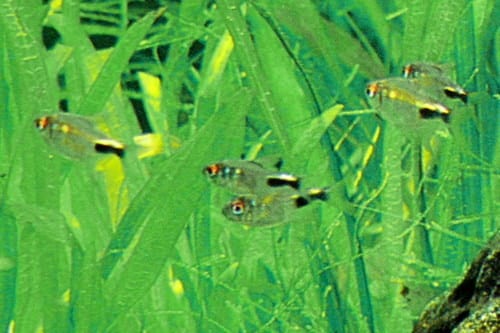
Hemigrammus rodwayi is a small characin found from Guyana through Brazil and Peru. FishBase gives 5.3cm TL, a maximum reported age of four years, pH from 6.3, up to 12 dH and 24-28C, while Seriously Fish gives 24-28C, pH 5.5-7.0, 1-12 dGH and a base of at least 60 by 38cm, about 68 litres. Its natural colour is a plain silver-grey, but in some localities a trematode parasite provokes a skin reaction that deposits guanine and turns the whole fish metallic gold. When those gold fish were first found they were described as a new species, Hemigrammus armstrongi, now treated as a synonym. It is abundant in coastal creeks and floodplains, including mildly brackish water. Farmed fish carry no parasite and so never turn gold.
Source: Wikipedia (CC BY-SA 4.0)
Lifespan of the Golden Tetra
The Golden Tetra lives Up to 4 years (reported).
Size of the Golden Tetra
The Golden Tetra grows to About 5.3cm TL.
Temperature & humidity for the Golden Tetra
The ideal temperature for the Golden Tetra is 24〜28℃.
Basic Info
Origin
South America (Guyana, Suriname, French Guiana, Peru and Brazil)
Lifespan
Up to 4 years (reported)
Size
About 5.3cm TL
Care Specifications
- pH
- 5.5–7
- Hardness (GH)
- 1–12 dGH
- Water Temp.
- 24–28℃
- Min. Tank
- 68 L
PeacefulGroupBreeding: Moderate
Sources: Seriously Fish / FishBase
References & Sources
Edited & verified by: BreederDirect editorial team
The taxonomic, regulatory, and husbandry data on this page are compiled and verified against the authoritative primary sources below.
Taxonomy & Authority
Regulations & Conservation Status
Not CITES-listedIUCN LC · Least Concern
Sources: CITES Appendices (species not listed) / IUCN Red List
Regulations may change. Always verify the latest information with the relevant authorities.
Golden Tetra Listings
Loading latest listingsFind listings for this species