Source: Wikimedia Commons
Lemon Tetra
BeginnerHyphessobrycon pulchripinnis
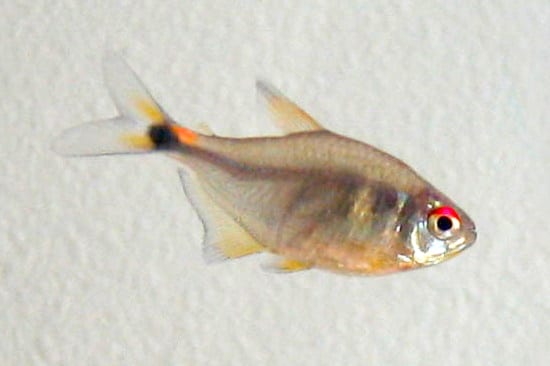
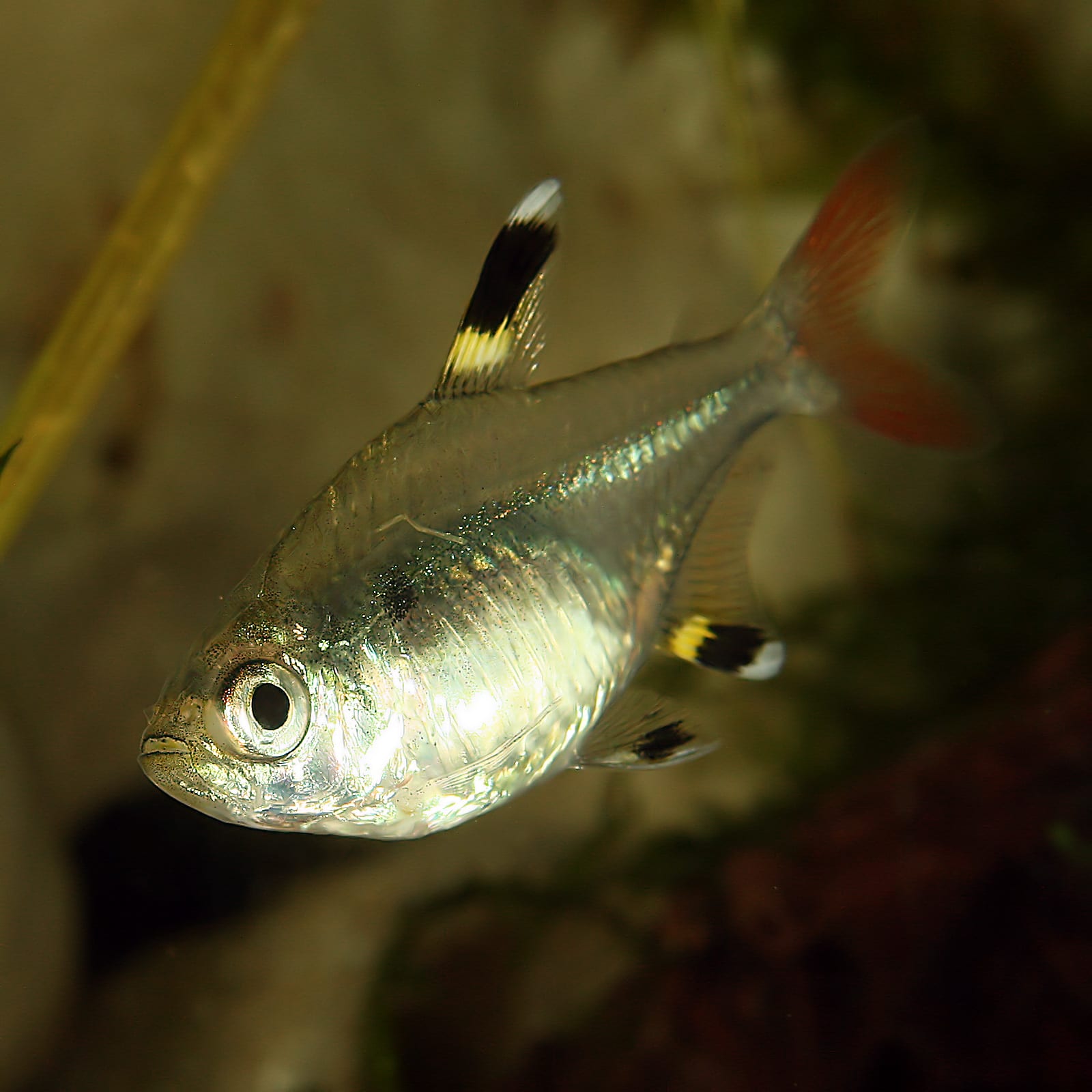
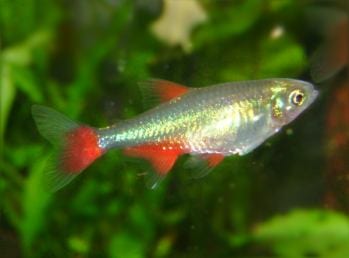
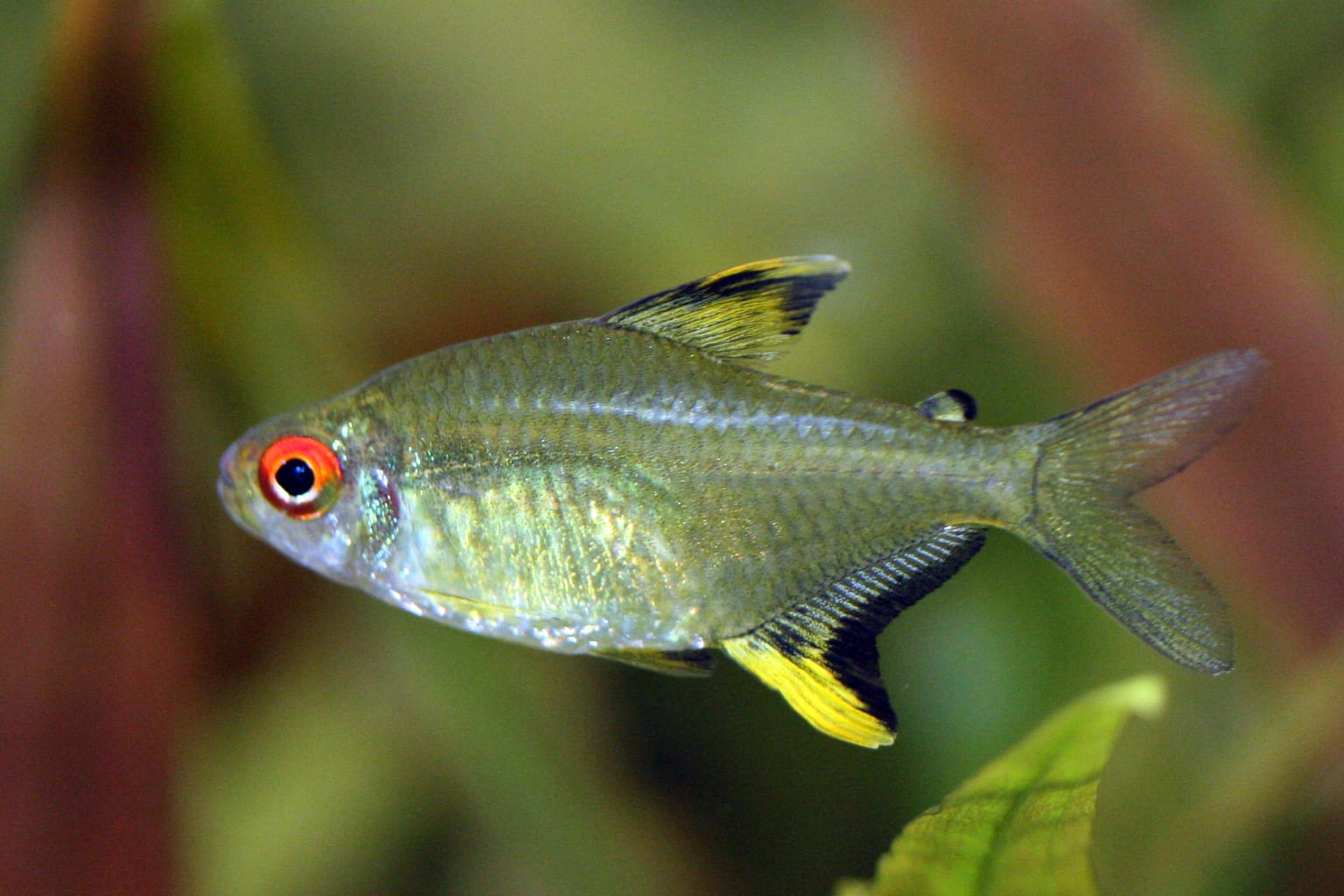
A small characin with a translucent pale yellow body and dorsal and anal fins edged in black with a bright lemon-yellow band inside. The red iris is striking. Hardy, peaceful and most colourful in a group.
Difficulty
Beginner
Temperature
20〜28℃
Lifespan
3-5 years
Size
About 4cm SL
Diet
Dried foods, frozen bloodworm, Daphnia
About
Hyphessobrycon pulchripinnis is a small characin from the Tapajos River basin in Brazil. FishBase gives 3.8cm SL, pH 5.5-8.0 and 23-28C. The translucent pale yellow body carries a large red iris, and the dorsal and anal fins are edged in black with a bright lemon-yellow band inside. Seriously Fish gives 20-28C, pH 5.0-7.5, 1-12 dGH and a base of at least 80 by 30cm, about 72 litres. It is peaceful, and a mixed-sex group of eight to ten or more brings out the best colour because males form temporary hierarchies and compete for attention. It is an egg-scattering free spawner with no parental care, so a separate tank with mesh over the base is used to stop the adults eating the eggs. Almost all fish in the trade are farmed, and an albino strain is established.
Source: Wikipedia (CC BY-SA 4.0)
Lifespan of the Lemon Tetra
The Lemon Tetra lives 3-5 years.
Size of the Lemon Tetra
The Lemon Tetra grows to About 4cm SL.
Temperature & humidity for the Lemon Tetra
The ideal temperature for the Lemon Tetra is 20〜28℃.
Basic Info
Origin
South America (Tapajos River basin, Brazil)
Lifespan
3-5 years
Size
About 4cm SL
Care Specifications
- pH
- 5–7.5
- Hardness (GH)
- 1–12 dGH
- Water Temp.
- 20–28℃
- Min. Tank
- 72 L
PeacefulGroupBreeding: Moderate
Sources: Seriously Fish / FishBase
References & Sources
Edited & verified by: BreederDirect editorial team
The taxonomic, regulatory, and husbandry data on this page are compiled and verified against the authoritative primary sources below.
Taxonomy & Authority
Regulations & Conservation Status
Not CITES-listedIUCN LC · Least Concern
Sources: CITES Appendices (species not listed) / IUCN Red List
Regulations may change. Always verify the latest information with the relevant authorities.
Lemon Tetra Listings
Loading latest listingsFind listings for this species