Source: Wikimedia Commons
Pristella Tetra
BeginnerPristella maxillaris
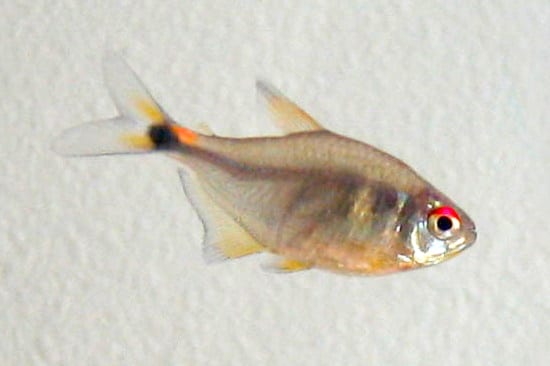
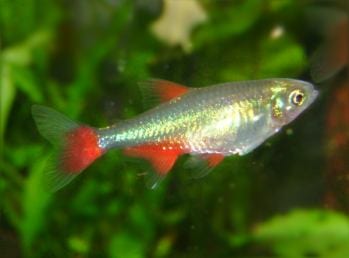
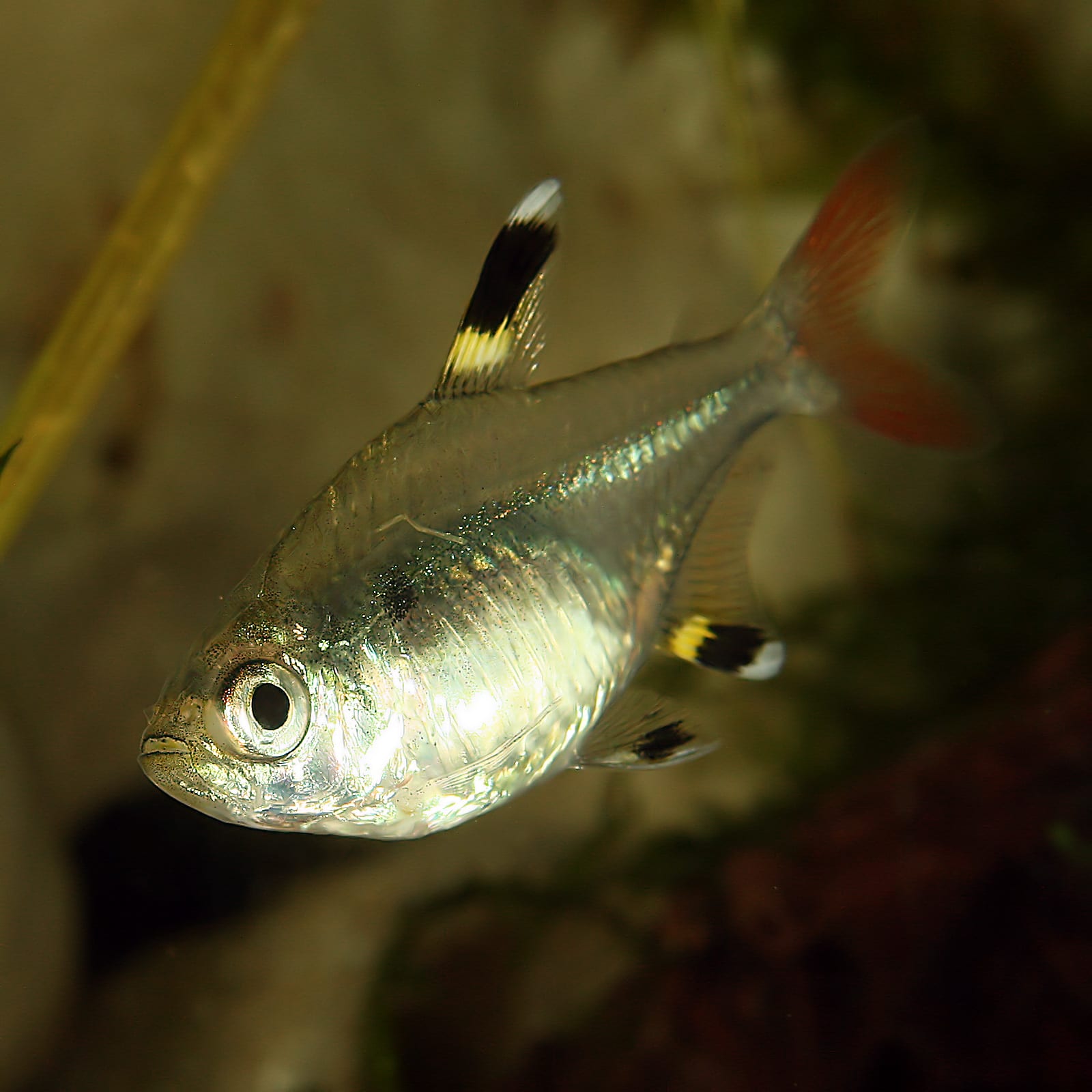
A small characin with a semi-transparent body and black, white and yellow banding on the dorsal, anal and pelvic fins. Hardy, peaceful, undemanding about water and inexpensive, it is one of the easiest recommendations for a first community tank.
Difficulty
Beginner
Temperature
22〜28℃
Lifespan
3-5 years
Size
About 4.5cm
Diet
Dried foods, frozen bloodworm, Daphnia, brine shrimp
About
Pristella maxillaris is a small characin from the Amazon and Orinoco basins and the coastal drainages of the Guianas. FishBase gives 4.5cm TL, pH 6.0-8.0, up to 35 dH and 24-28C, while Seriously Fish gives 22-28C, pH 6.0-7.5, 2-20 dGH and a base of at least 60 by 30cm, about 54 litres. The semi-transparent body carries a small humeral spot, and the dorsal, anal and pelvic fins are banded in black, white and yellow. In the dry season it lives in clearwater streams; when the rains come it moves into flooded savannah and spawns among submerged vegetation. It is peaceful and shoaling, and its hardiness and low price make it a standard beginner recommendation. Spawning is easy, with 300 to 400 eggs reported per event, and a semi-albino golden strain is established.
Source: Wikipedia (CC BY-SA 4.0)
Lifespan of the Pristella Tetra
The Pristella Tetra lives 3-5 years.
Size of the Pristella Tetra
The Pristella Tetra grows to About 4.5cm.
Temperature & humidity for the Pristella Tetra
The ideal temperature for the Pristella Tetra is 22〜28℃.
Basic Info
Origin
South America (Amazon and Orinoco basins and coastal drainages of the Guianas)
Lifespan
3-5 years
Size
Care Specifications
- pH
- 6–7.5
- Hardness (GH)
- 2–20 dGH
- Water Temp.
- 22–28℃
- Min. Tank
- 54 L
PeacefulGroupBreeding: Moderate
Sources: Seriously Fish / FishBase
References & Sources
Edited & verified by: BreederDirect editorial team
The taxonomic, regulatory, and husbandry data on this page are compiled and verified against the authoritative primary sources below.
Taxonomy & Authority
Regulations & Conservation Status
Not CITES-listedIUCN LC · Least Concern
Sources: CITES Appendices (species not listed) / IUCN Red List
Regulations may change. Always verify the latest information with the relevant authorities.
Pristella Tetra Listings
Loading latest listingsFind listings for this species