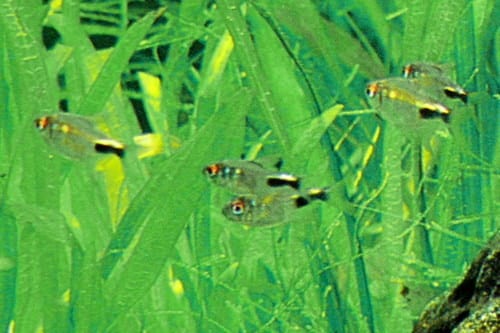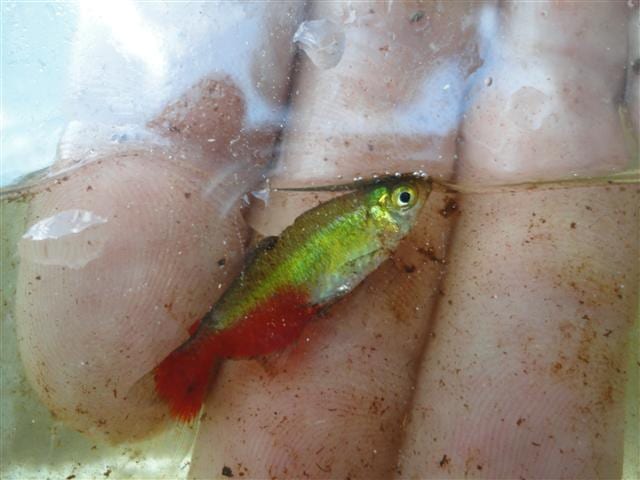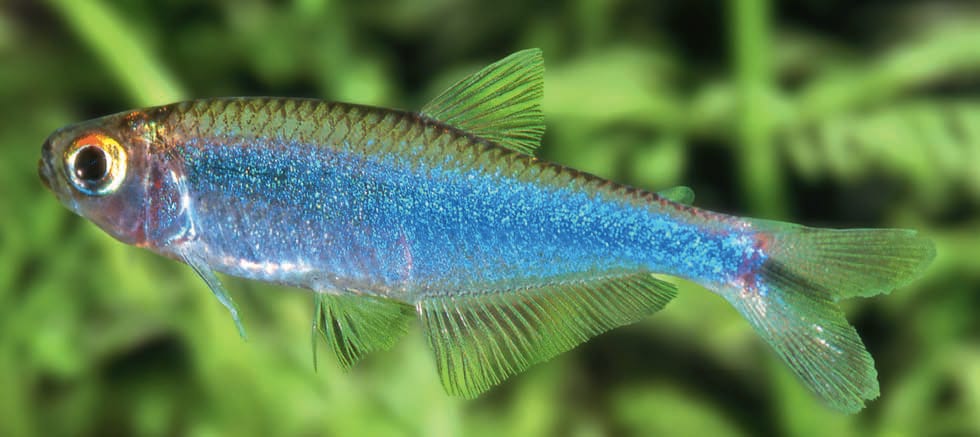
Source: Wikimedia Commons
Blue Tetra
IntermediateKnodus borki
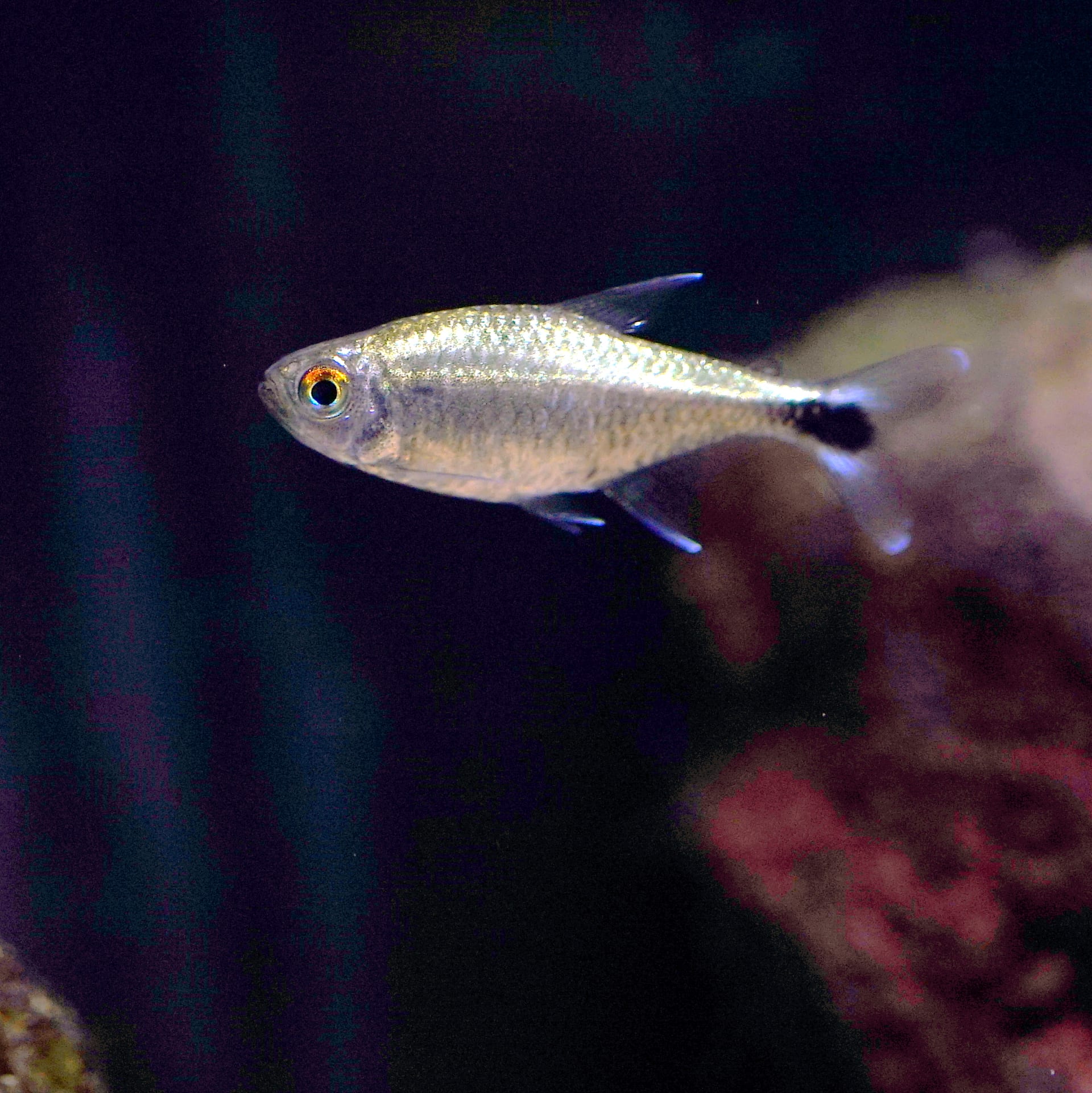
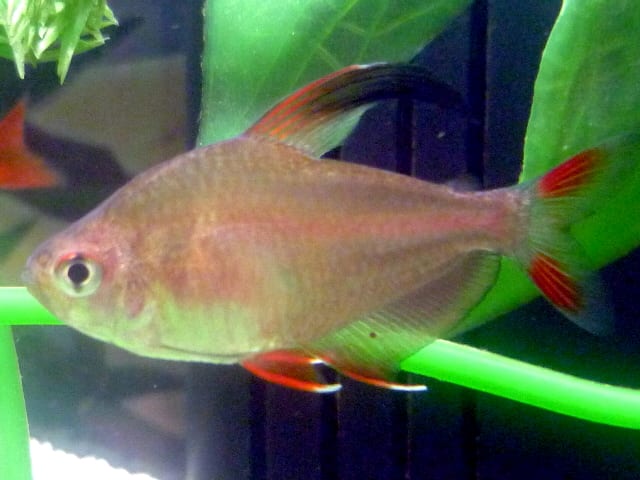
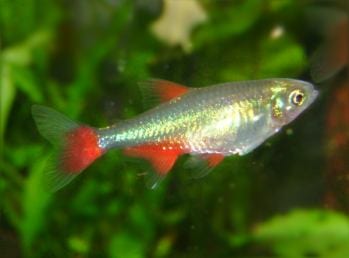
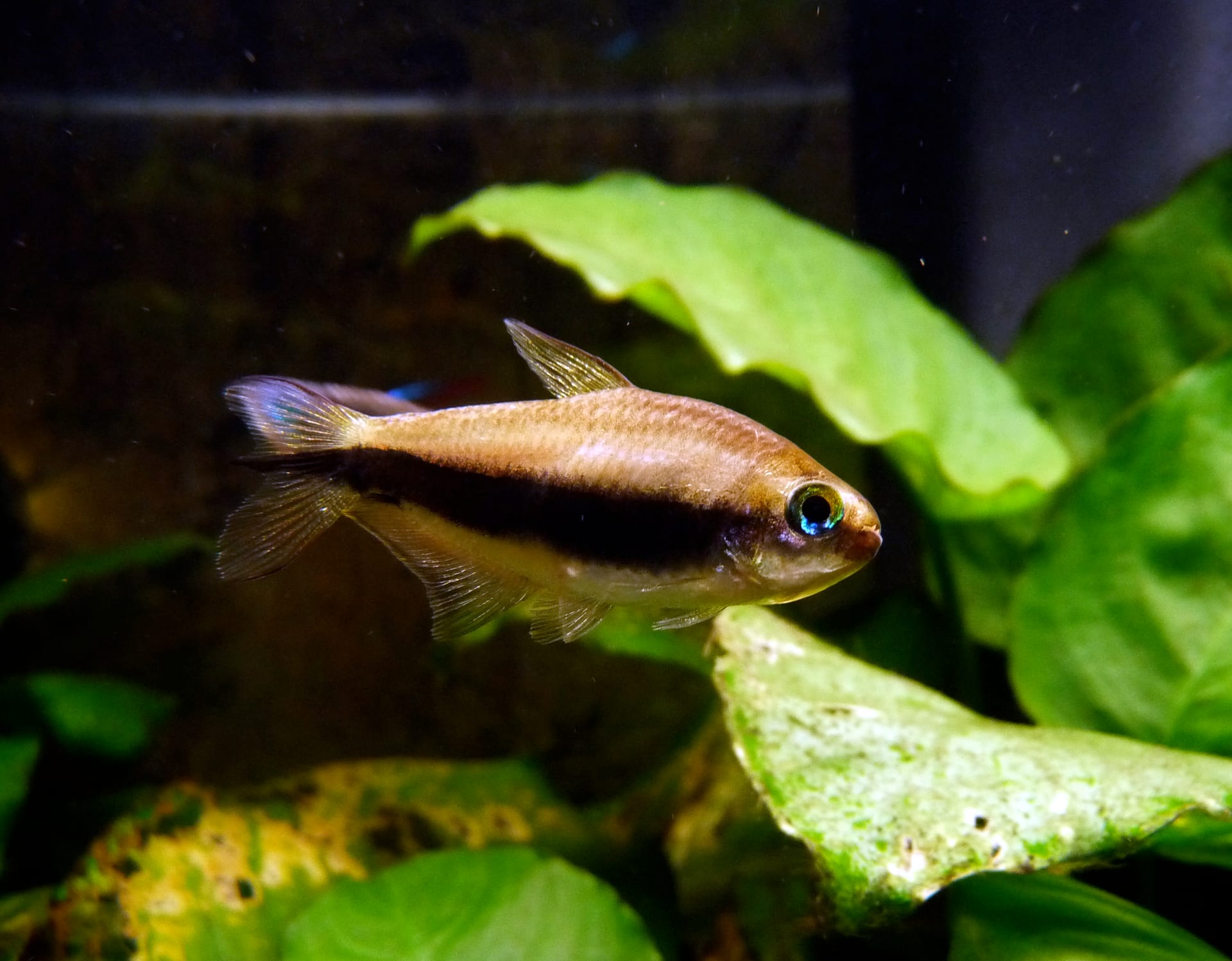
A small characin whose flanks shine an intense blue, so vivid that newcomers often assume the fish has been dyed. Small but constantly on the move, it will nip fins at feeding time or in cramped quarters. A dark substrate and floating plants set it off best.
Difficulty
Intermediate
Temperature
22〜26℃
Lifespan
3-5 years
Size
About 5cm
Diet
Dried foods, frozen bloodworm, Daphnia, brine shrimp and some plant matter
About
Knodus borki is a small characin whose flanks shine an intense blue, so strong that people seeing it for the first time in a shop often take it for a dyed fish. Seriously Fish gives 5.0cm SL, 22-26C, pH 5.5-7.0, 5-12 dGH and a base of at least 75 by 38cm. FishBase records only the distribution, Iquitos in Peru, without size or water figures, while Seriously Fish gives rivers, streams and tributaries in Colombia and Brazil. Small though it is, it swims a great deal, and its true colour comes out in a densely planted tank with a dark substrate and floating plants to soften the light; in sparse surroundings it stays dull. It is broadly peaceful but will nip the fins of its own kind and of long-finned species, which settles when eight to ten or more are kept together in a roomy tank. Do not pair it with slow or retiring fish.
Source: Wikipedia (CC BY-SA 4.0)
Lifespan of the Blue Tetra
The Blue Tetra lives 3-5 years.
Size of the Blue Tetra
The Blue Tetra grows to About 5cm.
Temperature & humidity for the Blue Tetra
The ideal temperature for the Blue Tetra is 22〜26℃.
Basic Info
Origin
South America (sources differ: FishBase gives Iquitos in Peru, Seriously Fish gives Colombia and Brazil)
Lifespan
3-5 years
Care Specifications
- pH
- 5.5–7
- Hardness (GH)
- 5–12 dGH
- Water Temp.
- 22–26℃
- Min. Tank
- 86 L
Semi-aggressiveGroupBreeding: Hard
Sources: Seriously Fish / FishBase
References & Sources
Edited & verified by: BreederDirect editorial team
The taxonomic, regulatory, and husbandry data on this page are compiled and verified against the authoritative primary sources below.
Taxonomy & Authority
Regulations & Conservation Status
Not CITES-listedIUCN DD · Data Deficient
Sources: CITES Appendices (species not listed) / IUCN Red List
Regulations may change. Always verify the latest information with the relevant authorities.
Blue Tetra Listings
Loading latest listingsFind listings for this species