Source: Wikimedia Commons
Green Fire Tetra
IntermediateAphyocharax rathbuni
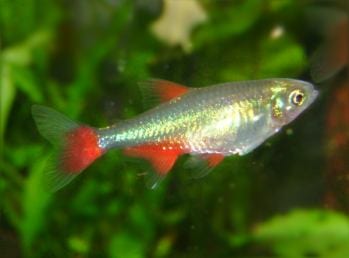
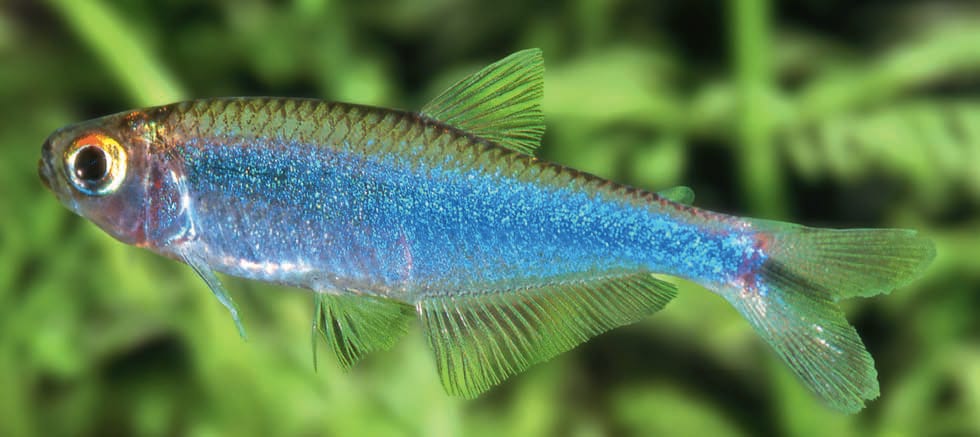
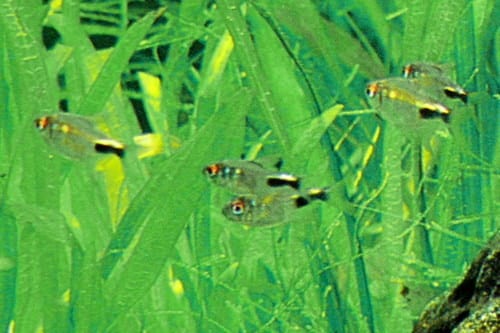
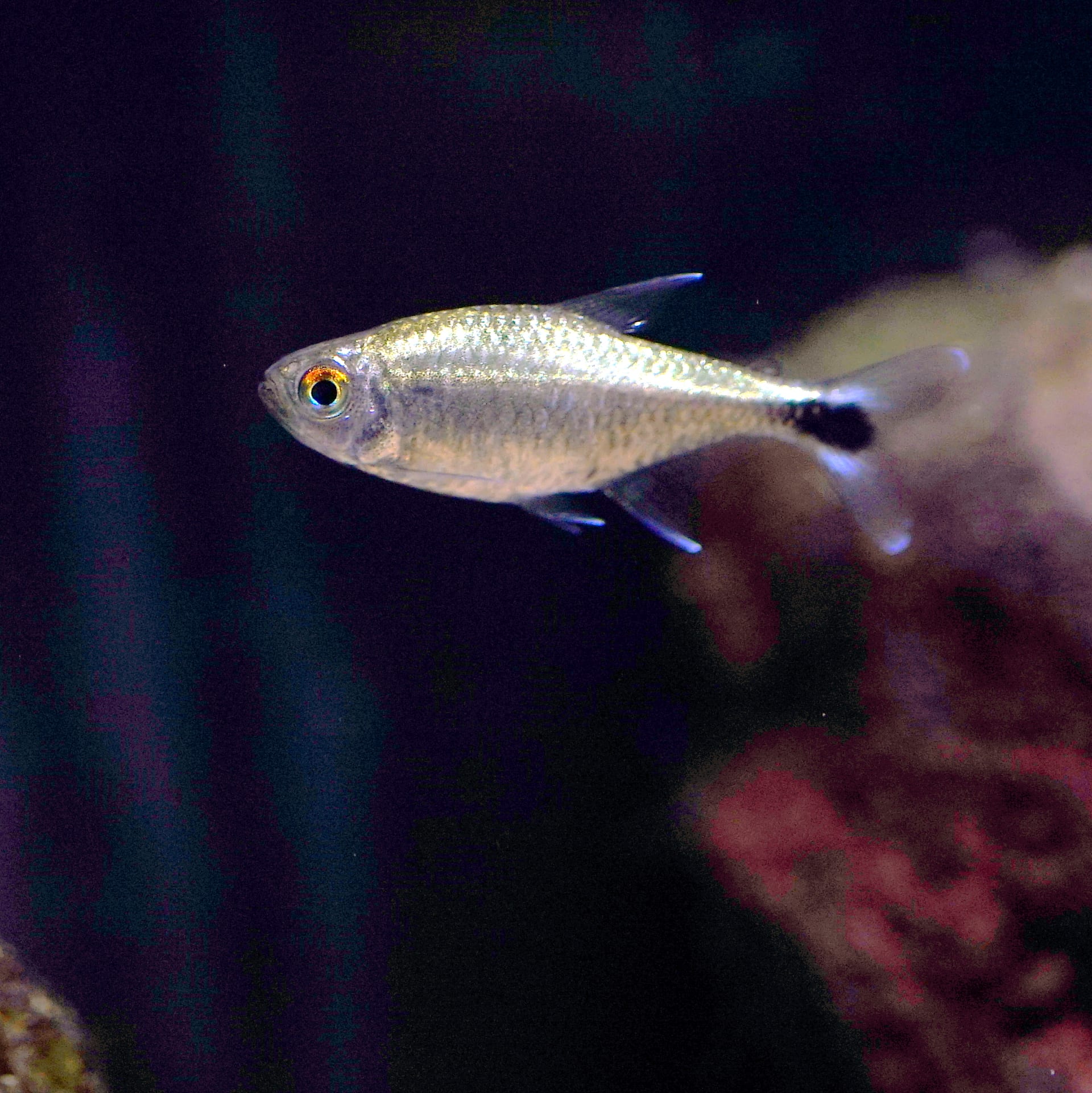
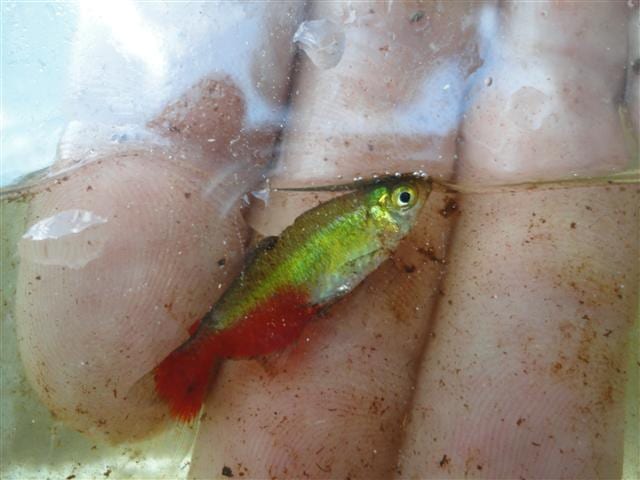
A small characin, red along the lower flank with a pale green cast above. It is the smallest of the three Aphyocharax species seen in the hobby and is not often available. It nips fins, so pair it with quick-moving tank mates.
Difficulty
Intermediate
Temperature
20〜26℃
Lifespan
5-10 years
Size
About 4.5cm (FishBase gives 7.1cm SL)
Diet
Dried foods, frozen bloodworm, brine shrimp, Daphnia
About
Aphyocharax rathbuni is a small characin of the Paraguay, Parana and Uruguay drainages in Brazil, Paraguay, Argentina and Uruguay. FishBase gives the Paraguay basin, pH 6.0-7.5, hardness to 20 dH, 20-26C and 7.1cm SL, while Seriously Fish gives 4.5cm SL, 20-26C, pH 6.5-7.5, 2-20 dGH and a base of at least 60 by 30cm. The lower flank is flushed red and the back carries a pale green cast. It favours streams, rivers and tributaries shaded by floating or overhanging vegetation. It is the smallest of the three Aphyocharax species that reach the hobby and is not often on sale. It has a reputation as a fin nipper, so keep it away from long-finned or slow-moving fish. Breeding is not difficult, and a well-conditioned pair may produce as many as 500 eggs.
Source: Wikipedia (CC BY-SA 4.0)
Lifespan of the Green Fire Tetra
The Green Fire Tetra lives 5-10 years.
Size of the Green Fire Tetra
The Green Fire Tetra grows to About 4.5cm (FishBase gives 7.1cm SL).
Temperature & humidity for the Green Fire Tetra
The ideal temperature for the Green Fire Tetra is 20〜26℃.
Basic Info
Origin
South America (the Paraguay, Parana and Uruguay drainages in Brazil, Paraguay, Argentina and Uruguay)
Lifespan
5-10 years
Care Specifications
- pH
- 6.5–7.5
- Hardness (GH)
- 2–20 dGH
- Water Temp.
- 20–26℃
- Min. Tank
- 54 L
Semi-aggressiveGroupBreeding: Moderate
Sources: Seriously Fish / FishBase
References & Sources
Edited & verified by: BreederDirect editorial team
The taxonomic, regulatory, and husbandry data on this page are compiled and verified against the authoritative primary sources below.
Taxonomy & Authority
Regulations & Conservation Status
Not CITES-listedIUCN LC · Least Concern
Sources: CITES Appendices (species not listed) / IUCN Red List
Regulations may change. Always verify the latest information with the relevant authorities.
Green Fire Tetra Listings
Loading latest listingsFind listings for this species