Source: Wikimedia Commons
Rosy Tetra
BeginnerMegalamphodus rosaceus
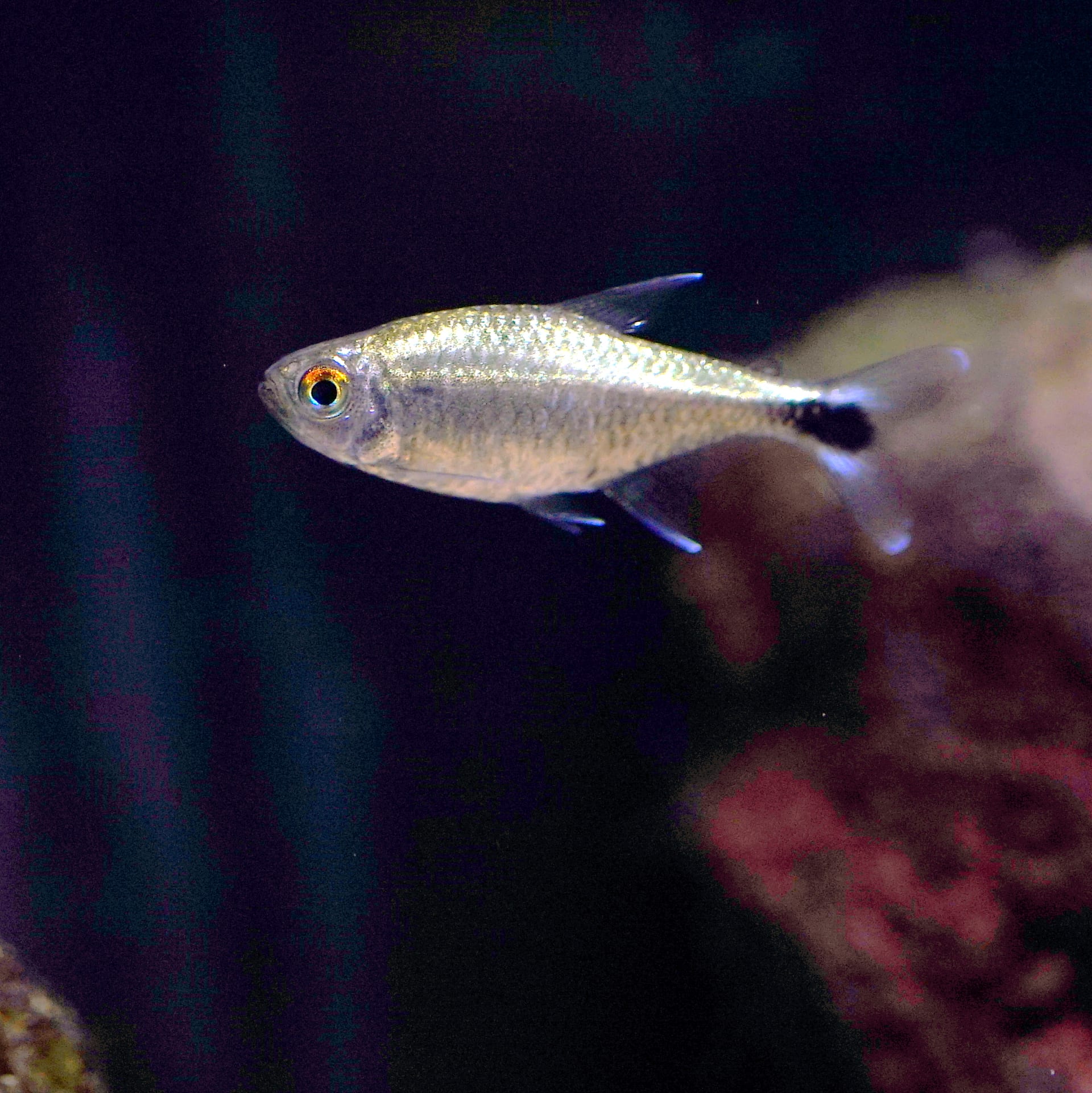
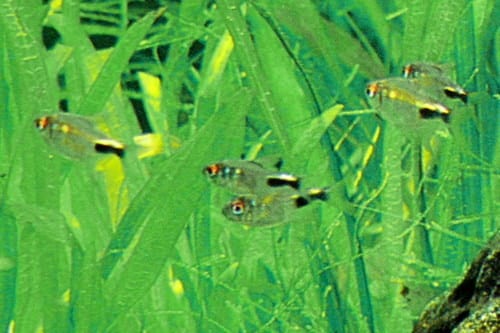
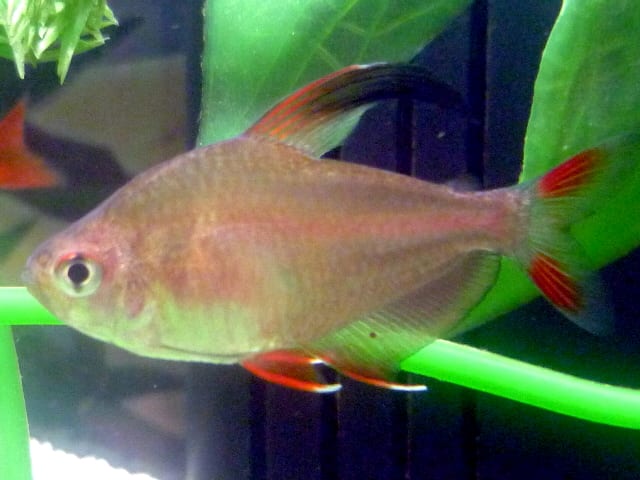
A small characin with a pale pink body and a tall dorsal fin edged in white and black. Males develop extended fins. Peaceful and hardy, but outcompeted by pushy tank mates.
Difficulty
Beginner
Temperature
24〜28℃
Lifespan
3-5 years
Size
About 3.5-4cm SL
Diet
Dried foods, frozen bloodworm, Daphnia
About
Megalamphodus rosaceus is a small characin from the Essequibo, Corantijn and Suriname River basins, from Guyana into Suriname. FishBase gives 3.4cm SL, pH 5.8-7.5, up to 20 dH and 24-28C. Seriously Fish gives 24-28C, pH 5.5-7.5, 1-12 dGH and a base of at least 60 by 38cm, about 68 litres. The whole body carries a pale pink wash and the tall dorsal fin is edged in white and black. Males have extended dorsal and anal fins and are slimmer and more colourful than females. It is very peaceful and will lose out on food beside fast or large fish, so a group of about ten of its own kind is the usual approach. It is an egg scatterer, and Seriously Fish gives pH 5.5-6.5 and 1-5 gH for the spawning tank.
Source: Wikipedia (CC BY-SA 4.0)
Lifespan of the Rosy Tetra
The Rosy Tetra lives 3-5 years.
Size of the Rosy Tetra
The Rosy Tetra grows to About 3.5-4cm SL.
Temperature & humidity for the Rosy Tetra
The ideal temperature for the Rosy Tetra is 24〜28℃.
Basic Info
Origin
South America (Essequibo, Corantijn and Suriname River basins)
Lifespan
3-5 years
Size
About 3.5-4cm SL
Care Specifications
- pH
- 5.5–7.5
- Hardness (GH)
- 1–12 dGH
- Water Temp.
- 24–28℃
- Min. Tank
- 68 L
PeacefulGroupBreeding: Moderate
Sources: Seriously Fish / FishBase
References & Sources
Edited & verified by: BreederDirect editorial team
The taxonomic, regulatory, and husbandry data on this page are compiled and verified against the authoritative primary sources below.
Taxonomy & Authority
Accepted name: Megalamphodus rosaceus (Durbin, 1909)
Synonyms: Hyphessobrycon rosaceus
Authority databases: FishBase
Nomenclature follows global taxonomic authority databases.
Regulations & Conservation Status
Not CITES-listedIUCN LC · Least Concern
Sources: CITES Appendices (species not listed) / IUCN Red List
Regulations may change. Always verify the latest information with the relevant authorities.
Rosy Tetra Listings
Loading latest listingsFind listings for this species