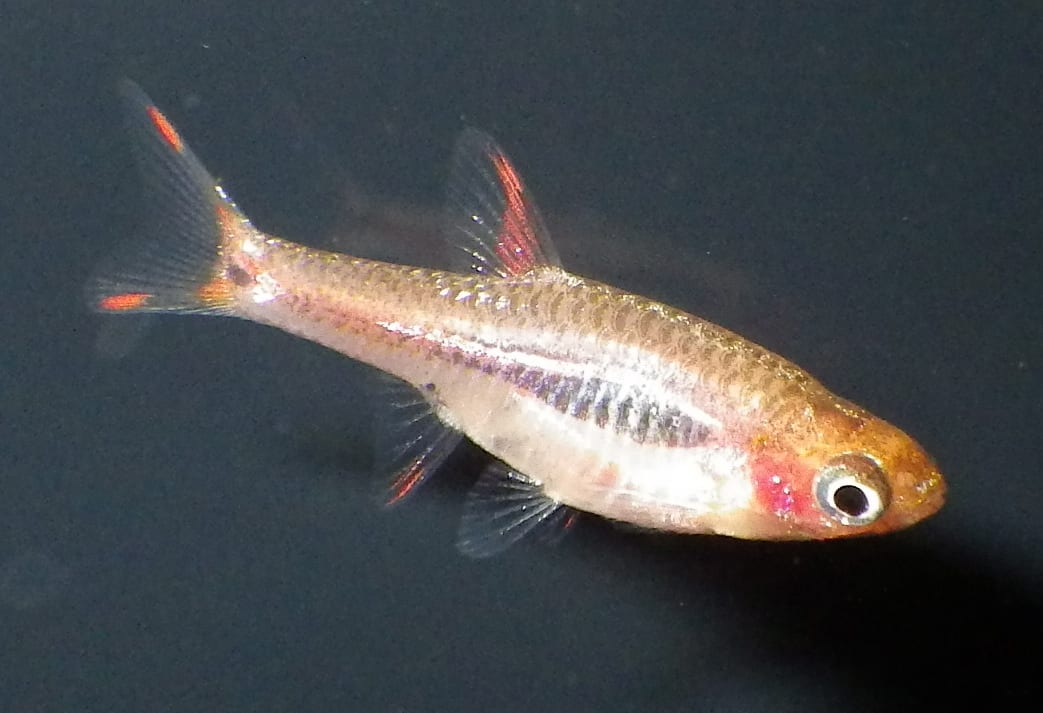
 © Andrewbogott / CC BY-SA 4.0
Phoenix Rasbora
The Phoenix Rasbora (Boraras merah) is a tiny cyprinid fish, reaching only about 2 cm even as an adult, with a reddish body marked by round black spots. In the wild it lives in peat swamp forests of western and southern Borneo, favoring soft, strongly acidic water. It's a shy species best kept alone in a shoal or alongside similarly small, calm tankmates. While a small school can look striking even in a modest tank, water quality needs steady attention, making this a fish better suited to keepers with some prior experience.
View Phoenix Rasbora encyclopedia →0% commission on your first sales!Register by September 30, 2026 and your first 2 sales are commission-free!
Breeder Wanted!
List on BreederDirect and sell directly to customers nationwide!
Our 6 Transparency Commitments
All Tropical Fish listings include water quality, temperament, and tank size information from verified Breeder.
- Origin Disclosed
- Real Photos
- Water Quality Disclosed
- Recommended Tank Size
- Temperament Disclosed
- Breed Line Disclosed
Browse all 301 breeds
Water Type
Care Level
No listings match your filters
Adjust your filters, or get notified when new listings arrive.
Getting alerts is free with a member account. When new listings match your saved search, we'll notify you by email and in-app.
Browse other categories
Verified breeders (preview)
Are you raising tropical fish?
Register as a breeder and connect with buyers directly.
Apply as a breederAbout Phoenix Rasbora
The Phoenix Rasbora (Boraras merah) is a tiny reddish cyprinid maxing out at 2cm, native to Borneo's peat swamps and thriving in soft, acidic water — best suited to intermediate keepers.
7 things to know before welcoming a Phoenix Rasbora
1Tiny Even as an Adult
Even fully grown, the Phoenix Rasbora tops out at around 2 cm, making it one of the smallest cyprinids in the hobby. That size makes it easy to keep a group in a small tank, but it also means the fish is more sensitive to sudden shifts in water quality or temperature.
2Prefers Soft, Acidic Water
In the wild, this species comes from peat swamp forests in western and southern Borneo, where the water is soft and strongly acidic. Replicating that at home with an acidic substrate or blackwater conditioners helps keep the fish settled and healthy.
3Shy — Best Kept Alone
Phoenix Rasboras are naturally shy, and pairing them with larger or fast-moving fish can push them into hiding for good. They do best either as a single-species shoal or alongside other calm, similarly sized fish.
4Better Kept in a Shoal
Keeping a proper group rather than just one or two fish brings out their natural swimming behavior and coloration. Since they tend to hide, adding plants or driftwood gives them cover and helps them settle in.
5Suited to Intermediate Keepers
Because of their small size and sensitivity to water changes, this species is generally considered suited to intermediate keepers. It's best introduced to a tank with mature, stable filtration rather than one that's freshly cycled.
6Fits Small Tanks Well
Their small adult size means a group can thrive even in a compact tank. That said, smaller volumes of water shift temperature and chemistry faster, so regular monitoring and water changes matter more.
7Prep the Water Before Arrival
Preparing soft, acidic water in advance makes it easier for new arrivals to settle in smoothly. Take extra time during acclimation, letting the fish adjust gradually rather than rushing the transition.
Frequently asked questions about Phoenix Rasbora
- Q.How big does the Phoenix Rasbora get?
- A.Even as an adult, it stays around 2 cm long, making it one of the smallest tropical fish species. It's noticeably tinier than most other community fish.
- Q.Can it be kept with other fish?
- A.Because it's naturally shy, it doesn't do well with larger or fast-moving tankmates. It's best kept either as a single-species shoal or alongside other calm, similarly sized fish.
- Q.Is this a good fish for beginners?
- A.It's generally considered suited to intermediate keepers rather than beginners. Its small size makes it sensitive to water quality changes, so some prior tank experience helps.
- Q.How should water quality be managed?
- A.Like its native peat swamp habitat, it prefers soft, strongly acidic water. Using acidic substrate or blackwater conditioners to keep the water on the acidic side helps it stay healthy.
- Q.Is the Phoenix Rasbora subject to CITES?
- A.The Phoenix Rasbora is not subject to CITES.
Useful tools for Phoenix Rasbora care
Learn more about Phoenix Rasbora in the encyclopedia
View Phoenix Rasbora encyclopedia entry →
Care difficulty, lifespan, size and diet — all basics covered.
More in this category
Can't find the one you're looking for?
Post your wishes for free and breeders with matching animals will contact you with introductions.