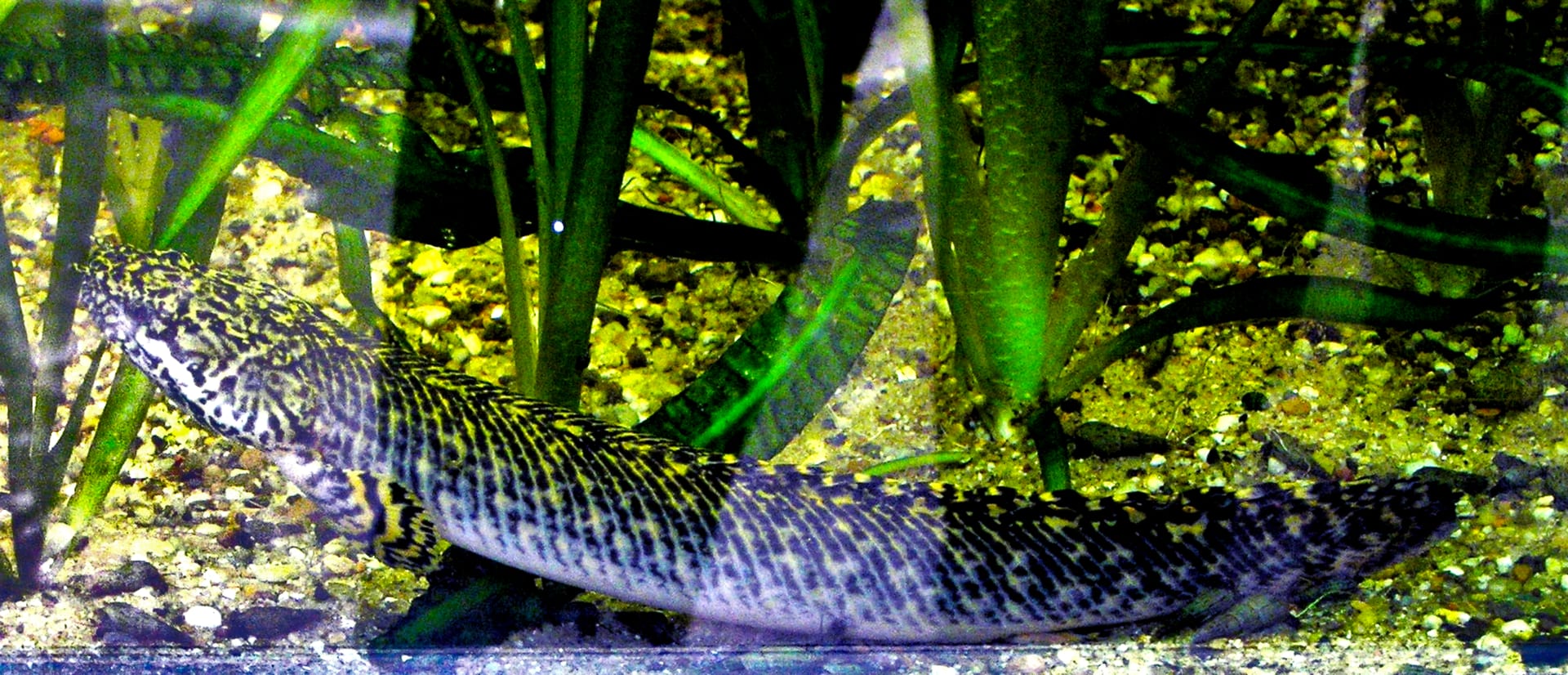
 © Lymantria / CC BY-SA 3.0
Marbled Bichir
The Marbled Bichir (Polypterus palmas) is a mid-sized Polypterus with irregular blotches scattered across a dark brown body. Its upper jaw projects noticeably beyond the lower jaw, giving it the prehistoric, almost dinosaur-like face that draws fans to this genus. Marbled Bichirs are hardy and tolerate changing water conditions reasonably well, which has made them one of the more approachable Polypterus species and a common entry point into keeping bichirs. Fully grown, they reach up to about 35cm, becoming a striking centerpiece in the tank. With their slow, deliberate movements and endearingly odd expression, they're endlessly fun to watch.
View Marbled Bichir encyclopedia →0% commission on your first sales!Register by September 30, 2026 and your first 2 sales are commission-free!
Breeder Wanted!
List on BreederDirect and sell directly to customers nationwide!
Our 6 Transparency Commitments
All Tropical Fish listings include water quality, temperament, and tank size information from verified Breeder.
- Origin Disclosed
- Real Photos
- Water Quality Disclosed
- Recommended Tank Size
- Temperament Disclosed
- Breed Line Disclosed
Browse all 301 breeds
Water Type
Care Level
No listings match your filters
Adjust your filters, or get notified when new listings arrive.
Getting alerts is free with a member account. When new listings match your saved search, we'll notify you by email and in-app.
Browse other categories
Verified breeders (preview)
Are you raising tropical fish?
Register as a breeder and connect with buyers directly.
Apply as a breederMarbled Bichir key facts
- Care level
- Intermediate
- Lifespan
- 10-15 years
- Size
- Up to 35cm SL
- Temperature
- 25〜28℃
- Diet
- Meaty live and frozen foods such as prawns, earthworms, mussel and lancefish
- Tank
- Seriously Fish suggests a 120 x 45cm base of about 205 litres. Build cover from driftwood and smooth rocks over sand while leaving open floor for swimming, and always fit a lid, since it slips out of any gap.
- Water Temperature & Quality
- Seriously Fish gives 25-28C, pH 6.0-7.0 and 5-15 dGH, while FishBase records pH up to 7.0, hardness to 10 dH and 26-28C in the wild. Slightly acidic to neutral, moderately soft water suits it.
- Tank Mates
- It swallows anything small enough but is otherwise fairly peaceful. Other Polypterus, Synodontis, Datnioides, knifefish and medium to large characins make suitable companions.
- Diet & Feeding
- Carnivorous and often refuses dried food. Offer prawns, earthworms, mussel and small fish, live or frozen. It is active at night, so feeding after lights-out is the most reliable approach.
- Breeding & Spawning
- Captive breeding has not been recorded and is presumed to follow congeners. It spawns in the rainy season in the wild, the male cupping the eggs in his anal fin, fertilising them and scattering them among plants.
- Health & Notes
- It breathes air and will drown if it cannot surface. Small and hardy for the genus, it feeds readily. Choose decor without sharp edges to avoid grazes. The IUCN rates it Least Concern and it is not listed by CITES.
About Marbled Bichir
The Marbled Bichir is a hardy mid-sized Polypterus with a dark, blotched body and a distinctive protruding upper jaw, growing up to 35cm. A popular, accessible entry point into bichir keeping for intermediate aquarists.
7 things to know before welcoming a Marbled Bichir
1Grows Up to 35cm
Marbled Bichirs grow into a mid-sized fish, reaching a standard length of up to 35cm. Since it won't stay small for long, plan for a tank that can accommodate its adult size before bringing one home.
2Distinctive Long Upper Jaw
Its most recognizable feature is the upper jaw, which projects noticeably beyond the lower jaw. This jaw structure is one of the easiest ways to tell it apart from other Polypterus species.
3Hardy but Intermediate-Level
It tolerates water quality changes relatively well and is considered one of the easier Polypterus to keep, but it's still rated as an intermediate-level fish compared to typical tropicals. It suits keepers comfortable with routine water care and observation.
4Nocturnal, Bottom-Dwelling
It tends to stay hidden during the day and becomes more active at night. Not seeing it during daylight hours isn't necessarily a sign of trouble — it's simply following its natural rhythm.
5Secure Lid Against Jumping
Its long, slender body lets it squeeze through surprisingly small gaps and jump out of an open tank. A tight-fitting lid, weighted if needed, is essential before bringing one home.
6Carnivorous, Mind Tankmates
It's a carnivore that favors meaty foods and will eat any fish or crustacean small enough to fit in its mouth. Avoid pairing it with tankmates too small to be safe.
7Prepare Before You Bring One Home
Along with adequate tank space, driftwood or PVC pipes for hiding spots help it settle in. Talking to someone with Polypterus experience beforehand can make the first weeks much smoother.
Frequently asked questions about Marbled Bichir
- Q.How big does it get as an adult?
- A.It reaches a standard length of up to about 35cm, making it a mid-sized Polypterus. Don't plan your tank around its juvenile size — account for its eventual adult length instead.
- Q.Is it suitable for beginners?
- A.Marbled Bichirs are relatively hardy for a Polypterus, but they're still considered an intermediate-level fish overall. It's best to have some tropical fishkeeping experience before taking one on.
- Q.Can it live with other fish?
- A.It's carnivorous and will eat any tankmate or crustacean small enough to fit in its mouth. Choose robust tankmates of a similar size if you want to keep it in a community setup.
- Q.Is it listed under CITES?
- A.The Marbled Bichir is not listed under CITES. This is one less thing to worry about when considering the species.
- Q.Is it prone to jumping out of the tank?
- A.Like other Polypterus, its long body can slip through small gaps and jump out of an open tank. A secure, tight-fitting lid is essential.
Useful tools for Marbled Bichir care
Learn more about Marbled Bichir in the encyclopedia
View Marbled Bichir encyclopedia entry →
Care difficulty, lifespan, size and diet — all basics covered.
More in this category
Can't find the one you're looking for?
Post your wishes for free and breeders with matching animals will contact you with introductions.