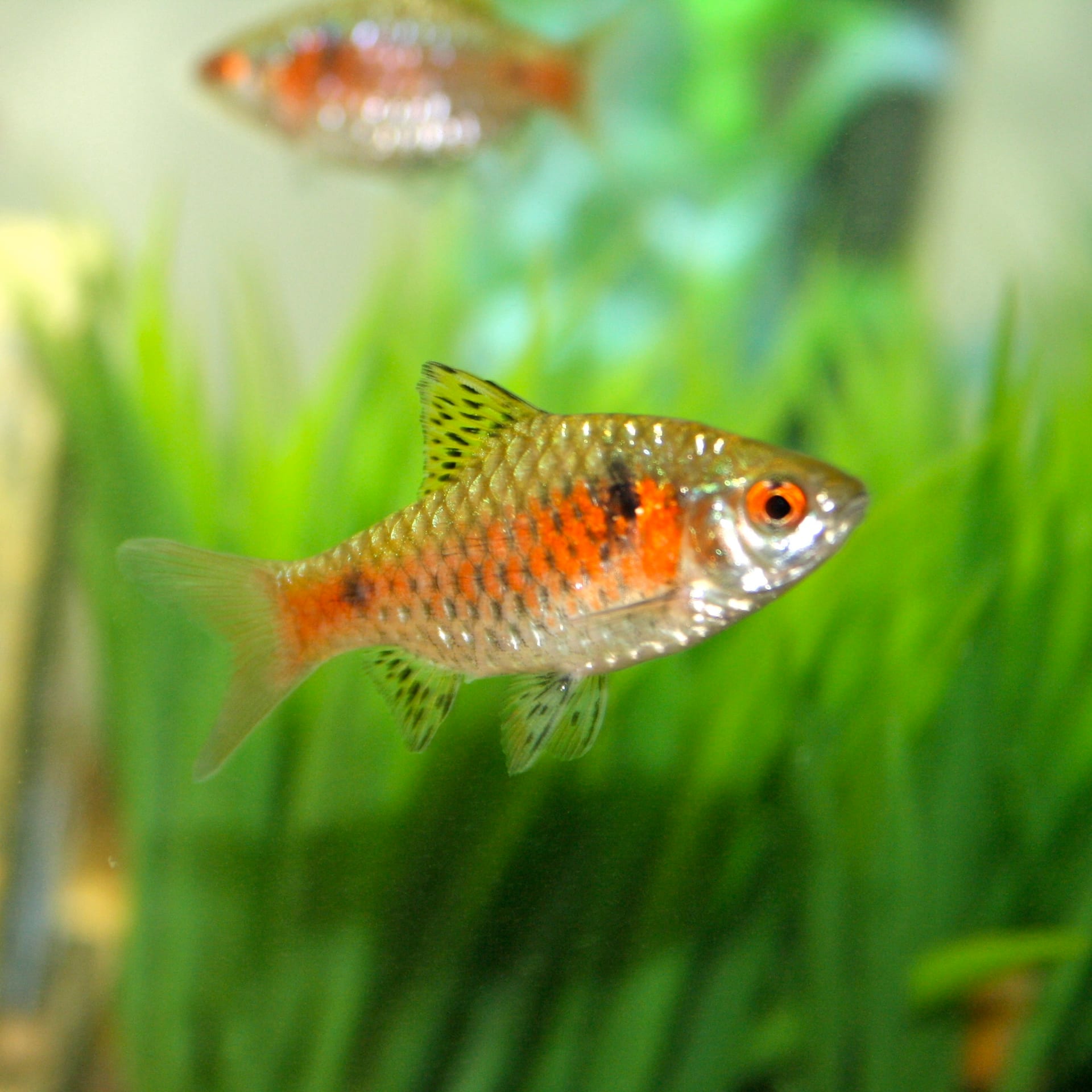
 © Waitingonthetide / CC BY-SA 3.0
Odessa Barb
The Odessa Barb is a small, striking barb known for the bold red-orange band running along the male's body, accented by fins edged and marked with rows of black spots. Kept in a group, males compete for attention with their coloration, often intensifying it in the process. Females are plainer and slightly deeper-bodied, making the sexes easy to tell apart. Hardy and tolerant of cooler water temperatures, this fish is a forgiving choice for those new to tropical fishkeeping. Topping out around 4.6cm, its compact size and schooling behavior make it a popular, easygoing addition to a community tank.
View Odessa Barb encyclopedia →0% commission on your first sales!Register by September 30, 2026 and your first 2 sales are commission-free!
Breeder Wanted!
List on BreederDirect and sell directly to customers nationwide!
Our 6 Transparency Commitments
All Tropical Fish listings include water quality, temperament, and tank size information from verified Breeder.
- Origin Disclosed
- Real Photos
- Water Quality Disclosed
- Recommended Tank Size
- Temperament Disclosed
- Breed Line Disclosed
Browse all 301 breeds
Water Type
Care Level
No listings match your filters
Adjust your filters, or get notified when new listings arrive.
Getting alerts is free with a member account. When new listings match your saved search, we'll notify you by email and in-app.
Browse other categories
Verified breeders (preview)
Are you raising tropical fish?
Register as a breeder and connect with buyers directly.
Apply as a breederOdessa Barb key facts
- Care level
- Beginner-friendly
- Lifespan
- 3-5 years
- Size
- Up to 4.6cm SL
- Temperature
- 16〜25℃
- Diet
- Dried, frozen and live foods
- Tank
- Seriously Fish suggests an 80 x 30cm base of about 72 litres. Keep open swimming space but add plants and driftwood for cover, which helps it settle.
- Water Temperature & Quality
- Seriously Fish gives 16-25C, pH 6.5-8.5 and 5-20 dGH. It suits neutral to slightly alkaline, moderately hard water and takes cooler temperatures well.
- Tank Mates
- Very peaceful and a good community fish. Similar-sized open-water cyprinids, balitorid, cobitid and nemacheilid loaches, and benthic cyprinids such as Crossocheilus and Garra all suit it.
- Diet & Feeding
- It takes dried food readily, and regular small live or frozen foods such as bloodworm and Artemia deepen the red-orange of the males.
- Breeding & Spawning
- Pethia species are typically egg scatterers with no parental care. In good condition they spawn often, and fry sometimes appear unaided in a mature planted tank. For numbers, use a dimly lit spawning tank over mesh.
- Health & Notes
- Hardy and easy to keep. Young fish and females look plain in the shop, but mature males colour up strongly within a group. The IUCN rates it Data Deficient, so the state of wild populations is not well known. It is not listed by CITES.
About Odessa Barb
The Odessa Barb is a small, hardy barb prized for the male's vivid red-orange stripe. Beginner-friendly and compact, growing to about 4.6cm.
7 things to know before welcoming a Odessa Barb
1Coloring improves in a group
Males have a tendency to compete with one another for coloration, so keeping a group is recommended. Kept alone or in very small numbers, the vivid red-orange band may not develop as fully.
2Telling males from females
Males show a broad red-orange band along the body with black-spotted, edged fins, while females are plainer in color and somewhat deeper-bodied — making the sexes fairly easy to distinguish.
3Hardy and cold-tolerant
This is a robust species that adapts well to environmental changes and can tolerate relatively cool water temperatures, making it approachable even for first-time tropical fish keepers.
4Grows to about 4.6cm
Adults reach only about 4.6cm at most, so they add presence to a tank without contributing much to bioload — an easy size to fit into a community setup.
5Choose peaceful tankmates
Small and generally peaceful, this species pairs well with other calm fish of similar size. It can occasionally nip fins, so keep an eye on compatibility when housing it with long-finned species.
6Provide room to school
To bring out its natural appeal, it helps to keep a decent-sized group with enough swimming space to school together. Prepare a tank that can comfortably accommodate this before bringing them home.
7Acclimate carefully
Even though it's a hardy species, fish can be more sensitive to water changes right after transport. Take time with the acclimation process when bringing them home to ease the transition into their new environment.
Frequently asked questions about Odessa Barb
- Q.Is this fish suitable for beginners?
- A.Yes, it's considered a beginner-friendly species thanks to its hardiness and tolerance for environmental changes. With basic water quality maintenance, it's approachable even for first-time tropical fish keepers.
- Q.How many should be kept together?
- A.Keeping a group is preferable to housing just one or two. Because males compete with each other for coloration, a reasonably sized group tends to bring out their fullest colors.
- Q.How can I tell males and females apart?
- A.Males have a broad red-orange band on the body with black-spotted, edged fins, while females are plainer in color and somewhat deeper-bodied — the difference is usually easy to spot.
- Q.Can it be kept with other tropical fish?
- A.Being small and generally peaceful, it can usually be kept with other calm fish of similar size. That said, it may nip fins occasionally, so monitor compatibility if pairing with long-finned species.
- Q.Are there any CITES restrictions on this species?
- A.The Odessa Barb is not listed under CITES. We don't provide definitive information on other regulations here, so please check independently if needed.
Useful tools for Odessa Barb care
Learn more about Odessa Barb in the encyclopedia
View Odessa Barb encyclopedia entry →
Care difficulty, lifespan, size and diet — all basics covered.
More in this category
Can't find the one you're looking for?
Post your wishes for free and breeders with matching animals will contact you with introductions.