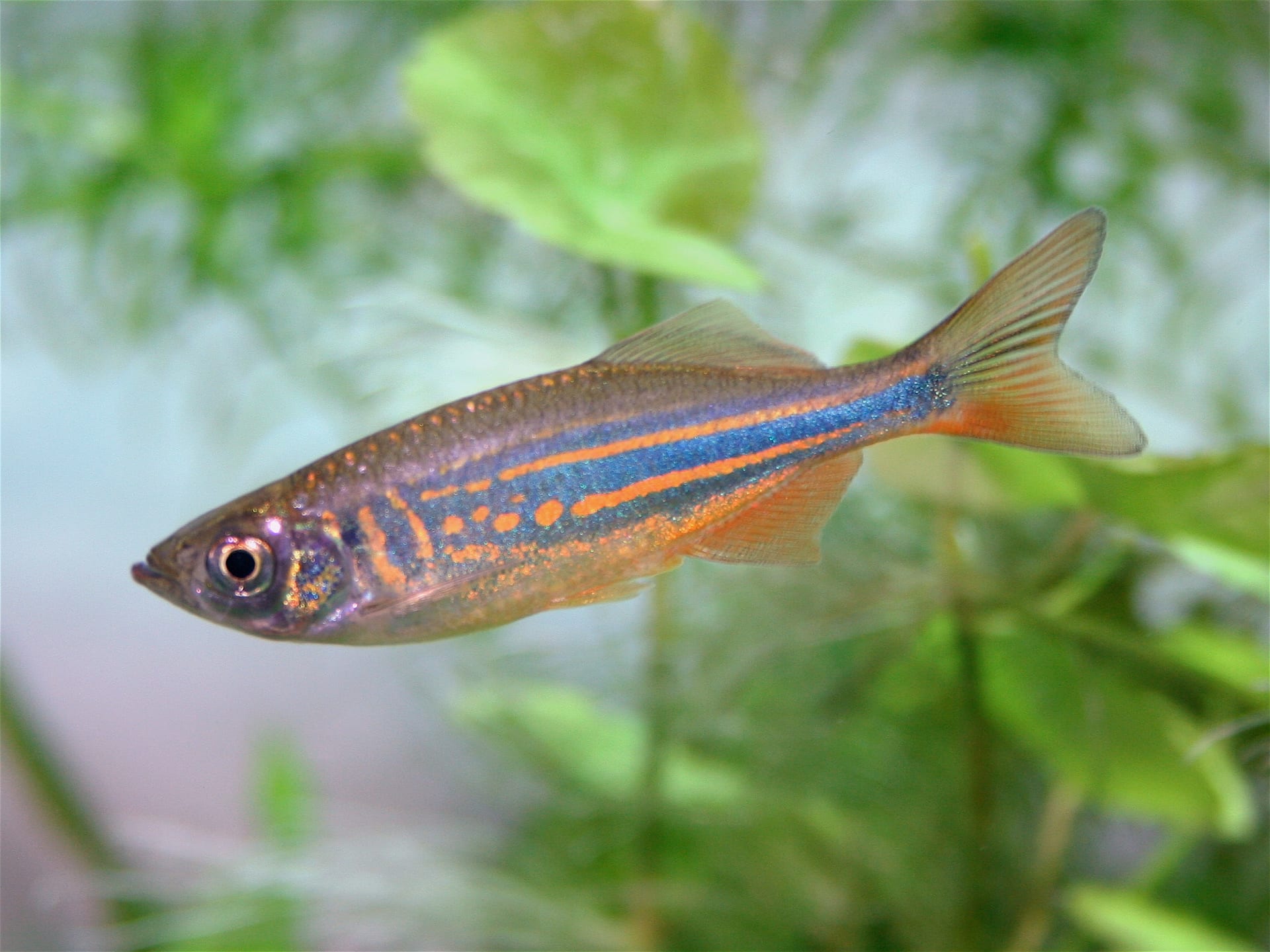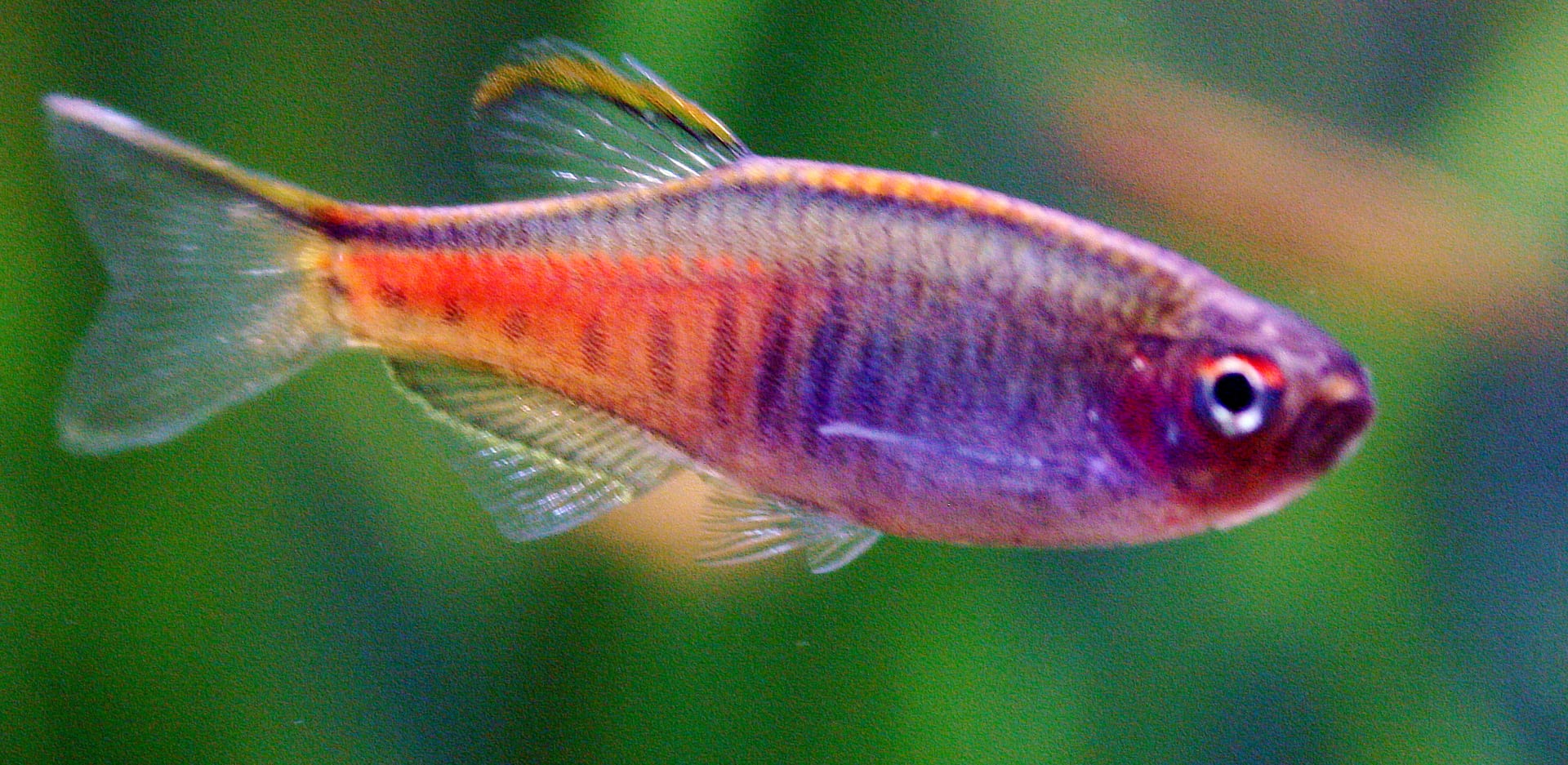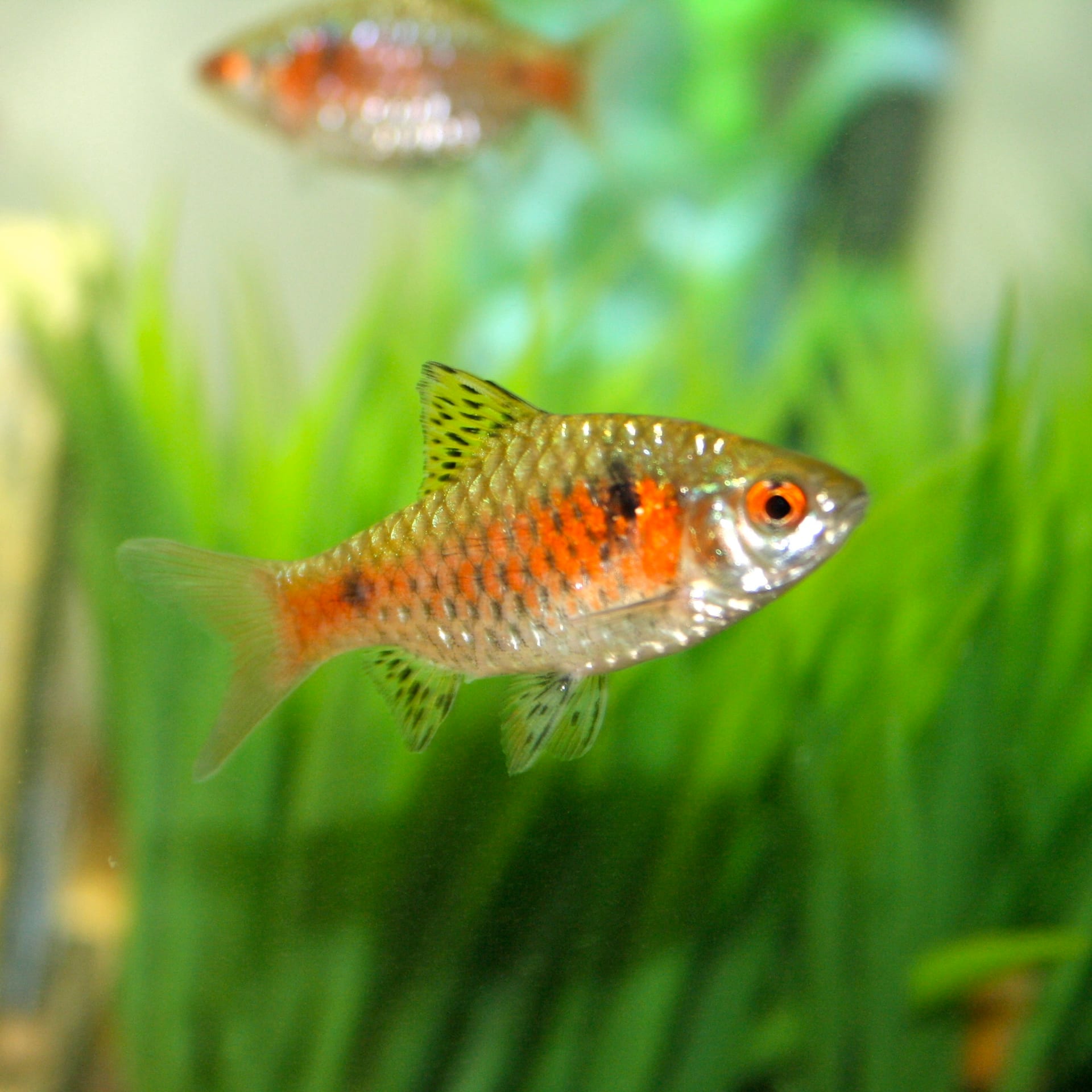
Source: Wikimedia Commons
Odessa Barb
BeginnerPethia padamya
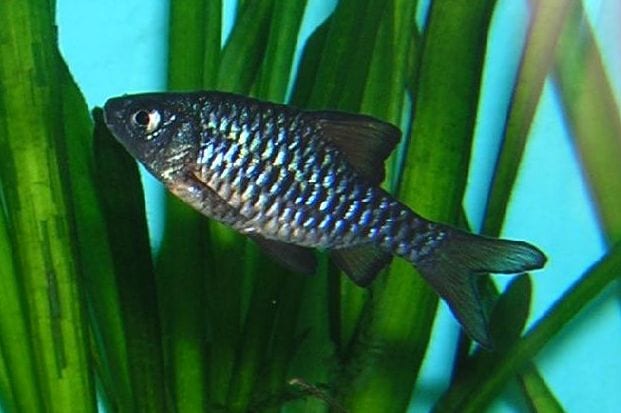
A small barb whose males carry a broad red-orange band along the flank with spotted, dark-edged fins, while females are plainer and thicker-bodied. Hardy and tolerant of cool water, males colour up hardest in a group.
Difficulty
Beginner
Temperature
16〜25℃
Lifespan
3-5 years
Size
Up to 4.6cm SL
Diet
Dried, frozen and live foods
About
Pethia padamya occurs in the Ayeyarwady and Chindwin basins of Myanmar. FishBase records a maximum of 4.6cm SL and notes that the material behind the description came from an artificial pond at Toe Gyi village near Pyin Oo Lwin. Seriously Fish gives 46mm SL, 16-25C, pH 6.5-8.5, 5-20 dGH and an 80 x 30cm base of about 72 litres. Males carry a broad red-orange band along the flank with strongly marked fins, while females are plainer and thicker-bodied, so sexing is straightforward. It is very peaceful and mixes well with similar-sized open-water cyprinids and loaches. Although traded since the early 1970s its identity remained unsettled until it was formally described in 2008. The IUCN rates it Data Deficient and it is not listed by CITES.
Source: Wikipedia (CC BY-SA 4.0)
Lifespan of the Odessa Barb
The Odessa Barb lives 3-5 years.
Size of the Odessa Barb
The Odessa Barb grows to Up to 4.6cm SL.
Temperature & humidity for the Odessa Barb
The ideal temperature for the Odessa Barb is 16〜25℃.
Basic Info
Origin
Myanmar (Ayeyarwady and Chindwin basins)
Lifespan
3-5 years
Size
Up to 4.6cm SL
Care Specifications
- pH
- 6.5–8.5
- Hardness (GH)
- 5–20 dGH
- Water Temp.
- 16–25℃
- Min. Tank
- 72 L
PeacefulGroupBreeding: Moderate
Sources: FishBase / Seriously Fish
References & Sources
Edited & verified by: BreederDirect editorial team
The taxonomic, regulatory, and husbandry data on this page are compiled and verified against the authoritative primary sources below.
Taxonomy & Authority
Regulations & Conservation Status
Not CITES-listedIUCN DD · Data Deficient
Sources: CITES Appendices (species not listed) / IUCN Red List
Regulations may change. Always verify the latest information with the relevant authorities.
Odessa Barb Listings
Loading latest listingsFind listings for this species