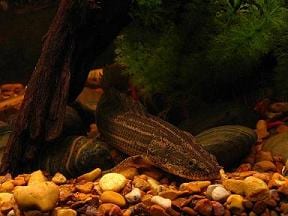
 © P. Greene (TVRGolf) / Public domain
Lapradei Bichir
Polypterus lapradei is a striking large-bodied bichir, its tawny body covered in fine dark spots and banding. It carries more dorsal finlets than any other member of the genus — 13 to 18 in a row — set against a thick, muscular frame that gives it real presence in any tank. Mostly nocturnal, it tends to be calm and unbothered by tankmates, but its eventual size calls for a spacious setup and an experienced keeper. The unhurried, prehistoric way it moves and its surprisingly expressive behavior make it a fish that rewards long-term care with real character.
View Lapradei Bichir encyclopedia →0% commission on your first sales!Register by September 30, 2026 and your first 2 sales are commission-free!
Breeder Wanted!
List on BreederDirect and sell directly to customers nationwide!
Our 6 Transparency Commitments
All Tropical Fish listings include water quality, temperament, and tank size information from verified Breeder.
- Origin Disclosed
- Real Photos
- Water Quality Disclosed
- Recommended Tank Size
- Temperament Disclosed
- Breed Line Disclosed
Browse all 301 breeds
Water Type
Care Level
No listings match your filters
Adjust your filters, or get notified when new listings arrive.
Getting alerts is free with a member account. When new listings match your saved search, we'll notify you by email and in-app.
Browse other categories
Verified breeders (preview)
Are you raising tropical fish?
Register as a breeder and connect with buyers directly.
Apply as a breederAbout Lapradei Bichir
A large tawny bichir with fine dark spots and 13-18 dorsal finlets, reaching up to 74cm. Best suited to experienced keepers.
7 things to know before welcoming a Lapradei Bichir
1Grows up to 74cm
Lapradei bichirs can reach up to 74cm and 2.7kg according to FishBase records. It's easy to underestimate this when bringing home a small juvenile, so plan your tank size around its adult length from the start.
2An advanced-level fish
Given its size and strength, along with the water quality and equipment management it demands, this species is considered suitable for advanced keepers. If it's your first bichir, it may help to gain experience with a hardier species first.
3A distinctive row of finlets
Its row of 13 to 18 dorsal finlets is the most in the genus, making it a standout feature. Combined with its thick body, this is a useful way to distinguish it from other Polypterus species.
4A secure lid is essential
Bichirs can breathe air and are known to jump out of open tanks. Make sure the lid is secure and check for gaps around cords or filter openings where a fish could squeeze through.
5A predator that eats what fits its mouth
It's generally calm and unbothered by tankmates, but as a predator it will eat any fish small enough to fit in its mouth. When choosing tankmates, make sure there's a clear size difference.
6Nocturnal habits and hiding spots
This species is largely nocturnal and often stays hidden during the day. Providing driftwood or rockwork as a shelter helps it settle in and display more natural behavior.
7Prepare sturdy, escape-proof equipment
Its strength and adult size call for robust filtration and sturdy equipment set up in advance. Investing in the right setup from the start makes long-term care much easier down the line.
Frequently asked questions about Lapradei Bichir
- Q.How big does Polypterus lapradei eventually get?
- A.According to FishBase records, it can reach up to 74cm in length and 2.7kg in weight. It's best to plan your tank size around this eventual adult size from the beginning.
- Q.Is this a good fish for beginners?
- A.It's classified as suitable for advanced keepers. Because of its eventual size and the water quality management it requires, it's best suited to keepers who already have bichir experience or have built up experience with other species first.
- Q.Can it be kept with other fish?
- A.It's generally calm in temperament, but as a predator it will eat any fish small enough to fit in its mouth. If keeping tankmates, choose fish of a similar or larger size rather than smaller ones.
- Q.Does it jump out of the tank?
- A.Bichirs can breathe air and are known to jump, so escaping from an open tank is a real risk. Use a secure, gap-free lid and check around cords or filter openings for any spots it could squeeze through.
- Q.Is this species subject to any legal restrictions like CITES?
- A.Polypterus lapradei is not listed under CITES. No special procedures are required when acquiring this fish.
Useful tools for Lapradei Bichir care
Learn more about Lapradei Bichir in the encyclopedia
View Lapradei Bichir encyclopedia entry →
Care difficulty, lifespan, size and diet — all basics covered.
More in this category
Can't find the one you're looking for?
Post your wishes for free and breeders with matching animals will contact you with introductions.