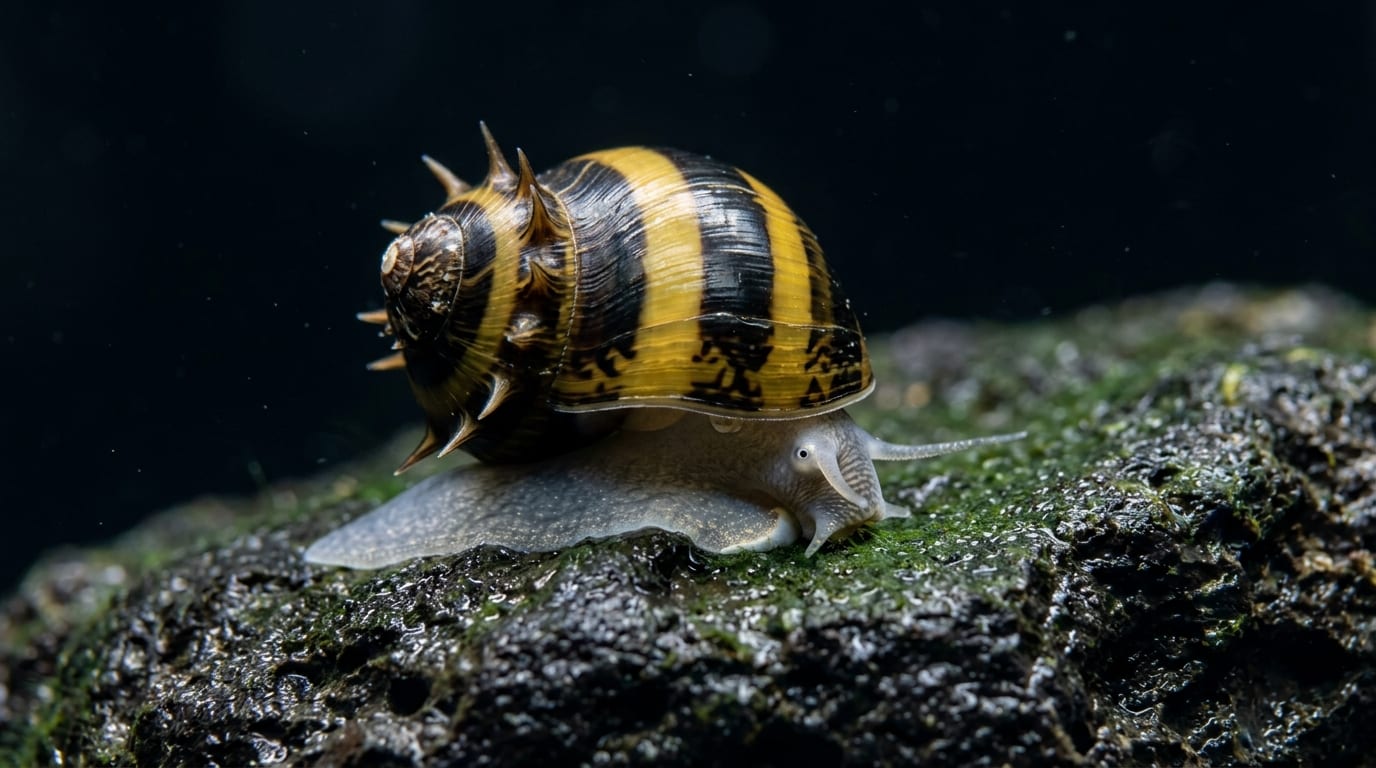
Horned Nerite
The Horned Nerite is a striking snail known for the spiky, horn-like projections that line its shell. A member of the Neritidae family, it grazes on algae growing on glass, driftwood, and rocks, making it a popular choice for keeping tanks clean. Its calm temperament makes it easy to keep alongside fish and shrimp. Because it has an amphidromous life cycle, its larvae need conditions beyond fresh water to develop, so it won't reproduce and overpopulate a freshwater tank on its own. This makes it a low-hassle algae-eating companion that's well suited to beginners.
View Horned Nerite encyclopedia →0% commission on your first sales!Register by September 30, 2026 and your first 2 sales are commission-free!
Breeder Wanted!
List on BreederDirect and sell directly to customers nationwide!
Our 6 Transparency Commitments
All Tropical Fish listings include water quality, temperament, and tank size information from verified Breeder.
- Origin Disclosed
- Real Photos
- Water Quality Disclosed
- Recommended Tank Size
- Temperament Disclosed
- Breed Line Disclosed
Browse all 301 breeds
Water Type
Care Level
No listings match your filters
Adjust your filters, or get notified when new listings arrive.
Getting alerts is free with a member account. When new listings match your saved search, we'll notify you by email and in-app.
Browse other categories
Verified breeders (preview)
Are you raising tropical fish?
Register as a breeder and connect with buyers directly.
Apply as a breederHorned Nerite key facts
- Care level
- Beginner-friendly
- Lifespan
- 3-5 years
- Diet
- Algae, biofilm and sinking prepared foods
- Tank
- Provide hard surfaces where algae can grow, whether glass, stone or driftwood. It sometimes climbs above the waterline and falls, so fit a lid and right any snail found upside down.
- Water Temperature & Quality
- It is tropical and occurs in both brackish and fresh water, and the basic requirement is to avoid strongly acidic or very soft water, which erodes the shell.
- Tank Mates
- Peaceful and harmless to other animals. Do not house it with snail-eating fish or with assassin snails. The spines make it a less easy target for snail-sucking fish, though not a safe one.
- Diet & Feeding
- It rasps algae from hard substrates. It loses condition once the tank runs out of algae, so supplement with a sinking plant-based food or blanched vegetables.
- Breeding & Spawning
- It is amphidromous and its larvae are planktonic, so it does not reproduce within a freshwater aquarium. Even where spawning occurs, the larvae cannot complete their development in fresh water.
- Health & Notes
- It grips hard surfaces strongly, so shift it gently with a spatula under the shell rather than prising it off. It cannot always right itself if turned over, so put it back when you find one. Never use copper-based fish medications, which are toxic to snails. It is not listed by CITES.
About Horned Nerite
A spiky-shelled nerite snail that grazes algae off glass and driftwood, valued as a natural tank cleaner. Its amphidromous life cycle means it won't overpopulate a freshwater tank, making it easy for beginners.
7 things to know before welcoming a Horned Nerite
1A Reliable Algae Cleaner
Horned Nerites graze algae off glass, driftwood, and rocks, making them popular for natural tank cleanup. Their grazing habit is one of their most valued traits among keepers.
2Won't Overpopulate Your Tank
This species has an amphidromous life cycle, meaning its larvae need conditions beyond fresh water to develop. As long as it's kept in a freshwater tank, it won't multiply out of control.
3Watch for Escapes
Nerite snails are known for climbing out of tanks. Keep a secure lid on and maintain the water level below the rim to help prevent escapes.
4Can Get Stuck Upside Down
Due to its shell shape, this snail can sometimes struggle to right itself if flipped over. If you notice one stuck, gently turn it back over.
5Acclimate Slowly
This snail can be sensitive to sudden shifts in water parameters. Take your time acclimating a new arrival to minimize stress from the change in environment.
6Plays Well With Others
Its calm temperament means it rarely bothers fish or shrimp. This makes it easy to add to a community tank for algae control.
7Prepare Your Tank First
It settles in more easily in a tank that already has some algae growth to graze on. Check how established your tank is before bringing one home.
Frequently asked questions about Horned Nerite
- Q.Will it breed in my tank?
- A.Horned Nerites have an amphidromous life cycle, so their larvae need conditions beyond fresh water to develop. Kept in a freshwater tank alone, they're very unlikely to overpopulate.
- Q.Can it live with other fish or shrimp?
- A.Yes, its calm temperament means it rarely bothers tankmates. It's commonly added to community tanks to help control algae.
- Q.What should I do if it gets flipped over?
- A.Because of its shell shape, it can sometimes struggle to right itself. If you notice one stuck upside down, gently turn it back over.
- Q.Can it escape from the tank?
- A.Nerite snails are known for climbing out of tanks. A secure lid and a water level kept below the rim can help prevent this.
- Q.What does it eat?
- A.It mainly grazes on algae growing on glass, driftwood, and rocks. It's often kept specifically for algae control in the tank.
Useful tools for Horned Nerite care
Learn more about Horned Nerite in the encyclopedia
View Horned Nerite encyclopedia entry →
Care difficulty, lifespan, size and diet — all basics covered.
More in this category
Can't find the one you're looking for?
Post your wishes for free and breeders with matching animals will contact you with introductions.